 Μake us preferred on Google
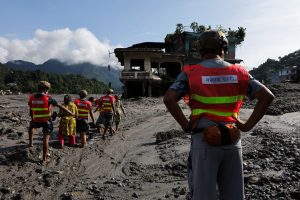
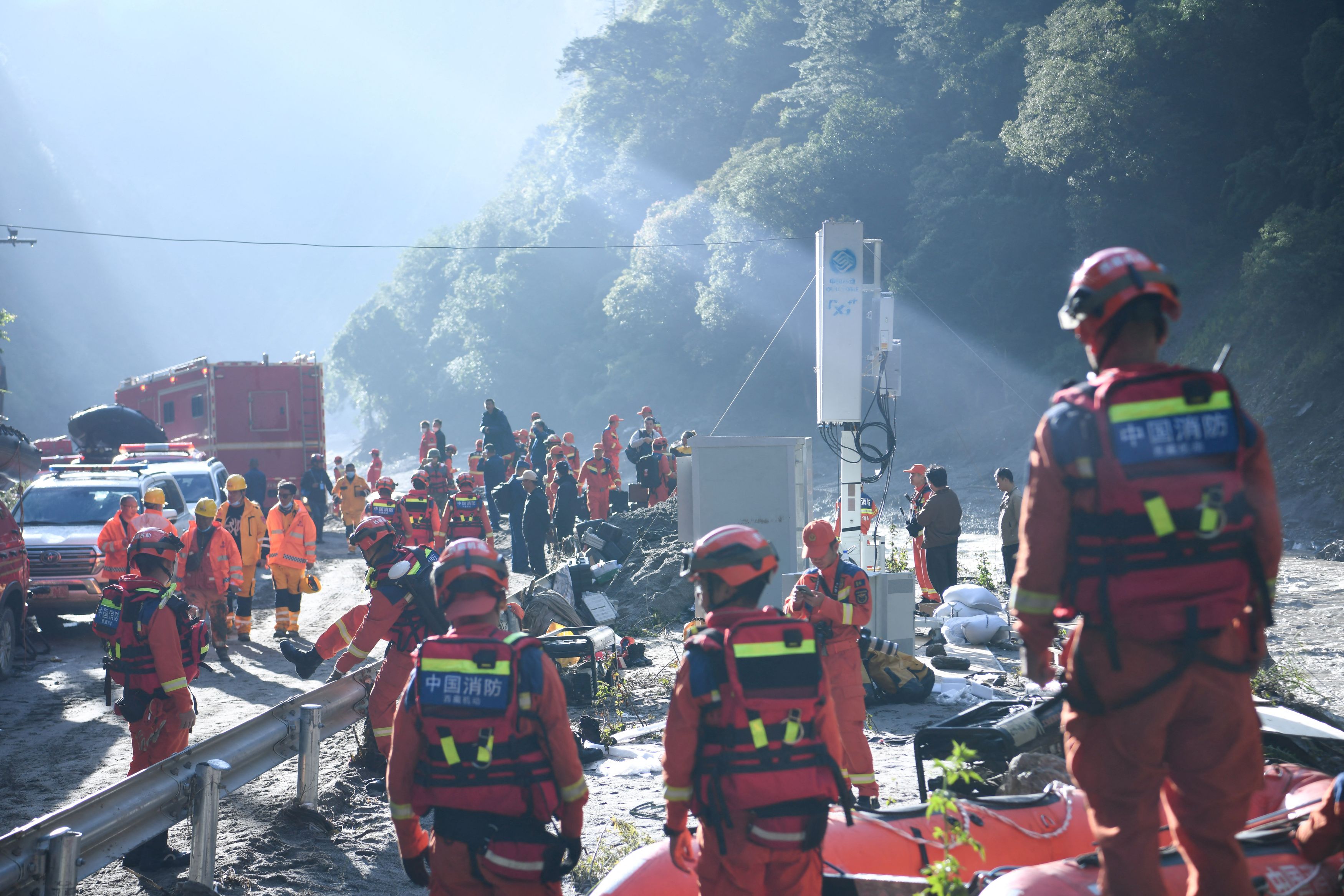
 Rescue teams in Nepal and China worked through Sunday to locate thousands of people still missing after a glacier collapse triggered a catastrophic mudslide across the Himalayas, battling harsh weather and rising water levels along the way.
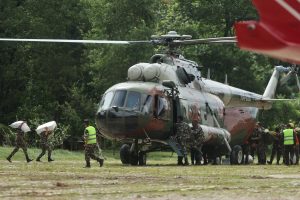
Army soldiers load relief material onto a helicopter at the Maithili Barrack, an army training center, where people evacuated from areas affected by flash floods and a mudslide are brought, in Trishuli, Nuwakot district, Nepal, August 30, 2026. REUTERS/Francis Mascarenhas
Authorities said the death toll had climbed to 750 by Sunday morning, with more than 3,000 people still missing on both sides of the Nepal-China border after ice, rock, mud, and debris tore through mountain valleys and rivers on Wednesday. The Red Cross estimates more than 90,000 people have likely been affected, and China has tied the disaster to the effects of climate change.
Chinese Foreign Minister Wang Yi told his Nepalese counterpart in a Saturday call that the mudslide was one of the most severe cross-border disasters the two countries have faced in recent years, and that the rescue operation had reached an unprecedented level of difficulty and complexity, according to state broadcaster CCTV.
Nepal’s disaster management authority reported 734 deaths, 2,498 people still missing, and 7,514 rescued so far. On the Chinese side, authorities said 16 people were killed in Gyirong County, with 546 still missing. Beijing said 261 foreign nationals from 23 countries remain unaccounted for in Tibet, near a key border crossing with Nepal.
BREAKING: The death toll from a devastating flash flood that struck Nepal’s border with China on Wednesday has risen to at least 734, with 2,498 people still missing, the country’s disaster authority says.
🔴 More on https://t.co/OwhgaIH6vP pic.twitter.com/ij60WzDCcx
— Al Jazeera Breaking News (@AJENews) August 30, 2026
Rising Waters Complicate the Search
The scale of the disaster has made rescue work across the rugged Himalayan terrain especially difficult. Local police told Reuters that residents and rescue workers had retreated to higher ground after water levels in the Trishuli River rose following fresh rainfall, stoking fears of additional flooding.
Rescue operations have been paused multiple times since Friday due to bad weather and concerns over a lake that formed across the Nepal-China border, which had begun overflowing into Nepal’s Lhende Khola and Trishuli Rivers. CCTV reported the lake had largely drained by Saturday evening, but drones spotted a new landslide late Saturday roughly 2.8 kilometers downstream, forming a fresh dam and pool of water.
In Nepal, rescue efforts have increasingly focused on hundreds of people believed trapped inside tunnels at hydropower plants damaged by the flooding. A Nepali foreign ministry spokesperson said the country needs international help with specialized tasks, including tunnel rescues, DNA testing, refrigerated body storage, and forensic identification of decomposed remains. Indian and Chinese experts are already assisting with tunnel access and rescue support.
Mass Burials Begin as Bodies Decompose
After days of relatives searching hospitals, morgues, and relief centers for missing loved ones, Nepali authorities have begun mass burials of hundreds of unidentified victims whose remains had started to decompose. In Chitwan district, which wasn’t directly hit by the disaster, bodies swept downstream from the flood-ravaged Rasuwa region have been carried by the river system into the Narayani River.
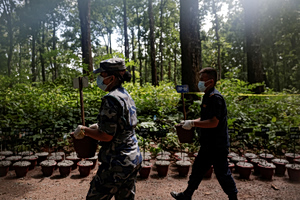
Police officers carry identification number tags for bodies, arranged in flower pots, at the Devghat mass burial site for victims of deadly flash floods and mudslides, in Chitwan, Nepal, August 30, 2026. REUTERS/Navesh Chitrakar
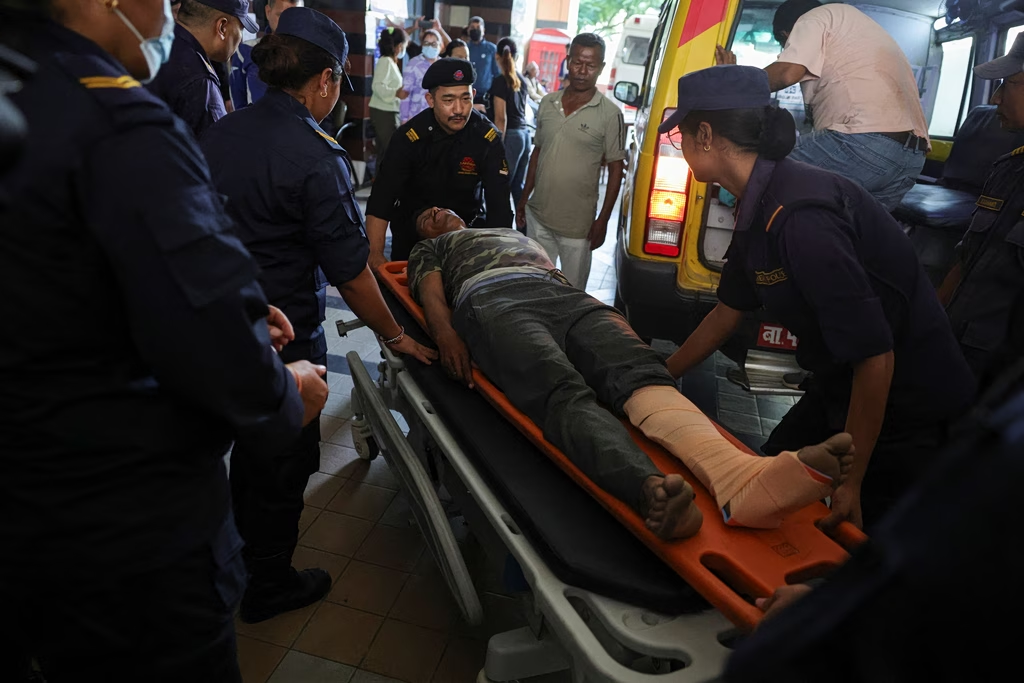
Authorities are photographing bodies, collecting DNA samples, and recording identifying details so families may still be able to identify relatives even after burial. A police officer told Reuters that more than half of the bodies recovered so far are unrecognizable, with many missing faces entirely and, in some cases, only hands, legs, or partial remains available. After burying more than 100 unidentified bodies Saturday, authorities were digging additional graves Sunday for hundreds more.
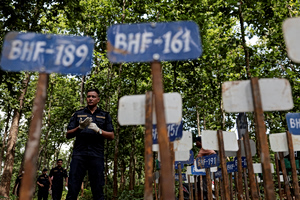
A police officer stands near identification number tags for bodies at the Devghat mass burial site for victims of deadly flash floods and mudslides, in Chitwan, Nepal, August 30, 2026. REUTERS/Navesh Chitrakar
Climate Change Cited as a Factor
CCTV reported that the flood was caused by glacier instability linked to the long-term effects of global warming, describing it as an emerging pattern of cryosphere disasters on the Tibetan plateau. Citing Chinese scientists, the broadcaster said the mudslide took six to seven minutes to reach the Gyirong border crossing from the Nepalese side. Widely shared surveillance footage showed torrents of water and debris engulfing buildings as people fled.
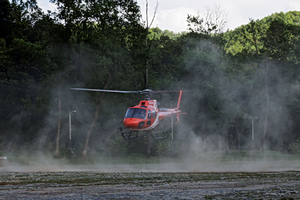
China has deployed more than 2,100 rescue workers and allocated at least 220 million yuan (about $32.7 million) for relief efforts, according to state television, with equipment and supplies being airdropped to frontline responders and soldiers using life-detection equipment to search for the missing.
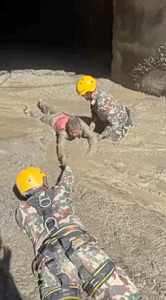
Rescuers evacuate a person from a tunnel of a hydropower project, in the aftermath of flash floods and a mudslide, in Rasuwa, Nepal, in this still image from handout video released August 28, 2026. PMO Nepal/Handout via Reuters