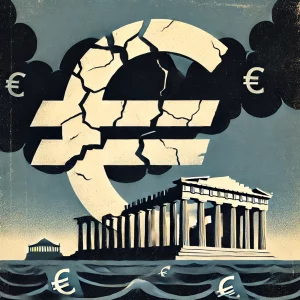
There goes the hammer: three, two, one (week before the US-set deadline) and the deal is clinched, to huge relief and congratulations all around. The main actors would like us to join in the applause but something is not exactly right with this scenario. In short, the European de facto confederation has given in to the demands of the transatlantic empire and has agreed to pay more in terms of tributes, to secure its status as a protected vassal entity.
What if the European imports to the US are to be subject to tariffs of 15 per cent (steel and aluminum, among other things, reaching as high as fifty per cent), while the US imports to the EU will be subject to no tariffs? There is no reciprocity when one of the parties is or feels inferior. There also goes the Green Deal that the EU was proudly touting a few years ago, with a handsome subsidy of USD 750 billion offered to the US fossil fuel and nuclear industries over the period of the Trump Presidency by the energy-starved and Russophobic EU. Not to mention USD 600 billion to be invested by the EU in the US military industry, ensuring ever-lasting dependence in terms of technology and innovation, way beyond the military sector.
Overall, it feels good to be generous and splurge on your ally and protector, by basically transferring to them in less than four years more than half the next EU seven-year budget, while of course cutting the internal reallocation of funds for home-grown defence and undermining all good civilian causes, from social solidarity to regional development and coherence. If this deal reached on 27 July 2025 (shall we call it EU Subjugation Day, as opposed to the declared US Liberation Day a few months ago?) gets actually ratified by the European Council, the European Parliament and national parliaments, any ambition for a self-standing EU with its own foreign and defence policy is dead in the water. Any pretension to objective, rule-based foreign and defence policy that would establish the EU as a distinct pole in global geopolitics and geoeconomics appears even more remote from reality than before.
Not a proud moment in EU history and one wonders what the role is of the EU’s representatives, from the European Commission President all the way down, in all this. Do they actually believe that the EU deserves such a deal or have they been bullied by the bigger-than-life personality and ambition of President Trump and his team? Do they thus acknowledge the inability of the EU political establishment to produce a credible, workable vision and a viable alternative to the US imperial system? Are they so terrified by the Russians that they would give in to anything that might offer them a protective shield? Are they unable to strike deals and balance global players, from the US to China, Russia, India and more, so that the EU can have its own say and also promote its own system of liberal-democracy-cum-social-economy? The possible explanations are many so we may never know what was actually the decisive factor(s) that led to this less-than-proud outcome.
Unfortunately, the above is not the only reason to feel “unproud” as an EU citizen these days. After a number of solemn declarations condemning the killing and mass starvation of the civilian population in Gaza, the only thing achieved as of now is some hours of daily quiet by the Israel Defence Forces (IDF) and the parachuting of a few tons of humanitarian assistance by Jordanian and UAE planes; the latter being a proven undignified, dangerous and ultimately ineffective way to address the catastrophic situation in the Gaza Strip. If the conscience of EU leaders, plus those of the UK and other like-minded countries, is as flexible as to feel that what needed to be done has been done through these token arrangements, one wonders if that should still be called a conscience at all. If, on the other hand, leaders had actually wanted to do more but this is all they could achieve, then we have another demonstration of the EU’s inability to exert any meaningful influence in the world, in this case when Israel insists on its genocidal course and the US plays along.
Well, if we want to feel a bit better as Europeans, the EU’s intervention did manage to reverse the course of undermining the independence of Ukrainian anti-corruption institutions a few days ago. Forcing President Zelenkyy to reverse course and replace a law he had just signed shows that sometimes conviction and pressure do matter. We need to see more of the latter but do not hold your breath – or rather scream out your disagreement, in case conscientious leaders still exist and respond.
Georgios Kostakos is a former UN Secretariat official and presently the Executive Director of the Foundation for Global Governance and Sustainability (FOGGS).