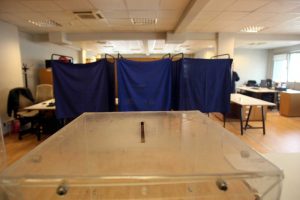
The first polls of the fall are identical to the last polls of the summer, which were identical to those throughout the spring. And yet. This “unchanged landscape,” as it is described in political analysis, is at the same time a “fluid landscape.” Everyone reads the polls — both those who believe them and those who do not. But no one knows what the ballot box will produce, whether on May 16 — one of the dates considered “the most likely” — or on any other Sunday in the spring.
Before that will come a “harsh winter,” already being described by the prime minister as he builds the profile of the “great helmsman.” The weight of that winter is being forecast as a storm of rising energy prices, Greek-Turkish tensions and international relations. It is being presented dramatically in order to sharpen the dilemmas. “Mitsotakis or Erdogan,” “hope or adventure.” Me or the alternative shamans of politics; me or the charlatans promising wellness through bargain programs from the University of Honolulu. The dilemma has been turned into something more fevered by the salt. Why?
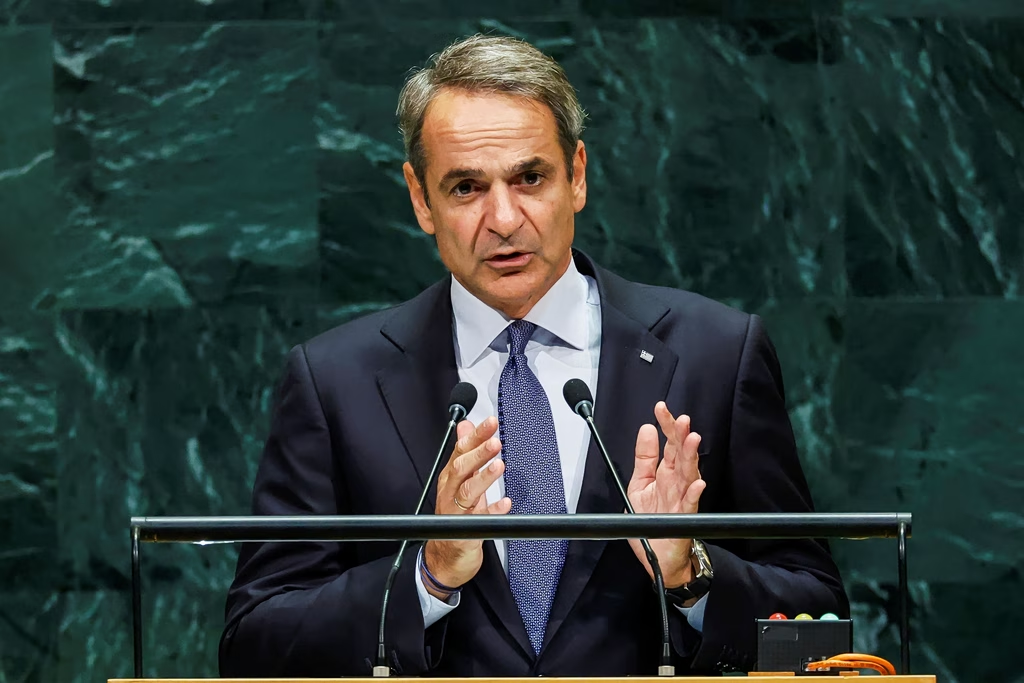
In the 2019 elections, Kyriakos Mitsotakis asked for two terms to “change the country.” Today he is asking for a third, with the country he said he would change still absent. The prime minister is not running a campaign centered on the government’s record, but on the dangers that lie ahead. The storm is coming — who do you want at the helm? The reason the dilemma has been chosen over the narrative is that everything holding the country back is still here. Corruption, parasitic networks of influence, hidden mechanisms of illicit enrichment, and unregulated areas that put lives at risk and sometimes claim them. The gap between a privileged caste and a mass of people left in limbo has widened, while a generalized sense of fatigue is reflected in a tired government.
How can fatigue be covered up? How could it be forgotten? Through confrontation. The prime minister is creating, beyond the walls of his own party, an anti-Mitsotakis front, placing Alexis Tsipras and Nikos Androulakis, along with anyone else readily available in the opposition, in the same camp. At the same time, however, an anti-Mitsotakis current is flourishing inside the walls. Former prime minister Antonis Samaras has openly expressed it since his removal from the government, presenting himself as representing the “party of the broader political camp” against the “Mitsotakis party.” As the “authentic New Democracy” against the “New Democracy of PASOK.”
The helmsman and the front are measured again and again in the polls like needles stuck in place. Neither can form a government: one is far from a majority, while the others are divided into many different camps. What remains to be measured is the underlying current, but even then there is no certainty that the polls will reveal all the currents running beneath the surface. Nor is there any certainty that the polls will reveal the franchise party of the criminal organization that Golden Dawn was, and of its successor after his release from prison. What kind of parliament will the ballot box produce, and how many new elections will it give rise to?
The Presidency of the Republic has consistently been signaling the same concern over post-election stability. It is the same SOS signal the president issued in November 2025 in an interview with To Vima and Antonis Karakousis. Even more strongly, sources close to the presidency are now highlighting the risk of a third round of elections that could plunge the country into a quagmire of instability and political deadlock.
The concern is heightened by the tone of the election campaign — by both its subject matter and its tactics. Between helmsmen, fronts and currents staring each other down on the political battlefield for a fight with no tomorrow, the political system is hurting itself. This is happening because the party leading the polls is trying to manage its position at a “zero point”: the distance separating it from the others is large, but so is the distance separating it from an outright majority. Some of the more moderate figures within the party put the issue this way: “The real question after the election is whether Mitsotakis will be the source of good or evil.”