 Μake us preferred on Google
In recent days, the Greek Orthodox Churches experienced a unique moment of consensus. By publicly supporting Archbishop Symeon of the Monastery of Saint Catherine at Mount Sinai, the Ecumenical Patriarchate of Constantinople, the Patriarchates of Jerusalem and Alexandria, and the Churches of Greece and Cyprus rallied around the belief that the monastery’s historic continuity could only be secured through a compromise between its monastic brotherhood and the Egyptian state.
It was also a moment of realpolitik. The robed servants of God did not place their hopes in a “miracle” or, for that matter, in some “national right” of the kind that has often blinded secular powers in the past. Instead, they reached a consensus within the constraining framework imposed by the legal dispute and the decisions of the Egyptian courts.
After a trial at first instance and a second hearing before the Ismailia Court of Appeals, the case — and the final ruling — was now in the hands of Egypt’s Court of Cassation. Once the ruling was announced, there would be no turning back.
The deadline was October 24. Gathering information over the previous months, To Vima was able to establish that the monastery’s future was hanging by a thread. Egypt’s Court of Cassation had postponed the announcement of its ruling four times to allow time for an agreement between the monastery and Egypt that could avert a judicial decision. The court had indicated that there would be no fifth postponement.
Reports also suggested that the country’s senior judges were following the hard line taken in the first-instance ruling. The monastery’s historic character would be altered, its course would change, and a UNESCO World Heritage Site that had remained what it was for 15 centuries would cease to be the same.
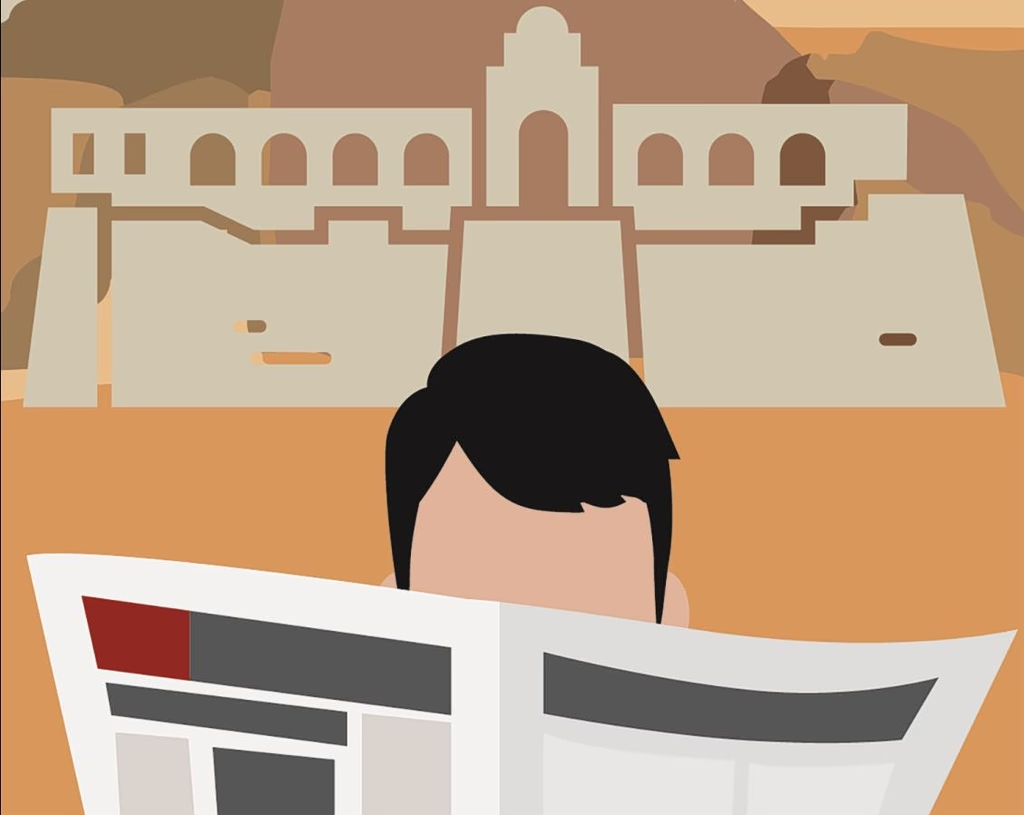
On October 4, To Vima published a front-page headline reading “20 Days Will Decide Sinai’s Future.” The newspaper’s editorial team chose the headline to highlight the critical nature of the moment without undermining the difficult negotiations that could lead to an agreement, while also bringing to readers and the wider public the people and events that until then had remained largely behind the scenes.
It also sought to put before readers — and ultimately leave to their judgment — the roles, aims and methods of the individuals seeking to play leading roles in the story.
Ultimately, this is a story of Byzantinism. As it became clear, the monastic brotherhood was living through a period of division. A small but nonetheless historically weighty “national division” was taking place there, finding supporters among those divided over the issue here in Greece.
Divisions are not all the same, but the pattern of division is. Its anatomy is as simple as a binary choice. A world of prudence, moderation and pragmatism is often confronted by a world of maximalism, confrontation and grand nationalism. The former is usually denounced as “concessionist,” while the latter is systematically presented as “uncompromising.” But how real is this distinction?
In its October 11 edition, To Vima returned to the issue of the Monastery of Saint Catherine, publishing the full ruling of the Ismailia Court of Appeals, translated by the Greek authorities. A new element had come to light: according to the Egyptian judges, the monastery’s former archbishop, Damianos, the leader of the “uncompromising” camp, had “admitted” that the monastery’s properties belonged to the Egyptian state.
Both To Vima reports prompted written objections. The newspaper’s offices first received a letter of protest from monks of Mount Athos who followed Damianos’ line rather than that of the Ecumenical Patriarchate, to which they are spiritually affiliated. This was followed by an extrajudicial notice from the former archbishop himself.
To Vima’s editorial team chose to respond to those protesting, thereby offering its full support to the newspaper’s reporter who signed the articles. It offered that support on moral grounds, even if it was not substantively necessary: the reports were positively assessed by the wider ecclesiastical community for their accuracy and credibility.
As the agreement finally appears to be nearing completion, the protests and positive comments converge on the same point: the editorial team and the reporter did their job properly. That is, after all, the work of the press.
Postscript. The job of the press is to publish, but also to take a position on events. The editorial team of To Vima supports the agreement. Primarily, this is because it would preserve the religious character of one of the oldest monasteries in the Christian world and a UNESCO World Heritage Site. Secondarily, it is to prevent another outburst of national humiliation if history were to be written differently…