 Μake us preferred on Google
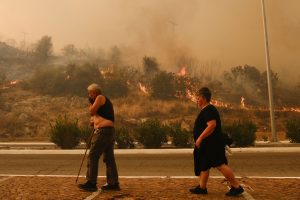
 Whenever I pass through a burned area, I feel as though I have lost a relative. Fire does more than blacken trunks and strip the earth; it takes lives, homes, animals, crops and refuges; it destroys places that are bound to memories, and countless small stories that will never appear in any official account.
This time, for me, the charred zone has a name: Psatha. It is where I grew up, where I spent my summers, where I fell in love. It was not just a natural landscape that was consigned to the flames; it was a chunk of my personal geography—a place still inhabited by memories, faces and different versions of myself. Perhaps this personal loss allows me to get a firmer grasp on something bigger: behind every burned landscape, there is someone who sees beyond the ash to a part of their life—their selves—that will never be quite the same again. Because every burned place is someone’s Psatha.
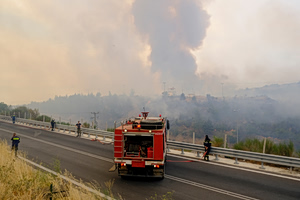
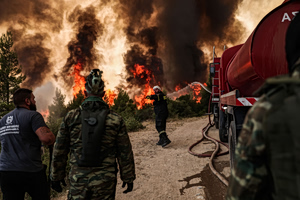
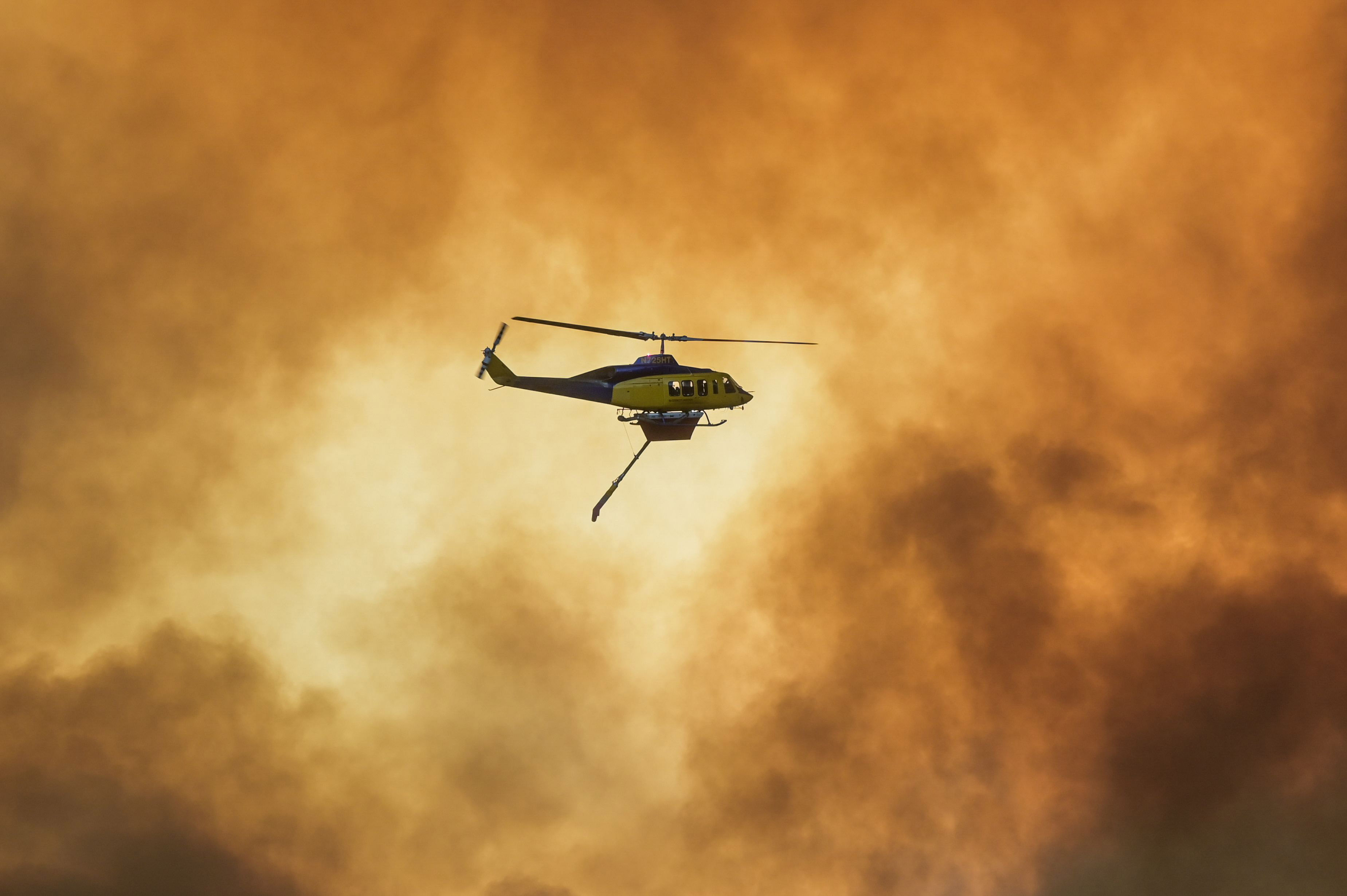
But it’s not just places we are losing; human lives are also being lost. In a matter of days, five people on the front line lost their lives. Two firefighters in Krya Vrysi, Rethymno; one firefighter during the operation in Gytheio; and two crew members of a firefighting helicopter in Attica. Five people sent out to protect lives, property and the natural environment never came back. And with the ash came the same haunting question: what is it we are witnessing? A series of unforeseeable natural disasters, or the recurring exposure of a system that knows its weaknesses, yet continues to behave as though it has been caught by surprise?
Still, the victims of this latest wave of wildfires extend beyond the five people who lost their lives. Because everyone who returned to burned-out homes is a victim, too, all those who lost their income and their land, who watched a lifetime’s efforts go up in smoke. So, too, are the animals that were burned, trapped or displaced, and the ecosystems that will take years—perhaps decades—to recover. Not every loss is inscribed on the official list of the dead, but each leaves a deep hole in the lives left behind.
High temperatures, drought and strong winds make wildfires more frequent, faster-moving and harder to contain. The climate crisis is real, and it is changing the behavior of fire. But that does not suspend accountability, nor does it absolve a state that knows the danger yet continues to treat disaster as an unforeseeable exception. It explains why the threat is growing; it does not explain why prevention continues to lag behind, or why the same operational gaps keep reappearing.
Civil protection does not begin when flames appear on the horizon. It begins in winter: with land clearance, with the maintenance of forest roads and firebreaks, with inspections of utility networks, with risk mapping, with adequate staffing, training and a clear allocation of responsibilities. It begins when the state, regional authorities, municipalities, forestry services and Fire Service know not only what must be done, but who must do it, using which resources and within what timeframe. When these remain fragmented, the outcome is not merely a ‘difficult fire season’. It is a system that proves inadequate in practice, even if its planning looks complete on paper.
This vulnerability is compounded by illegal construction, particularly in the fringes where residential areas meet forests. Narrow roads, blocked access points, inadequate escape routes and buildings inside high-risk zones impede both firefighting operations and the evacuation of residents. Responsibility, however, cannot be placed solely on private citizens. For decades, the state tolerated, regularized or legalized a reality it knew to be dangerous. It collected fines, handed out promises, and turned illegal building into an electoral transaction. But when the fires begin, it pretends to be taken aback by the planning chaos it allowed to become entrenched.
After every major wildfire, the state repeats the same ritual: it declares itself surprised, invokes unprecedented conditions, promises an investigation, and waits—for time to pass; for the news cycle to move on; for public attention to be exhausted; for the promise of accountability to disappear into files, overlapping jurisdictions and protracted procedures. Impunity is not just the absence of a judicial conviction—it begins when disaster becomes a story with an expiry date, and continues when the state fails to implement findings, reform its structures, or prevent the same mistakes from recurring. When no disaster substantially changes how the system works, the next one can no longer be described as entirely unforeseeable.
The tragedy at Mati, where 104 people died, remains the deepest wound in the modern history of Greek wildfires. It exposed, in the most painful way possible, the absence of an organized evacuation plan, inadequate coordination, confused lines of responsibility, and a failure to manage escape routes. The upgraded 112 public alert system would become fully operational later, and it was a necessary institutional correction. But Mati cannot be turned into a conveniently low benchmark for declaring every successive government a success. A wildfire is not a victory for the state simply because it claims fewer than 104 lives. The state’s obligation is not merely to avoid another Mati; it is to prevent every death that could have been avoided.
The 112 system has saved lives, and timely evacuation is an essential part of any serious protection plan. Criticism of its use should not become a pretext for discrediting it. Yet there is a crucial difference between a lifesaving tool and a political alibi. A warning is not protection, and an evacuation is not a victory. It is the last resort, when fire poses an immediate threat to life and the window for protecting the place itself has closed.
Every warning derives its effectiveness from the public trusting that it concerns a real, immediate and specific danger. When alerts are issued too frequently, cover excessively broad areas, or fail to distinguish clearly between simple preparedness and immediate evacuation, warning fatigue becomes a genuine risk. People may grow accustomed to the alarm, delay their response, or cease to distinguish those messages that truly require them to leave at once. Indiscriminate use of a lifesaving tool may ultimately weaken its credibility.
Even when the message arrives at the right moment, the critical question remains: has the state planned how, exactly, people are supposed to get to safety? An evacuation order is not an evacuation plan. A plan requires safe and open routes, a clear destination, traffic management, transport for the elderly, the sick, and people without their own vehicles, and provisions for anyone unable to leave home without assistance. A message cannot open a blocked road, prevent panic, or carry someone who has no means of escape to safety. If none of this is provided for, the state is not organizing an evacuation; it is issuing an order and leaving citizens to work out how to survive on their own.
Once a 112 alert has been sent, it is easy to give the impression that the state has fulfilled its duty: the citizen was warned, so the buck is now with them. If they do not leave in time, there’s a risk the debate will focus on their disobedience rather than what came before—or what was never done at all. A record showing that the state issued a warning does not prove that it provided protection. The 112 system cannot serve as a public-relations certificate stating that the state has discharged its duty, nor as a means of converting a collective failure of prevention and planning into the individual responsibility of the citizen.
The state’s first duty is to protect life. But it cannot pretend that this duty ends with preserving a citizen’s biological existence. A person’s life includes their place, their home, their work, the animals they refuse to abandon, their memories, and the labor of decades. The order to ‘leave now’ may be absolutely necessary at the critical moment. On its own, however, it is neither prevention, nor firefighting, nor recovery. And it certainly cannot become the central story of a state’s success, when those evacuated in time return to ruins.
It would be dishonest to diminish the struggle of our firefighters, volunteers, pilots, residents and all those who fight fires in conditions that often exceed human limits. Precisely because these people risk their lives, the state has an even greater obligation not to send them out to fill, through self-sacrifice, the gaps left by failed prevention and planning. Their heroism must not become a permanent substitute for a functioning system.
A fire may begin through negligence, a criminal act, a technical fault or a natural cause. Yet the scale of the destruction is not always determined solely by the moment the first spark was ignited. It is also the sum of everything neglected beforehand: inspections that never took place, forests left unmanaged, illegalities tolerated, resources that proved insufficient, and responsibilities dispersed among agencies. We cannot prevent every wildfire. But we can refuse to accept that, every summer, we will count the dead and watch the country retreat before the flames. That is not a law of Nature.
Sending a message does not in itself amount to civil protection. A state cannot measure its success solely by the number of people it managed to evacuate when the aftermath still includes dead citizens, exhausted firefighters, trapped animals, burned homes and an environment that will take decades to recover. How many more ‘successful evacuations’ will it take before we admit that a country evacuated every summer is not a country that is truly protected?