 Μake us preferred on Google
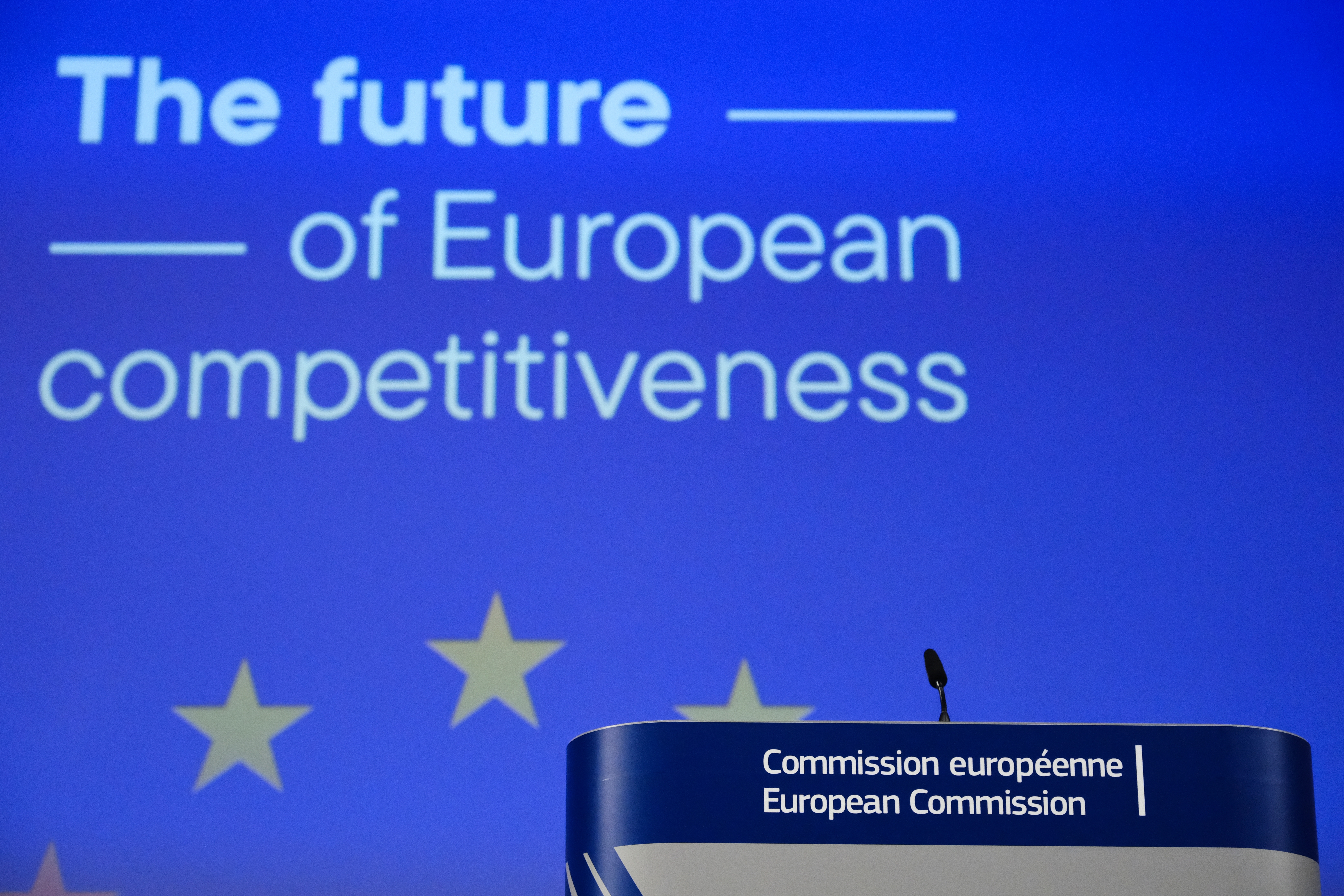
 In her State of the Union address a few weeks ago, Ursula von der Leyen returned to a problem that has become central to Europe’s economic debate: how to turn the size of the European Union (EU) into actual economic scale. The Commission’s competitiveness agenda now includes completing the overhaul of the Single Market, tackling national “gold-plating”, developing capital markets, accelerating permitting and simplifying parts of the banking framework. The general direction is no longer difficult to identify.
Certainly, there is no shortage of policy activity. By the end of August, the European Parliamentary Research Service counted 211 initiatives under the Commission’s prosperity and competitiveness priority, around half of the 423 initiatives on its monitored agenda. Of these, 156 had been tabled and 47 adopted.
That scale of activity changes the question. Europe does not primarily need another diagnosis of its economic weaknesses. Nor is the main challenge to add further initiatives to an already crowded agenda. The harder task is to identify which measures can materially affect investment, productivity and firm-level growth, secure the political agreements needed to carry them through, and ensure that separate initiatives work as parts of a coherent European market. Policy design matters, but so do political feasibility, sequencing and implementation.
The ‘One Europe, One Market’ roadmap is an attempt to impose greater discipline on that process. Agreed by the EU institutions in April 2026, it sets targets for legislative proposals and agreements through the end of 2027, with quarterly reviews of progress. Its agenda ranges from removing Single Market barriers and simplifying rules to energy prices, trade and digital transformation.
The same concern is visible outside the EU institutions. The ‘Rhine Group’, founded this summer by Mario Draghi and Stripe co-founder Patrick Collison, brings together figures from business, government and academia around Europe’s competitiveness agenda. Its launch statement argues that Europe is “increasingly at the mercy of external events we do not control”. Its creation, two years after the Draghi report, can be read as another indication that the debate is shifting from diagnosis towards the political and institutional conditions required for implementation.
The scale challenge is particularly visible in technology. As the Draghi report noted in 2024, only 4 of the world’s top 50 technology companies were European, while the EU’s position in advanced technologies expected to drive future growth was weakening. This is one reason why access to growth capital has become such a prominent part of the competitiveness agenda. Commission proposals also target some of the legal and institutional barriers around scaling. ‘EU Inc.’ would provide companies with an optional harmonised corporate legal regime across the Single Market, while the ‘European Innovation Act’ would seek to improve the conditions for financing and bringing innovation to market.
One of the most concrete tests is finance. The ‘Scaleup Europe Fund’ targets around 5 billion euros in capital, anchored by a 1 billion euro contribution from the European Commission and complemented by other investors. It is intended to back European technology companies at the stage where financing needs become much larger and access to growth capital can determine where a company expands. The Fund is managed independently on commercial terms. In August, its manager announced its first investment, co-leading a financing round for the Finnish satellite company ICEYE.
This marks a shift in emphasis. European innovation policy has often concentrated on research, early-stage financing and the creation of start-ups. The Scaleup Europe Fund addresses a different part of the problem, i.e. what happens when successful European companies need substantial capital to grow.
Yet finance alone cannot create European scale. A company may raise a large funding round while continuing to operate across markets with different administrative practices, uneven implementation of common rules and fragmented financing channels. Capital can help a company expand. It cannot, by itself, make the Single Market function as one domestic market.
The same distinction matters for simplification. Lower compliance costs can benefit firms, particularly SMEs. The Commission has made simplification a major part of its competitiveness agenda and has coupled it with a focus on implementation and enforcement. But the number of reporting requirements removed is an incomplete measure of success. For a company operating across borders, predictability and consistent application of common rules also determine the cost of doing business.
This is where the different parts of the EU’s competitiveness agenda meet. Growth finance works better when firms can expand across an integrated EU market. Capital-market reform matters more when savings can reach productive investment across borders. Lower energy prices affect the viability of industrial investment. Simplification has greater economic value when it reduces cross-border fragmentation and makes common rules easier to apply consistently across Member States. The policy challenge, then, is less about adding another EU legislative act than about making existing instruments reinforce each other.
The timetable also gives this debate a particular relevance for Greece. Greece will hold the Presidency of the Council of the EU from July to December 2027, during the final six months before the ‘One Europe, One Market’ roadmap’s end-2027 deadline. Of course, the Presidency will not determine the outcome of these reforms on its own. It will, however, chair much of the Council’s work at a point when competitiveness files are expected to be approaching agreement or implementation.
By then, progress should be judged in practical terms. Can a European company finance its next stage of growth more easily? Can it expand into another Member State with fewer operational barriers? Are capital and energy markets more integrated? Do common EU rules produce more consistent conditions in practice?
The EU now has a substantial competitiveness agenda, a timetable and increasingly concrete financial and regulatory instruments. The hard part is making them work together and sustaining the political agreements needed to implement them. The real measure of success will be whether the EU’s legal and economic architecture allows European companies and start-ups to operate, invest and grow at European scale.
Dr. Apostolos Samaras holds a Ph.D. in European Law from the Law School of the National and Kapodistrian University of Athens. He is a Research Fellow at the Hellenic Foundation for European and Foreign Policy (ELIAMEP).