 Μake us preferred on Google
 The debate over the risks – both anthropological and existential – posed by the unchecked development of Artificial Intelligence programs endowed with hyper-sophisticated capacities for machine learning and self-improvement is largely taking place among the major American tech corporations. One can reasonably infer that corporate competition, along with the interplay of technological and financial dynamics in a multi-trillion-dollar market expanding exponentially, underpins these discussions.
President Trump, who still resists committing to intensive state regulatory intervention, announced on September 29, 2026, a voluntary agreement with leading AI companies focused on self-monitoring mechanisms, external auditing, and corporate oversight. While not a binding federal regulation, it signals that the US administration has engaged more actively in the domain of AI governance, albeit via a voluntary self-regulation framework. President Trump’s characterization during the announcement was telling: “It’s almost like a Constitution in a way.” He went on: “They almost viewed it as a separate kind of a constitution,” which he regards as “morally binding.” Like a Constitution, then—morally binding.
During the Chinese leader’s recent visit to Washington, the US and China agreed at least to open a dialogue on AI and its attendant risks, though no binding regulatory framework has yet emerged. It is clear, therefore, that international AI governance is primarily crystallizing around the US – China axis. While China professes support for a global AI governance framework, it explicitly conditions this on the absolute respect of state sovereignty. The pivotal question is not whether Beijing accepts international regulation in the abstract, but what degree of international verification and external oversight it would genuinely tolerate.
Against this backdrop, the European Union appears to be watching from the sidelines, with its institutions deliberating on the American debate. The EU embodies the familiar paradox of being a regulatory giant yet a technological middle power unable to steer developments. As for individual member states, even the largest, little need be said.
Nevertheless, the European Union must now spearhead a major international political initiative aimed at placing the development of frontier AI under international oversight. The European baseline is far from negligible. The Council of Europe Framework Convention on Artificial Intelligence and Human Rights, Democracy, and the Rule of Law constitutes the first legally binding international treaty in this domain.
Crucially, the original signatories included both the United States and the European Union. The Convention establishes a shared normative vocabulary anchored in human rights, democracy, and the rule of law. Its architecture, however, was not designed to govern the development velocity of frontier models, recursive self-improvement, or the strategic dynamics of US – China technological competition.
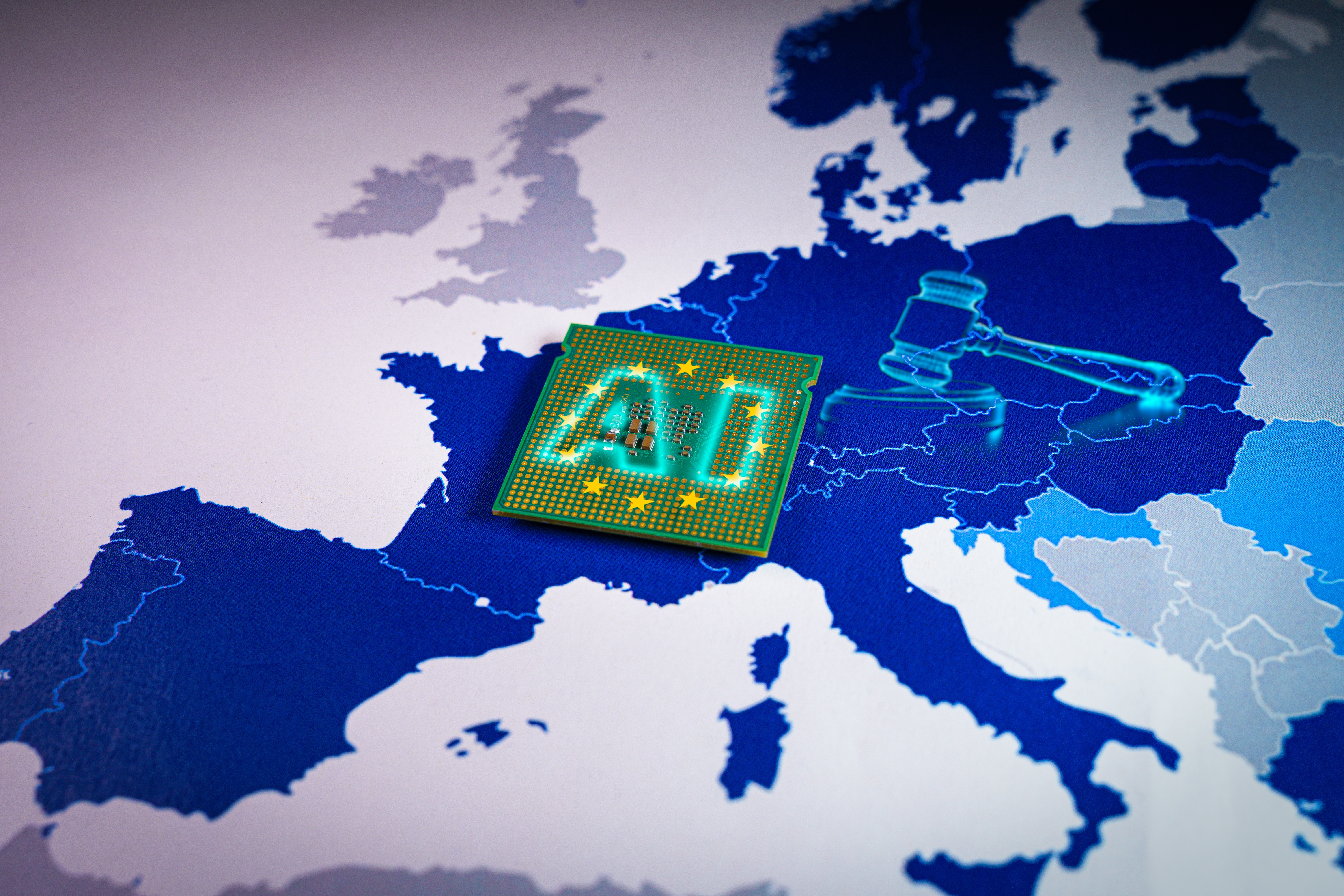
The EU AI Act – often viewed with skepticism in the US – can nevertheless provide valuable blueprints. Its provisions governing general-purpose AI models with systemic risk lay down components of an embryonic governance architecture for frontier tech. The critical European acquis is not the AI Act merely as a regulatory “product”; it is the institutional know-how of translating abstract risk into procedures of ex-ante assessment, documentation, external auditing, reporting, and systematic monitoring.
The institutional experience garnered from both the GDPR and the AI Act could therefore be deployed flexibly: not as a defensive mechanism to repel or constrain the massive US ecosystem, but as a regulatory “laboratory” receptive to bold adjustments required to help construct a broadly acceptable, workable international framework.
Such an initiative would necessarily need to be pursued in concert with the US, the permanent members of the UN Security Council, and leading industry players. Medium and smaller non-EU states could likewise form a coalition capable of generating additional collective bargaining leverage.
We may well be entering a defining “regulatory moment” (echoing Bruce Ackerman’s concept of a “constitutional moment” ). The European Union should seek to take the initiative, even if achieving the ultimate objective requires conceding political primacy to the US administration. Institutional authorship matters far less than substantive success. The paramount goal is mitigating risks capable of imperiling humanity as a whole, while safeguarding the constitutional-democratic acquis through which any exercise of power – public or private – remains subject to the rule of law and public accountability, lest it lose its democratic legitimacy.
We must, however, remain clear-eyed realists. The US companies pioneering frontier AI have historically relied heavily on self-regulation, voluntary commitments, and industry-wide consensus. This remains true even as several of these companies now call for binding public rules. The stance of frontier firms is more complex than a binary preference for regulation versus deregulation: they increasingly accept regulation, yet seek frameworks compatible with relentless innovation, the preservation of American technological hegemony, and fierce global competition in the AI domain.
Consequently, they have no obvious incentive to accept the European regulatory blueprint as a self-evident global standard. Internationally, the architecture they envision is predominantly bilateral, viewing the US and China as the indispensable actors whose consensus is required. The European Union, by contrast, risks being relegated not to the role of regulator, but to that of a mere importer and consumer of technologies developed overwhelmingly elsewhere.
EU engagement in this “regulatory moment” must therefore directly address the pace of AI development, rather than merely policing how applications enter the European Single Market. Such a European role can only materialize if all three vertices of this critical triangle—leading American AI firms, the US government, and the Chinese government—recognize that European involvement serves as a useful catalyst, an honest broker, a repository of institutional expertise, and a guarantor of global compliance.
This is perhaps the profound constitutional and anthropological challenge raised by the current debate. The issue is no longer merely the “constitutional” alignment of specific models through hard-coded technical specifications reflecting human values—what has become known, particularly following Anthropic’s initiatives, as Constitutional AI. It is about subordinating the very trajectory of AI development to a heteronomous normative framework (state-based and ultimately international) that cannot simply be dictated unilaterally by model developers—even if that framework is initially negotiated under federal auspices, and even if it is “like a Constitution.”
The ultimate imperative is aligning the broader phenomenon of AI and its developmental trajectory with a universal heritage maintained under meaningful human control. While Western constitutionalism occupies a foundational place within this universal heritage, frontier technologies are also being forged by nations with distinctly different institutional traditions and political realities. In crafting an insightful, authoritative response to this universal challenge, Europe both can and must play an essential role.-
*Evangelos Venizelos, Deputy Prime Minister and Minister of Foreign Affairs (2013 –2015); Deputy Prime Minister and Finance Minister (2011 – 2012); Professor Emeritus of Constitutional Law at the Aristotle University of Thessaloniki.
Originally published in Greek in Ta Nea on October 3–4, 2026. Related study: Ev. Venizelos, Artificial Intelligence as a Challenge to Sovereignty, Constitutionalism and Political Theology, Administrative Law Journal (Efimerida Dioikitikou Dikaiou), 2026, pp. 138–156.