 Μake us preferred on Google
 If it would be easier, and less provocative, to say the human experience is difficult, and that we ought to try to make it easier. But how do we get to equivalence from there?
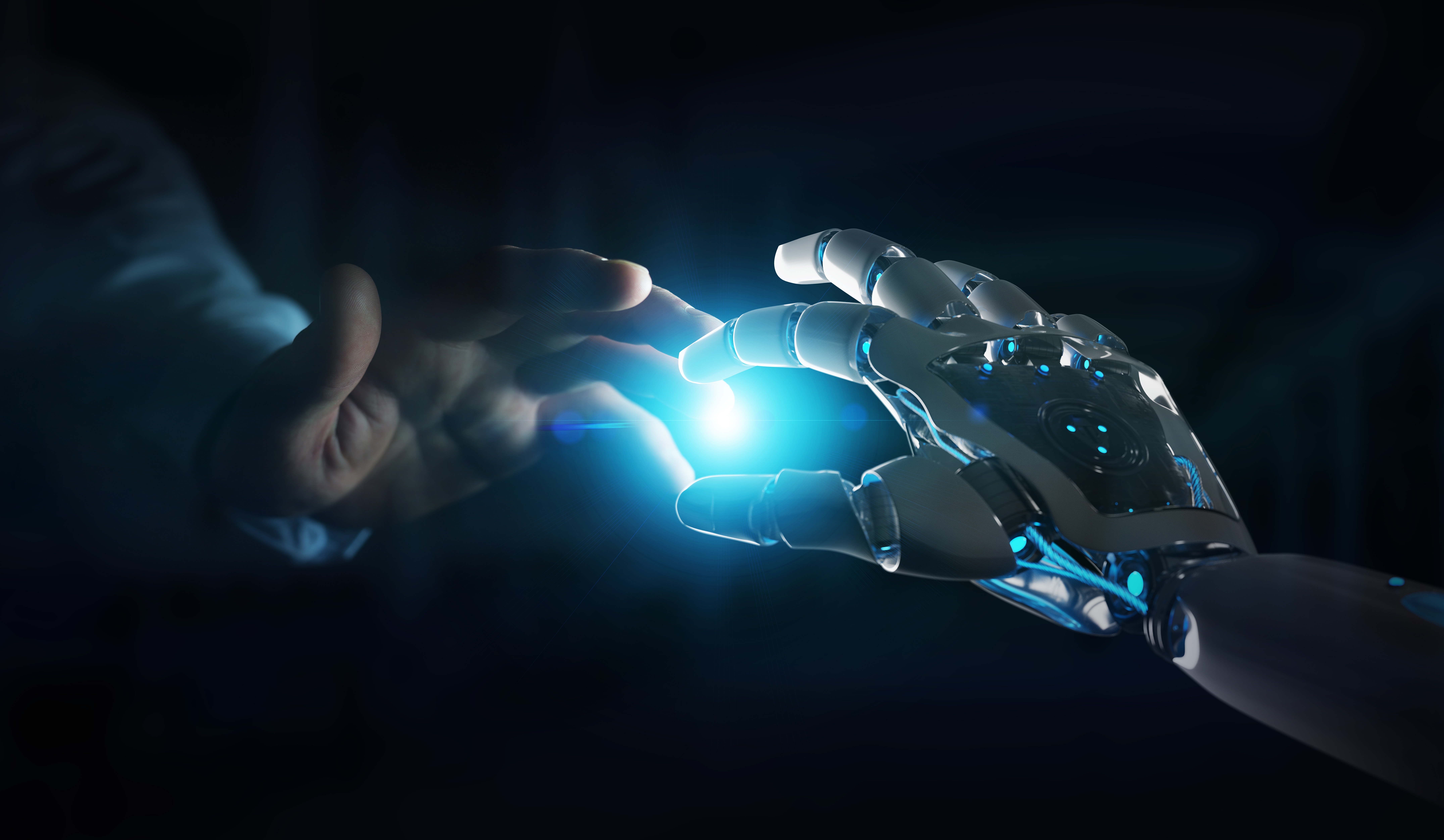
How do we arrive, for instance, at the belief that technological progress makes our lives ever easier—and is thus inherently good—and vice versa? Why is it taken for granted that the existence of an advanced chatbot which can find a solution to your every problem naturally (we really need quotation marks in there somewhere, but where? Around ‘naturally,’ ‘finds,’ ‘solution’, or all three?), without your having to do anything more than describe it, is a reality that improves your life? Why is it a given that instant access to music—to all music, wherever you are, whatever you are doing, to the point where you can task an algorithm with deciding what you like and playing it for you—enhances the musical experience? These questions are neither rhetorical nor ironic But I’m less taxed by what the answers may be than by why we don’t ask the questions more often.
It’s as if we’re permanently accelerating up a ramp (for a launch that never arrives) at a speed so dizzying, there simply isn’t time for complex questions. All the more so in the case of dubious questions which may conceal conservatism, technophobia, negativism or, more simply, inertia. But why is listening to a book better than reading it? Why is it better to have your house cleaned or to be cooked for than to clean and cook yourself? Why is it better to order something in than to go out and get it? Why is it better to watch something from your couch than from a cinema seat? Why is it better to see your SMS on your watch screen than to pick up your cell phone? Why is it better to save as much time as possible, down to the last hour, the last minute, the last second? Why?
Seemingly, so you can do something else with that time. So, what are you going to do with all that time you saved?
The reality is, you’ve no idea where it went. It’s as if your time is constantly dwindling. And because, metaphysically speaking, your time is forever counting down, you feel like dedicating less and less of it to things.
So an easier life does not equate to a better life. It may just mean a faster life. A life more easily measured in terms of productivity, growth and profit.
Still, an easier life can mean a life freed of friction, of toil and hardship, of waiting, patience, boredom, pain, worry, ignorance, ennui, insecurity, imbalance, frustration. One that spares us the things we consider undesirable. Life’s additional burdens, in other words. So we must, in short, believe our life is something else; something beyond these things. Something beyond this effort. That life is what we do when we aren’t wasting our time on these frictions. In which case, what is life? Is it the enjoyment of the things that don’t torment us? If that’s the case, then there’s very little actual living in our lives.
Perhaps the CEO of OpenAI was simply taking this logic of extremes to a more radical place when, a few days ago, he sought to allay concerns about the energy required by large language models: “People talk about how much energy it takes to train an AI model … But it also takes a lot of energy to train a human. It takes like 20 years of life and all of the food you eat during that time before you get smart.”
In Athens, record stores are opening. Spaces thick with the sharp scent of vinyl. With customers running their fingers over albums. Covers we’re used to seeing in small squares in the corner of a streaming service acquire substance and affect you in an entirely different way. They are really there, in your hands. You are touching a thing. And when you take it home, it’s yours to keep. This music belongs to you. You take the inner sleeve out, slide the record out, place it on the turntable, position the needle, lower it into a groove. You listen to one track, then the next. When the first side ends, you turn the record over. Efficiency-wise, utilitarianly speaking, you’ve added unnecessary extra steps to the process of consuming music and dramatically reduced your range of choices. You’ve lost time. You’ve increased the friction dramatically. You’ve made your life more effortful.
But there must be something else beyond this stripping, this algorithmization, of the human experience. Some clear space between the lubrication of the machine’s joints and the friction that warms human hands and bodies. Rather, there certainly is—just as it’s certain that, rather than marking retro nostalgia, the return to analog media marks a turn toward an experience with depth. One that isn’t aimed at instant gratification. Which recognizes that not everything can be equated to an itch that needs scratching, right here and now.
Which is why the future, which was once draped in futuristic fantasies, may no longer need to appear more advanced than the present to look better, and still less so more optimistic. It does not have to be more efficient or less effort. The future has an obligation to be more mature than the present, but always measured against the human scale. And maturity requires needs to be recognized and accepted. What we need is a more “difficult” future. With more friction.
Nick Cave, in addition to being a famous rock n’ roll star, has gained a different kind of celebrity since the tragic death of his 15-year-old son, in the light of how it changed him and how he presents to the world. In a public debate, in response to a question from the audience, he said: “[…] My rock n’ roll answer would be “fuck no! I don’t regret anything.” But the honest answer is that I regret a great deal, mainly because I now understand what life is… what life has to offer. […] I guess that’s what growing up is. The accumulation of regrets, disappointments, things that are transformed into losses. Maybe growing older is an accumulation of loss, which makes you a different person… Which makes you a real person, I think.”
By obsessively avoiding difficulty, friction, loss, we avoid something much more essential. Much more vital. It may not be easy for us to put a name to it. It may not be so easy for us to approximate with mathematical precision. But it is in painful proximity to what we like to call human life.