 Μake us preferred on Google
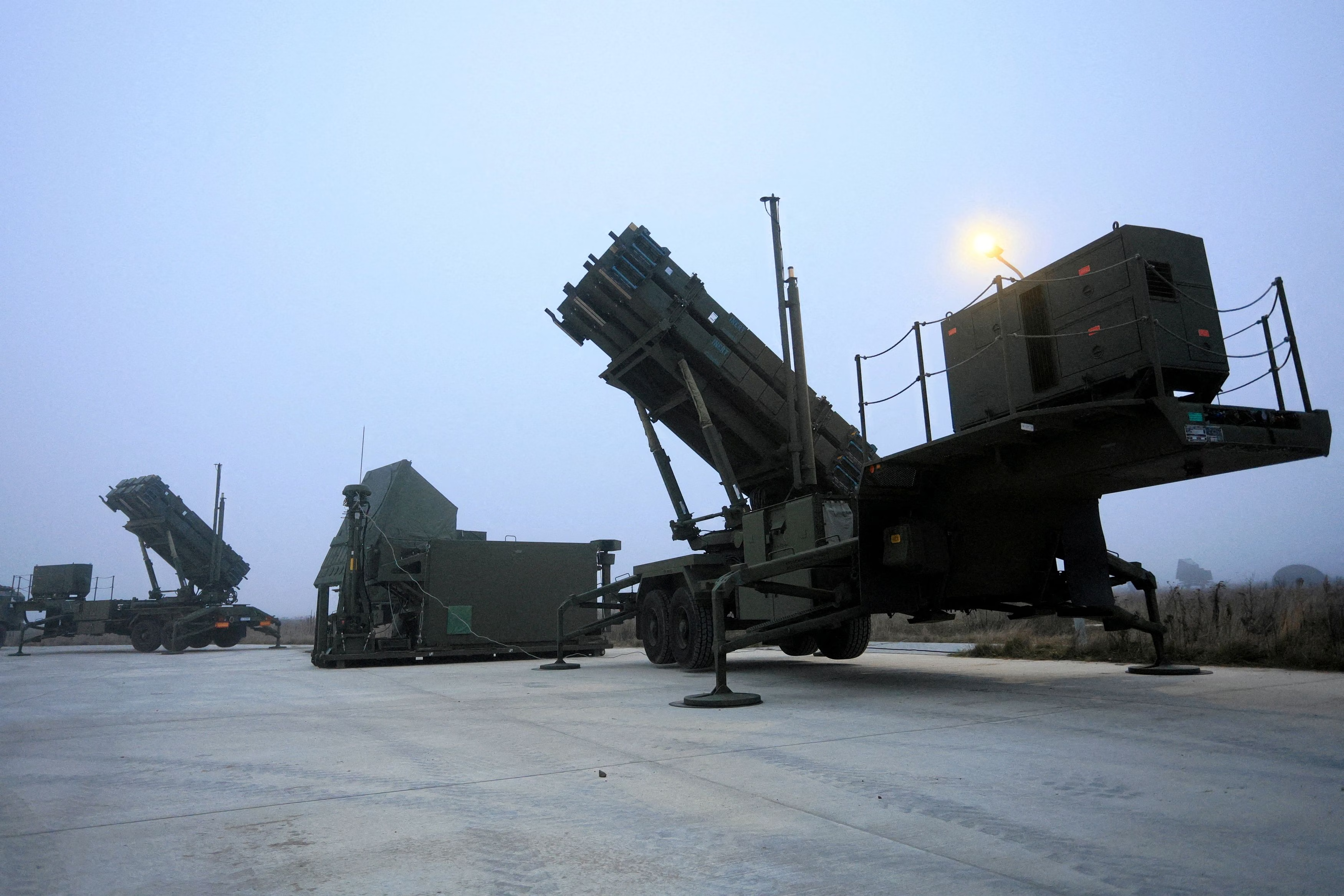
 Greece is among the countries facing renewed pressure to hand over Patriot air defense missiles to Ukraine, as a European shortage of interceptors threatens to leave Kyiv exposed to Russian ballistic strikes this winter, according to a Politico investigation published Monday.
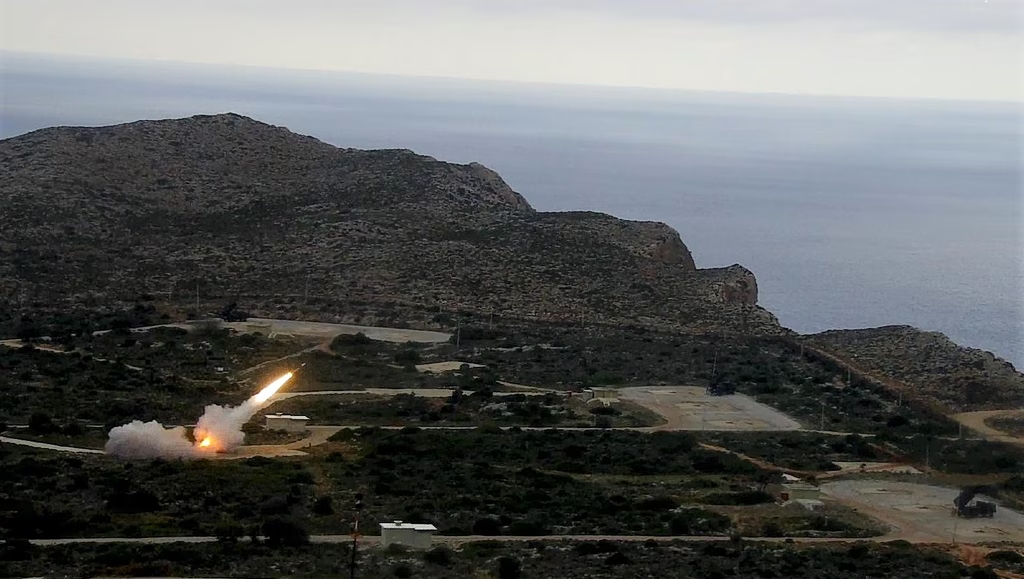
Greek media reported in July that Ukraine had asked Athens for as many as 200 older PAC2 interceptors. Since then Greece has not announced any Patriot transfers to Ukraine, unlike Germany, Poland and the Netherlands. Politico noted that Athens, which regards fellow NATO member Turkey as its greatest security threat, has kept its Patriots closer to home so far, with the exception of a Patriot missile battery in Saudi Arabia.
Politico reports that Kyiv and NATO Secretary General Mark Rutte have spent months privately pressing individual allies for whatever interceptors they can spare, part of what one senior official involved in the talks described to Politico as a broader effort covering “Spain, Greece and everyone in the world who has” Patriots.
A shrinking pool of donors
The shortage centers on Patriot PAC2 and PAC3 missiles, among the few systems capable of intercepting Russia’s fast ballistic weapons. Ukraine’s own air defenses are struggling to keep pace: Kyiv’s defense ministry said Ukrainian forces shot down only 29 of 195 Russian ballistic missiles fired in July, with another 40 failing to reach their targets.
Germany, one of Ukraine’s largest military donors, has already sent Patriot systems and missiles from its own stocks and arranged for the United States to replenish them. The Netherlands assembled an additional complete system. Poland confirmed in July it had released several PAC3 interceptors after requests from Rutte and senior U.S. commanders, a move Polish outlet Defence24 reported involved just five missiles and that triggered domestic political backlash over weakened national defenses.
Spain, like Greece, has kept its position vague. Prime Minister Pedro Sanchez confirmed in 2024 that Madrid was sending missiles to Ukraine but never disclosed the type or quantity, and Spain’s defense ministry declined to tell Politico whether it had recently been approached for more.
With donors closer to Russia increasingly unwilling to draw down their own defenses, attention has shifted toward Southern European countries, including Greece, that have contributed less to Ukraine’s war effort than Germany and Nordic donors, Politico reported.
Washington holds the key
Any resolution ultimately runs through Washington, since most PAC3 interceptors are built in the United States and their sale is subject to White House approval. President Donald Trump raised hopes at last month’s NATO summit in Ankara, Turkey, by suggesting Ukraine could eventually produce Patriot interceptors under license, a step that would reduce its reliance on scarce American deliveries. He has since walked that back, saying only that the idea is under discussion and calling the technology transfer “a hard thing to give away.”
U.S. Ambassador to NATO Matthew Whitaker told Fox Business that any production agreement would not be finalized before winter, and manufacturing the first missiles would take longer still. American stockpiles have also been strained by the war with Iran, and Trump has signaled Washington is now focused on rebuilding its own supplies rather than expanding donations.
“Everything depends on the U.S., and the lack of political will to help influences everyone else,” the senior official told Politico.
Ukrainian Foreign Minister Andrii Sybiha put it more starkly: “We are literally fighting for every missile.”
Athens has not said publicly whether it plans to respond to Ukraine’s request and according to Politico it has not responded to its request to comment.
This article draws on reporting first published by Politico on August 10, 2026.