 Μake us preferred on Google
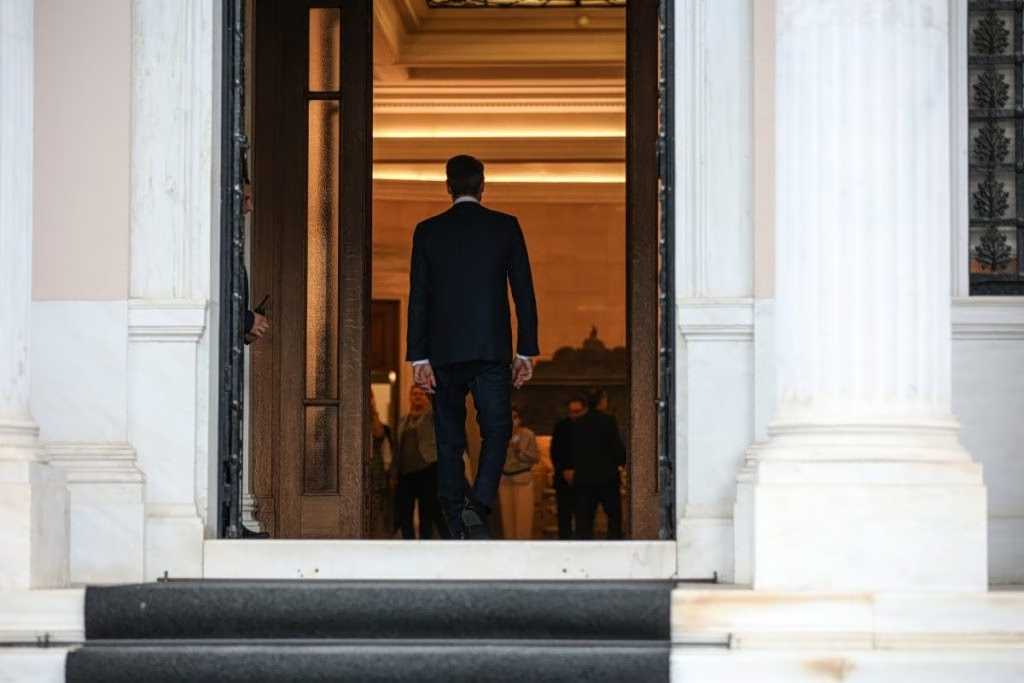
 Prime Minister Kyriakos Mitsotakis misses no opportunity, even when abroad, as he was in the United States in recent days for the annual U.N. summit, to proclaim his goal of winning an outright parliamentary majority for his party in next spring’s elections. He insists that it is the only rational choice for the country and its citizens amid international economic instability and geopolitical uncertainty.
Yet in private conversations with prominent political and business figures, he is said to acknowledge how difficult that goal will be. He reportedly does not hide the fact that, at New Democracy’s current level of voter support, winning a third term with an outright majority is practically impossible.
He recognizes the fatigue and political wear from what is now eight years of New Democracy government. He can also see that public expectations have not merely fallen, but are giving way to complaints and dissatisfaction among much of the population.
That may be at odds with the prevailing international view of Greece’s economy, but it is the present reality. As one experienced political observer puts it: “The mood is subdued. People are literally grumbling in the street, without necessarily expressing their anger forcefully, about high prices, unbearable fuel costs, high rents, prohibitively expensive housing, wages that are not enough, and the wealth from much-touted growth that is accumulating among a select few rather than being shared more widely. But they are seething inside, and no one can predict how they will behave at the ballot box.”
Mitsotakis’ political cards
Against this backdrop, Mitsotakis is playing the stability card, emphasizing restraint, patience and the attraction of investment and international investors. He reminds voters of the hardships of the previous major economic crisis, as well as what he portrays as the illusions and false assumptions of his predecessors. Their record forms the basis of his defense of his electoral aims.
According to accounts of his private remarks, this is the approach he is taking into the election. He has chosen Alexis Tsipras and the Greek Left Alliance as his main opponents, believing that a new version of the anti-SYRIZA front could bring disaffected conservative and centrist voters back to New Democracy. He hopes to achieve an acceptable level of party unity and voter support both in urban centers and in the regions of Greece where populations and economies are shrinking.
But the plan has weaknesses. The energy storm affecting European economies is unlikely to subside, as the wars in Ukraine and the Middle East are unlikely to end soon. Nothing guarantees that fuel and electricity prices will fall by next spring’s election, bringing relief to people who are genuinely struggling. On electricity in particular, critics say the chosen subsidy for PPC’s fixed-rate plans is ineffective and has stifled competition. Some also argue that PPC is not applying it consistently and is putting procedural obstacles in the way of customers who want to switch plans quickly.
At the same time, elevating Tsipras to the role of Mitsotakis’ principal opponent does not, for now, appear to be producing the desired result. New Democracy’s support has not surged, nor has the Greek Left Alliance generated a wave of enthusiasm among voters. As Kostas Laliotis often says, Tsipras’ newly formed party has yet to build organizational ties with Greek society and is not in a position to recover the influence SYRIZA developed over the years. “Look at how small the gatherings organized by Tsipras and his party officials are outside Athens, and you will understand its weakness,” the veteran PASOK figure says.
Under these circumstances, an outright majority will be hard to achieve. New Democracy’s loss of voters to the populist and nationalist right, influenced in part by the broader European shift toward similar parties, will not be easy to reverse. Its pursuit of centrist voters will run up against PASOK’s apparent resilience, rooted in its continuing ties with local communities.
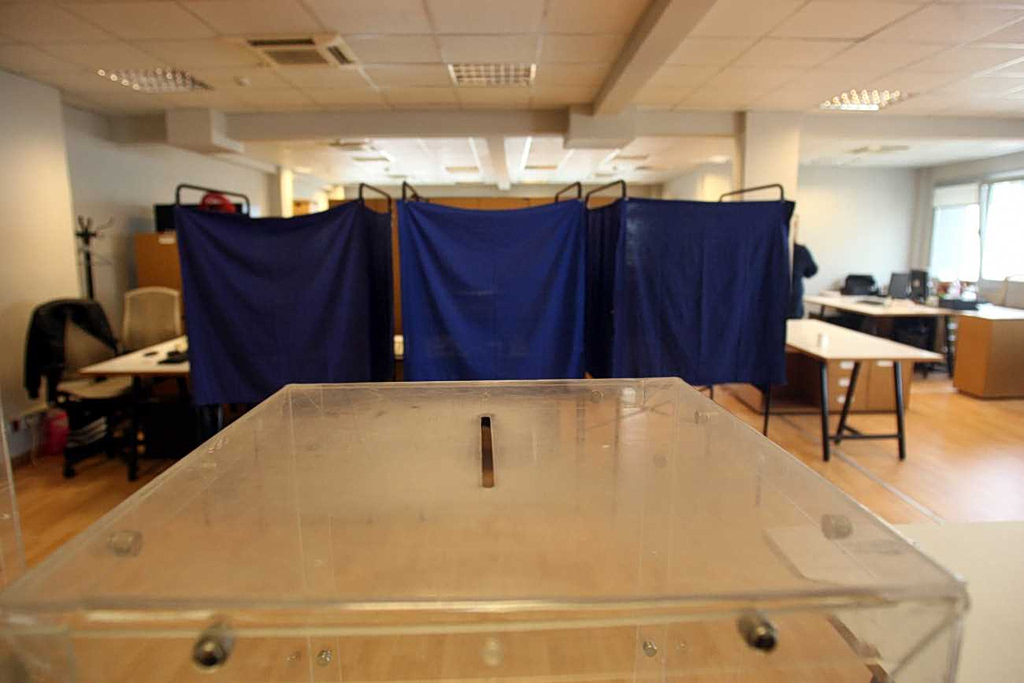
This is where scenarios for cooperation after the election come into play. All parties reject them during the campaign, but the results, if not of the first election, then probably of a second, may force them to reconsider. Much will depend on the first result.
The higher New Democracy’s share of the vote, the stronger the incentive to hold a second election roughly a month later. If Mitsotakis wins more than 30% in the first vote, he will move immediately toward a second, calculating that a campaign focused on stark choices could bring him close to an outright majority. Alternatively, he might need only a small number of lawmakers to secure one, either by cooperating with smaller parties or attracting members of Parliament from other parties. In recent years, lawmakers’ ties to their parties have proved less than unbreakable.
If New Democracy receives less than 30% and Tsipras comes second, the most likely outcome in a second election is that both will gain support, making it even harder to form a government. An exception would be if PASOK won a substantial share of the vote and enough seats to support a coalition with New Democracy, something its leadership firmly rejects.
Under the less likely scenario, based on current polling, that PASOK finishes second, the result could change dramatically in a second election. Some believe there could be upsets like those seen in the most recent municipal elections in Athens and Thessaloniki, where the underdogs won.
A “party truce”
If none of these scenarios materializes and an inability to form a government produces a complete political deadlock, another idea has recently entered the discussion: a “party truce.” With Greece approaching its presidency of the European Union, the parties could form a coalition government made up of prominent figures capable of credibly managing the presidency’s work. According to sources, the scenario has been brought to Mitsotakis’ attention.
The possibility of a political deadlock also continues to concern the office of the president of the republic. President Constantine Tassoulas is trying to ward off a third election and believes that the voters’ verdict will compel the formation of a coalition government. As he often tells people he speaks with: “After the pre-election refusals to cooperate comes the momentous process of the election, the expression of the people’s will, and its results and demands, which no party or leader can ignore.”