 Μake us preferred on Google
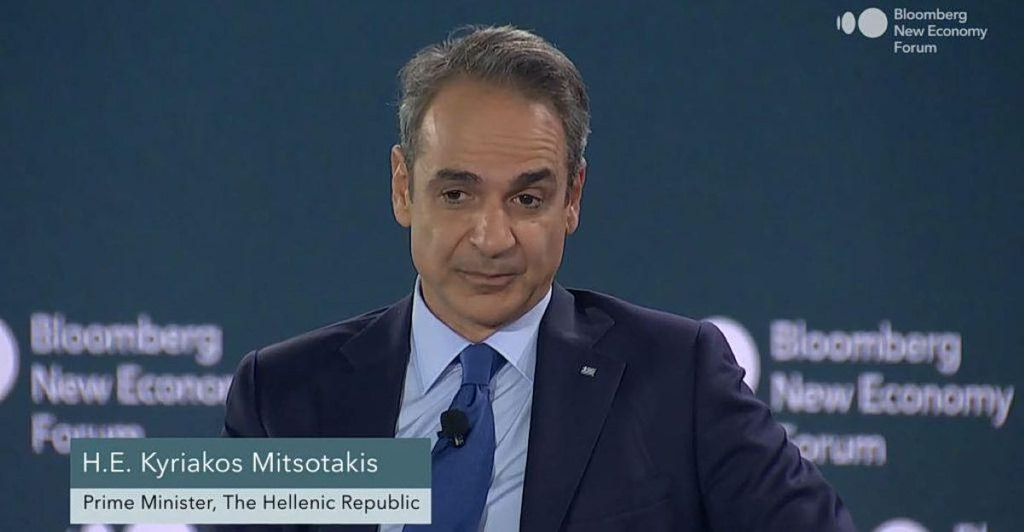
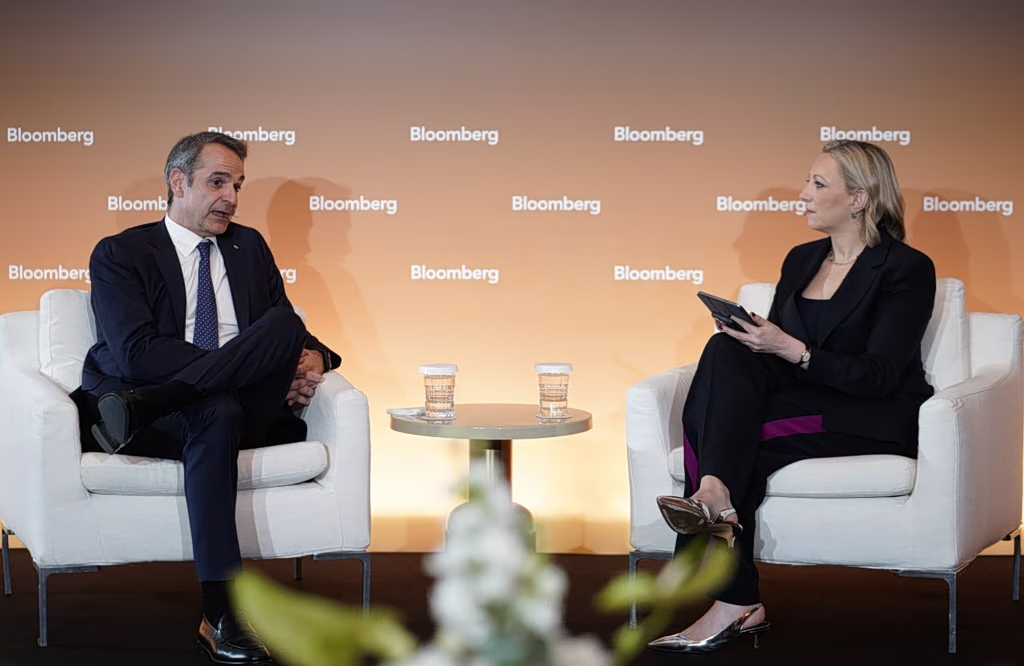
 Greek Prime Minister Kyriakos Mitsotakis called for global action to preserve freedom of navigation, warned against tolls on open waterways and urged Europe to play a more active role in the Gulf, while also making the case for Greece as an increasingly attractive destination for international investment, speaking during an interview with Bloomberg TV.
Appearing on Bloomberg’s “Surveillance” program that was broadcast on Friday, Mitsotakis said Greece, as a major maritime nation, had a direct interest in securing shipping routes. Greece is already participating in a European-led operation in the Red Sea aimed at protecting freedom of navigation amid Houthi attacks, he said, but the situation had deteriorated.
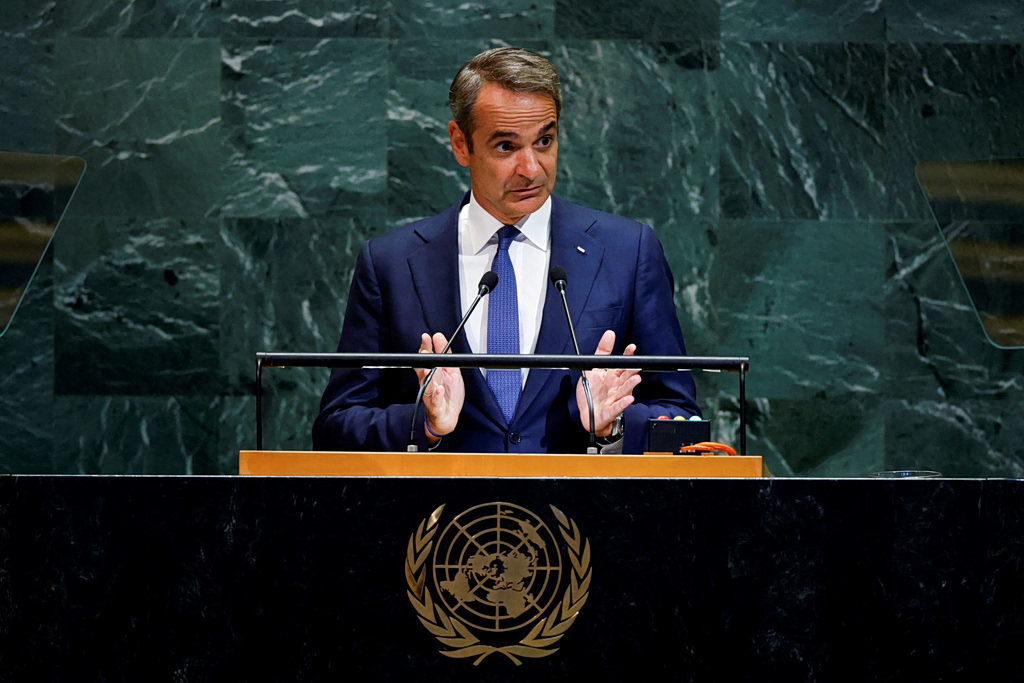
Mitsotakis said his message at the United Nations General Assembly was that freedom of navigation could not become a subject of negotiation and that countries should not accept tolls or other charges for passage through open waterways. Such charges, he argued, would ultimately increase the cost of global trade and contribute to inflation.
He said Europe could potentially play a larger role in the Strait of Hormuz and the wider Gulf region, although military involvement would require an agreement among the parties involved and an end to hostile fire. He also rejected suggestions that Greek shipping interests could simply absorb additional transit charges, warning that shipowners could ultimately pass the costs on to consumers.
Turning to the domestic economy, Mitsotakis said Greece was in a stronger fiscal position than many other European countries, with a budget surplus, fiscal targets being exceeded and public debt falling at what he described as a record pace. That position, he said, provided some room to support household incomes, although fiscal capacity remained limited.
He called for greater European flexibility to enable Greece to reduce fuel taxation without the measure counting against its expenditure benchmark. Mitsotakis said discussions with Brussels were beginning to gain momentum, while stressing that any temporary support should not be interpreted as a retreat from the green transition.
Greece now generates more than 55% of its electricity from renewable sources, he added, but maintaining domestic refining capacity remained strategically important because fossil fuels would continue to play a role in the European energy system. He also said he had already announced subsidies for heating oil, particularly for households in northern Greece during what he expects to be a difficult winter.
Mitsotakis also highlighted Greece’s improved borrowing conditions and fiscal performance, saying the country was now borrowing at a lower cost than four G7 countries. He said the improvement gave Athens greater credibility in discussions with European partners but stressed that Greece would remain committed to fiscal rules and would not risk reversing the progress made since the debt crisis.
A significant part of the interview focused on Greece’s efforts to attract international wealth and financial-sector investment. Mitsotakis said the government had approached major wealth creators and hedge fund managers in London and New York to identify what changes would encourage them to establish a presence in Greece.
He cited the arrival of Chris Rokos and Millennium Management’s decision to establish a presence in Athens as examples of the strategy, arguing that such investments also create employment opportunities for young Greeks.
Mitsotakis said the country’s pitch to international investors combined a competitive tax regime, quality of life and access to highly trained talent. He highlighted the country’s public universities and said technology companies were increasingly establishing operations in Greece because they could find well-trained engineers at comparatively lower costs than in other European countries.
On European leadership positions, Mitsotakis noted that Greece had secured the presidency of the Eurogroup and said several important European posts would become available. He suggested the appointments would form part of a broader European “grand bargain,” while stressing that Greece would maintain a neutral position because of its role in the process.