 Μake us preferred on Google
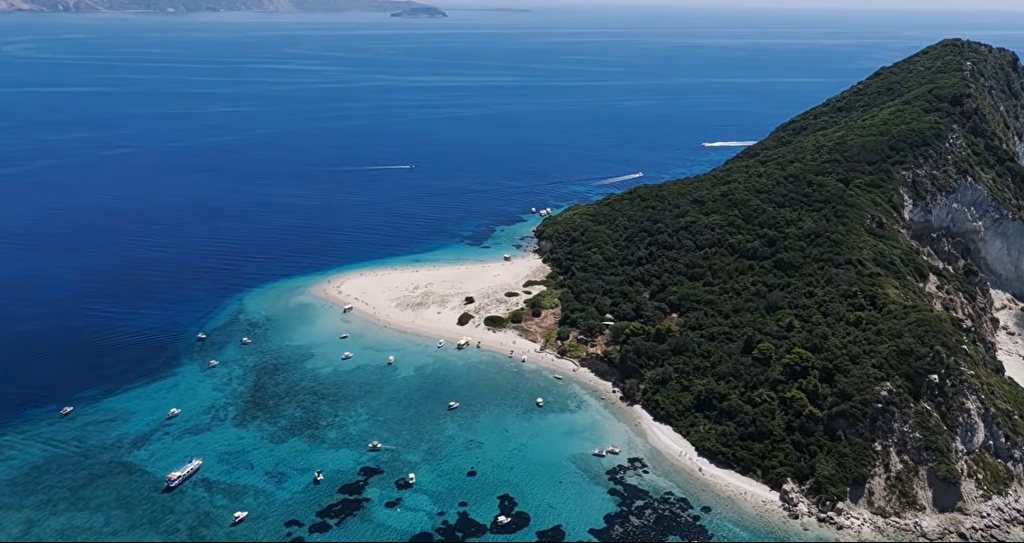
 In the turquoise waters of the Ionian Sea, just off the southern coast of the island of Zakynthos, a small, turtle-shaped islet rises from Laganas Bay: Marathonisi.
Locally known as “Turtle Island,” is one of the most recognizable landscapes in the area — but its appeal goes far beyond its white sandy beach, green hills and clear waters.
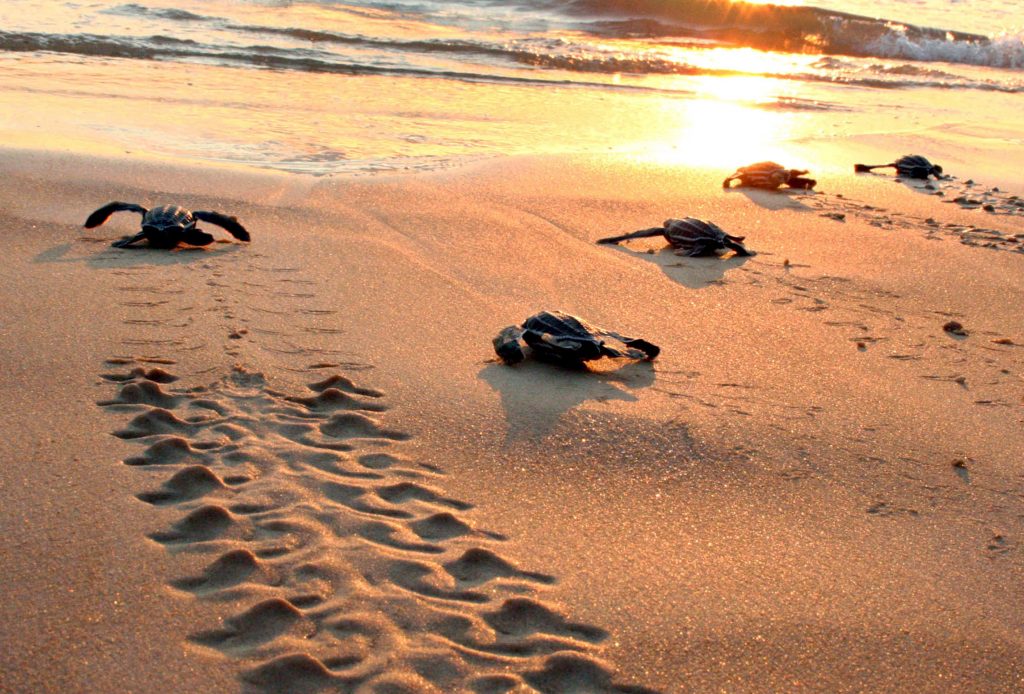
The privately owned islet forms part of the National Marine Park of Zakynthos, established in 1999 to protect the region’s exceptional biodiversity. Its 150-meter sandy beach is a nesting site for the loggerhead sea turtle, Caretta caretta, while much of the island’s remaining shoreline is rocky and steep. Marathonisi is also home to the Zakynthos endemic plant Limonium zakynthium.
For decades, Laganas Bay has been at the heart of efforts to protect the loggerhead, with Archelon, the Sea Turtle Protection Society of Greece, conducting annual monitoring and nest-protection programs in the area since 1983. The bay contains six nesting beaches and supports the largest breeding population of Caretta caretta in the Mediterranean, with an average of about 1,200 nests a year. Marathonisi, along with Kalamaki, Dafni and Gerakas, is designated as a nature protection site within the marine park.
The wider picture has offered some reason for optimism. Greece has recorded significant increases in loggerhead nesting in recent years, including record numbers in Laganas Bay. In 2024, more than 2,350 nests had already been recorded there by late August, surpassing the previous year’s record. More recently, the group reported that the Gulf of Kyparissia and Laganas Bay together accounted for more than 57% of all Caretta caretta nests in the European Union.
But the apparent recovery does not mean the threats have disappeared. A 2026 assessment by WWF Greece and Archelon found that only 12% of Greece’s loggerhead nesting beaches were in good conservation condition, while 38% were classified as poor.
Tourism, inadequate beach management, marine litter, fishing activity and other human pressures continue to pose risks.
That tension is particularly visible on Marathonisi during the summer. Visitors reach the islet by boat from the Laganas Bay area, often combining the trip with excursions to nearby sea caves. Yet the island’s status as a protected nesting site means that the experience is governed by strict rules designed to give the turtles priority.
On Marathonisi’s nesting beach, visitors are permitted from 7 a.m. until sunset and must remain within about five meters of the waterline. Umbrellas are prohibited, while visitors must not disturb nests or leave litter. Anyone encountering a protected species should keep at least 15 meters away and avoid touching, feeding or otherwise disturbing the animal. Boats must also observe speed restrictions in the protected area.