 Μake us preferred on Google
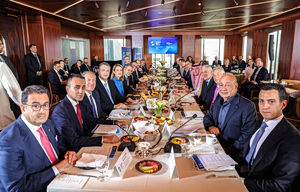
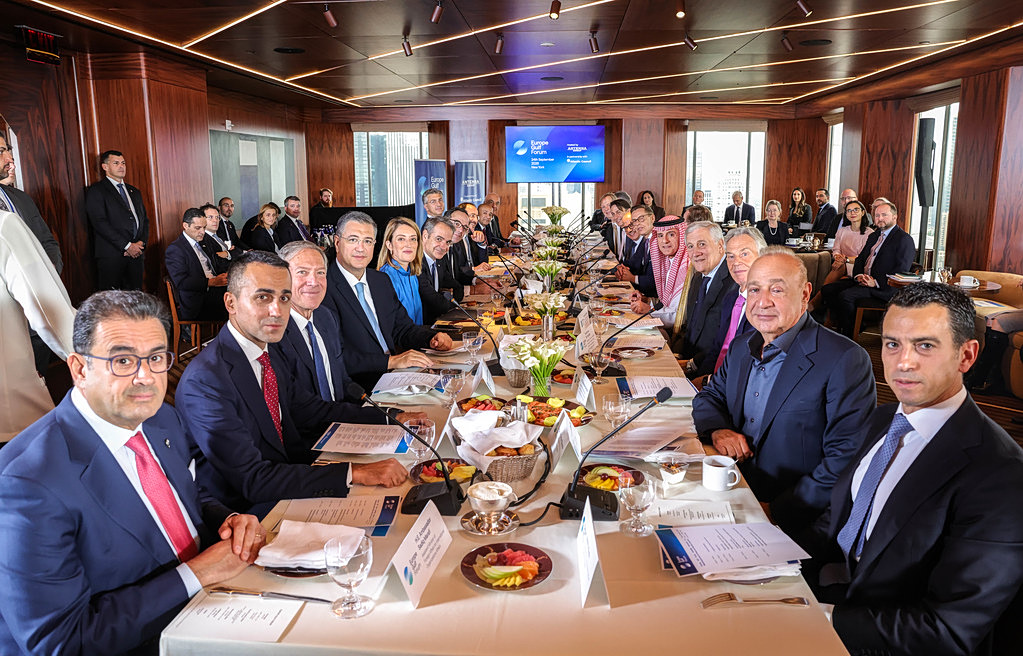
 At a critical moment for the Middle East, top leaders and officials from Europe and the Gulf, along with figures from the United States, met in New York on Thursday, September 24, as part of the Europe Gulf Forum. The shared message of the meeting was the need for immediate and meaningful action to address the effects of the crisis.
The third meeting of the Europe Gulf Forum took place on the sidelines of the UN General Assembly. It was organized at the initiative of the Forum’s founder and Chairman of Antenna Group, Theodore Kyriakou, in cooperation with Frederick Kempe, President and CEO of the Atlantic Council.
Also taking part in the discussion were Antenna’s senior advisors, Sir Tony Blair, former Prime Minister of the United Kingdom, and Amos Hochstein, former White House advisor on energy and investment, as well as former US Secretary of State Mike Pompeo.
In a week when the crisis in the Gulf worsened and key sea routes, such as the Strait of Hormuz and the Bab el-Mandeb Strait, remained closed, heads of state, senior government officials, institutional representatives, investors, and leading business figures focused on security, energy, trade, and investment.
Particular emphasis was placed on freedom of navigation and restoring commercial shipping through the Strait of Hormuz and the Bab el-Mandeb. Participants stressed that the worsening situation in the Gulf is already having a direct impact on Europe, affecting the cost of living, fuel and energy prices, and economic stability as a whole.
“Our Top Priority Is Ensuring Freedom of Navigation”
Italian Prime Minister Giorgia Meloni, speaking by video, said: “Our prosperity is based on peace, open trade, secure connections, and shared trade corridors. Our top priority is ensuring freedom of navigation, without tolls or discriminatory restrictions. That is why we must work together even more closely. The time has come to direct our investments toward a common goal, strengthening our resilience against threats and attempts to divide us. Connecting our markets, creating alternative trade corridors, strengthening infrastructure, and jointly developing technologies and defense capabilities serve exactly this purpose. And this effort must begin immediately. I hope that both Europe and the Gulf are ready to take on greater responsibility for the security, growth, and prosperity of our peoples.”
Italian Deputy Prime Minister and Foreign Minister Antonio Tajani also spoke about the need for a more active role from Europe, noting that “we need greater involvement from the other European countries as well.”
The need to restore safe passage through the Strait of Hormuz and the smooth flow of trade was also highlighted by other participants at the Europe Gulf Forum, who pointed out that immediate steps are required to deal with the crisis.
“A Clear Will From Europe to Support the Gulf Even More”
Theodore Kyriakou, Chairman of Antenna Group and Founder and Co-Chair of the Europe Gulf Forum, said: “It was a particularly meaningful discussion that brought Europe and the Gulf even closer at a critical time for both regions. Security, energy, investment, and defense are areas where closer cooperation is more necessary today than ever. It is important that there is a clear will from Europe to support the Gulf even more. Most importantly, our meeting produced specific initiatives that can be implemented right away for the prosperity of both Europe and the Gulf.”
“It Is in Everyone’s Interest to Keep All International Sea Routes Open”
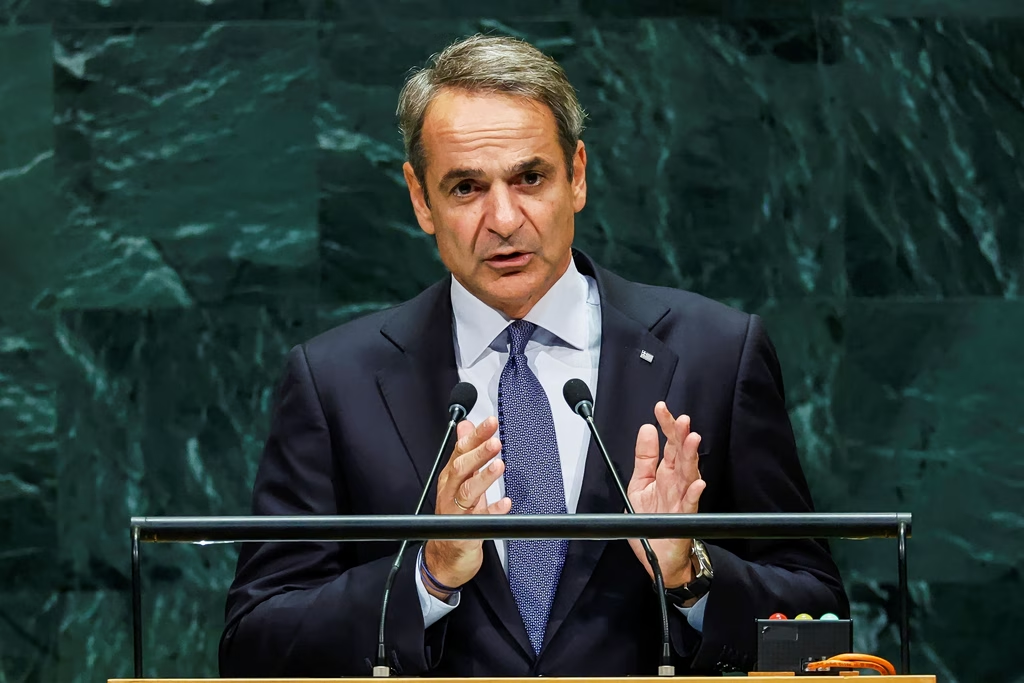
Greek Prime Minister Kyriakos Mitsotakis stressed: “It is important to focus on strengthening security cooperation and ensuring freedom of navigation. It is in all our interests to make sure that all international sea routes remain open, and also to strengthen economic cooperation through mutual investment.”
“We Have Never Faced a Situation Like This Before”
Tony Blair, former Prime Minister of the United Kingdom, said: “The Europe Gulf Forum is taking place at a time of great concern for Europe and the Gulf. We are facing the war in Iran and the problems in the Strait of Hormuz and the Bab el-Mandeb. Europe and the Gulf are closely connected, with shared strategic interests and shared concerns. Europe is dealing with the war in Ukraine, but also with the consequences of what is happening in Iran and the Gulf. It therefore makes complete sense for the two sides to discuss how they can work together to meet these challenges and lay the groundwork for greater security and resilience in the future.
The immediate priority is to make sure the sea routes stay open. This is a huge issue. We have never before faced a situation in which such critical sea routes, on which international trade depends, are disrupted in this way. The immediate question is how to reopen the Strait of Hormuz and how best to deal with the problems caused by Houthi attacks on Saudi Arabia and in the Bab el-Mandeb area. In the longer term, there are key issues in energy, defense, and investment, where Europe and the Gulf share many interests and have significant room for cooperation.”
“Significant Progress, With the Involvement of the United States”
Mike Pompeo, former US Secretary of State, said: “It was a very productive discussion. Europe and the Gulf countries, both collectively and bilaterally, are making real progress on issues critical to the region and to international security, as well as on deterring shared threats. Significant progress has already been made, with the involvement of the United States, but there is still a lot of work ahead of us. Freedom of navigation and the fundamental principles of Western civilization are especially important for both Europe and the Gulf, and there are many areas where we can work together to defend them.”
“The Effects of the Middle East Crisis Are Felt Around the World”
Amos Hochstein, former White House advisor on energy and investment, said: “As the crisis in the Middle East deepens and critical sea routes, such as the Strait of Hormuz and the Bab el-Mandeb, remain closed, cooperation between Europe and the Gulf is more important than ever. The crisis may be unfolding in the Middle East, but its effects are felt around the world and especially in Europe, through the rising cost of living, fuel, and energy.”
“Europeans and Gulf Partners Are Talking in a Practical and Positive Way”
Frederick Kempe, President and CEO of the Atlantic Council and Co-Chair of the Europe Gulf Forum, said:
“We created the Europe Gulf Forum before the war in Iran broke out, and today the war is already in its seventh month. We knew from the start that there were important opportunities for investment and cooperation in technology, trade, and tourism. Those opportunities remain important. Today, however, there is an urgent need for action.
Europe and the Gulf know they must work together to address the crisis in the Middle East, since the oil and natural gas that power the European economy pass through the Gulf’s sea routes. I have never seen Europeans and Gulf partners talk in such a practical and positive way about what they can do together from here on. These are two regions that have always been closely connected, but that now realize they must do much more to strengthen their ties.”
Participants in the third Europe Gulf Forum noted that the upcoming summit between the European Union and the Gulf Cooperation Council (EU-GCC), to be held next month in Riyadh, is an important opportunity for Europe to make concrete commitments to strengthen free trade and connectivity, as well as the security of sea routes.
Participants in the meeting included:
- Alexander Stubb, President of the Republic of Finland
- Nikos Christodoulides, President of the Republic of Cyprus
- Sheikh Mohammed bin Abdulrahman bin Jassim Al Thani, Prime Minister and Minister of Foreign Affairs of the State of Qatar
- Kyriakos Mitsotakis, Prime Minister of the Hellenic Republic
- Andrej Plenković, Prime Minister of the Republic of Croatia
- Roberta Metsola, President of the European Parliament
- Antonio Tajani, Deputy Prime Minister and Minister of Foreign Affairs and International Cooperation of the Italian Republic
- Radosław Sikorski, Deputy Prime Minister and Minister of Foreign Affairs of the Republic of Poland
- Adel bin Ahmed Al-Jubeir, Minister of State for Foreign Affairs of the Kingdom of Saudi Arabia
- Abdullatif bin Rashid Al Zayani, Minister of Foreign Affairs of the Kingdom of Bahrain
- Hamad Rashed Ayed Al-Mari, Deputy Minister of Foreign Affairs for Gulf Cooperation Council Affairs, State of Kuwait
- Apostolos Tzitzikostas, European Commissioner for Sustainable Transport and Tourism
- Jasem Mohamed Albudaiwi, Secretary General of the Gulf Cooperation Council
- Luigi Di Maio, European Union Special Representative for the Gulf
- Sadiq Marafi, Assistant Minister of Foreign Affairs for International Organizations Affairs, State of Kuwait
- Tony Blair, Executive Chairman of the Tony Blair Institute for Global Change and former Prime Minister of the United Kingdom
- Mike Pompeo, former US Secretary of State
- Amos Hochstein, Managing Partner of TWG Global and former Senior Advisor to the President of the United States
- Len Blavatnik, Founder of Access Industries
- Philippe Amon, Chairman and CEO of SICPA
- Michal Solowow, Founder and Owner of Synthos
- Alexis Ateslis, Co-Head of Europe and Partner at Oak Hill Advisors
- Theodore Kyriakou, Chairman of Antenna Group, Founder and Co-Chair of the Europe Gulf Forum
- Frederick Kempe, President and CEO of the Atlantic Council and Co-Chair of the Europe Gulf Forum
About the Europe Gulf Forum
The Europe Gulf Forum is a permanent platform for dialogue and practical cooperation between Europe and the Gulf. It brings together heads of state and government, senior government officials, institutional representatives, major investors, and top business leaders from Europe and the Gulf, with the aim of developing and speeding up joint solutions to some of the most critical issues facing the two regions.
A year on from our launch, The Europe Gulf Forum has become a permanent platform for dialogue and action.
This week, European and Gulf leaders will convene for the third Europe Gulf Forum in New York on the margins of UNGA, for discussions on how greater collaboration can bring… pic.twitter.com/USMQlvd89C
— Europe Gulf Forum (@EuropeGulfForum) September 23, 2026
The Forum was founded in September 2025 at the initiative of Theodore Kyriakou, Chairman of Antenna Group, an international media, news, content, and entertainment organization. Its Co-Chairs are Theodore Kyriakou and Frederick Kempe, President and CEO of the Atlantic Council. Its Senior Advisors are Sir Tony Blair and Amos Hochstein. The Europe Gulf Forum was created on the belief that the stability and prosperity of Europe and the Gulf countries are directly linked, and that the two regions need to work closely together, turning dialogue into concrete action with clear timelines. Europe and the Gulf are bound by a shared history, strong trade and investment ties, and a common future.
In May 2026, Antenna Group, in cooperation with the Atlantic Council, hosted the first major meeting of the Europe Gulf Forum in Greece. It brought together 23 heads of state, prime ministers, senior government officials, policymakers, and investors, in a setting that strengthened trust and cooperation and produced concrete results from the start.