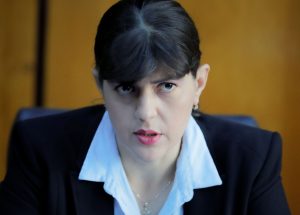
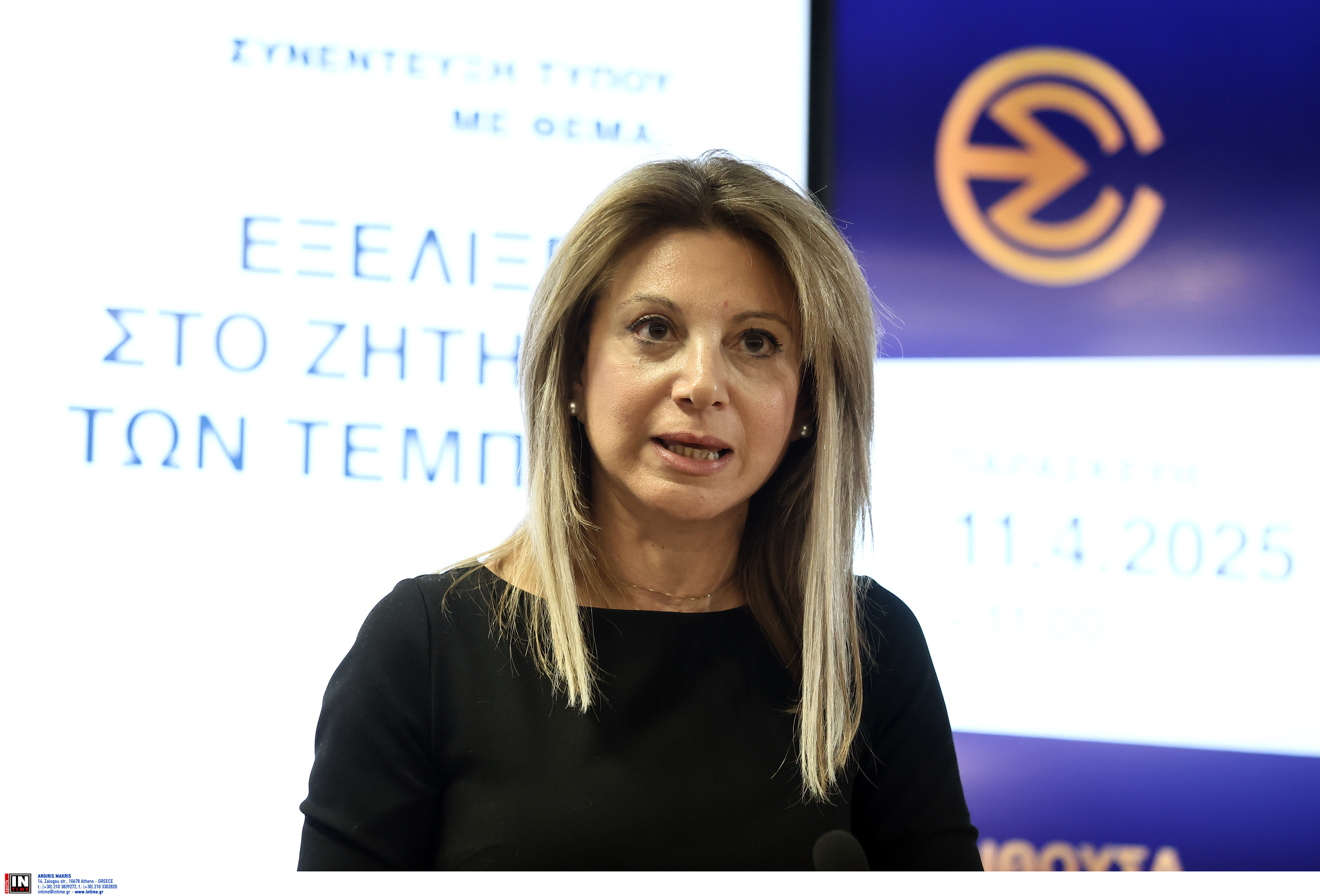
Almost three years after a national tragedy thrust her into public view, Maria Karystianou is signaling a move that is already rippling through Greece’s political system.
In a Jan. 5 television interview, Karystianou said that a civic movement formed after the 2023 rail disaster is now “evolving rapidly” into a political party. The initiative, she said, is being organized “at a very fast pace” and is intended to seek participation in an upcoming election, should citizens choose to back it.
Her remarks came amid polling that highlighted her unusually strong public standing. In a survey published the same day, Karystianou recorded 33% positive opinions, a result that placed her ahead of established party leaders and suggested that her voice resonates well beyond the circle of families directly affected by the tragedy.
The reaction was immediate. Government officials, opposition figures and party leaders across the spectrum weighed in within hours, underscoring how seriously even the prospect of a Karystianou-linked political project is being taken in a country marked by deep skepticism toward political institutions.
From personal loss to public reckoning
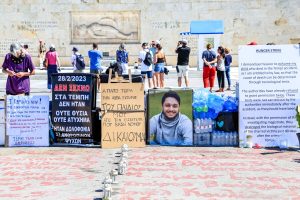
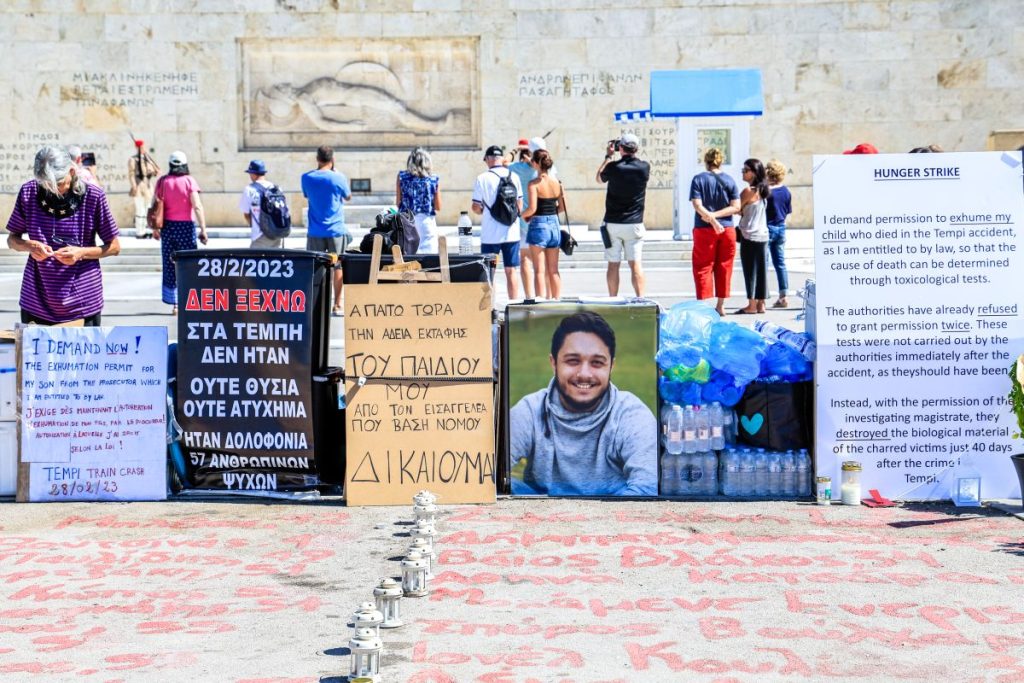
Karystianou entered public life after losing her 19-year-old daughter, Marthi, in the Tempi rail disaster, one of Greece’s deadliest peacetime accidents. Fifty-seven people, many of them students, were killed when a passenger train traveling between Athens and Thessaloniki collided head-on with an oncoming freight train.
The crash became a defining moment for Greece, exposing systemic failures in infrastructure, oversight and governance. As president of the Association of Families of the Victims of Tempi, Karystianou emerged as a leading figure in the families’ demand for accountability and justice.
What began as a fight over responsibility and judicial independence, she said, evolved into a wider civic awakening, one that mobilized Greeks both inside the country and abroad.
“Many people want to help,” she said, describing a level of public engagement that, according to Karystianou led her and those around her to conclude that remaining outside the political arena was no longer tenable.
“Whatever I need to do to vindicate my daughter, and through that, help the country, I will do,” she said.
A party without labels
Karystianou has deliberately avoided the vocabulary of conventional party politics. She has said the prospective party would reject ideological labels such as left, right or center, instead organizing itself around broad, loosely defined principles that she describes as universal: accountability, meritocracy, equality before the law and social well-being.
She did not clarify whether she intends to lead the party herself. Leadership, she said, should emerge collectively and be entrusted to someone without political “baggage”, “a person with courage, decisiveness and a clear understanding of society’s needs”.
“The politicians we have today came out of party pipelines,” she said. “They don’t know society.”
While trained as a pediatrician, Karystianou said she does not claim expertise in every policy area. Instead, she emphasized the role of expert groups that would propose practical, implementable solutions across fields such as the economy, education and public administration.
Unity, she suggested, lies at the core of the initiative and may even shape its eventual name. The disaster that gave rise to it, she noted, was not an isolated event. “It concerned everyone,” she said. “Any one of us could have been on that train.”
Political shockwaves
Karystianou’s statements triggered swift responses from across the political spectrum. A senior government official, Akis Skertsos, responded indirectly in a social media post, warning that “blind hatred” and the blanket discrediting of institutions cannot lead to accountability, and cautioning against vigilantism and mob rule.
Karystianou has categorically ruled out cooperation with existing political parties or figures. She has excluded any alliance with the governing New Democracy and dismissed the prospect of working with politicians such as Antonis Samaras or Stefanos Kasselakis. She was particularly critical of Alexis Tsipras, accusing him of having offered hope and then “torn everything down.”
Her comments have also had immediate consequences inside the opposition. Karystianou has spoken positively about her communication with Nikos Farantouris, following a joint appearance at an event in the European Parliament. Farantouris, elected as an MEP with SYRIZA, publicly described the emerging Karystianou initiative as “welcome” and said he was “joining his voice” to it.
Those remarks deepened unease within SYRIZA’s leadership. On Wednesday, party president Sokratis Famellos removed Farantouris from the party’s delegation in the European Parliament and formally asked him to return his seat, arguing that he could not continue to represent SYRIZA voters while declining to clearly commit to the party’s political line.
The decision followed Farantouris’ repeated public comments acknowledging discussions with Karystianou, which SYRIZA officials said blurred the line between party affiliation and an emerging political project outside its structures. The move has raised the possibility of his full expulsion from the party.
Elsewhere, officials from the Communist Party of Greece dismissed rhetoric about “cleansing” as politically outdated. On the nationalist right, Kyriakos Velopoulos of Greek Solution criticized what he described as a tendency for societies in crisis to invest in political “saviors.”
The road ahead
Karystianou’s term as president of the victims’ families association ends in March, coinciding with the start of the long-awaited trial over the Tempi disaster. Another key moment looms on Feb. 28, the third anniversary of the crash.
She has left open the possibility of a new mass rally, but this time with a broader agenda that could include public health, the armed forces and the cost-of-living crisis.
For now, Karystianou insists that the initiative’s direction will be determined collectively. Even without a formal launch, her next steps are being closely monitored by voters and party insiders alike who increasingly regard her not as an activist, but as a possible political contender.