 Μake us preferred on Google
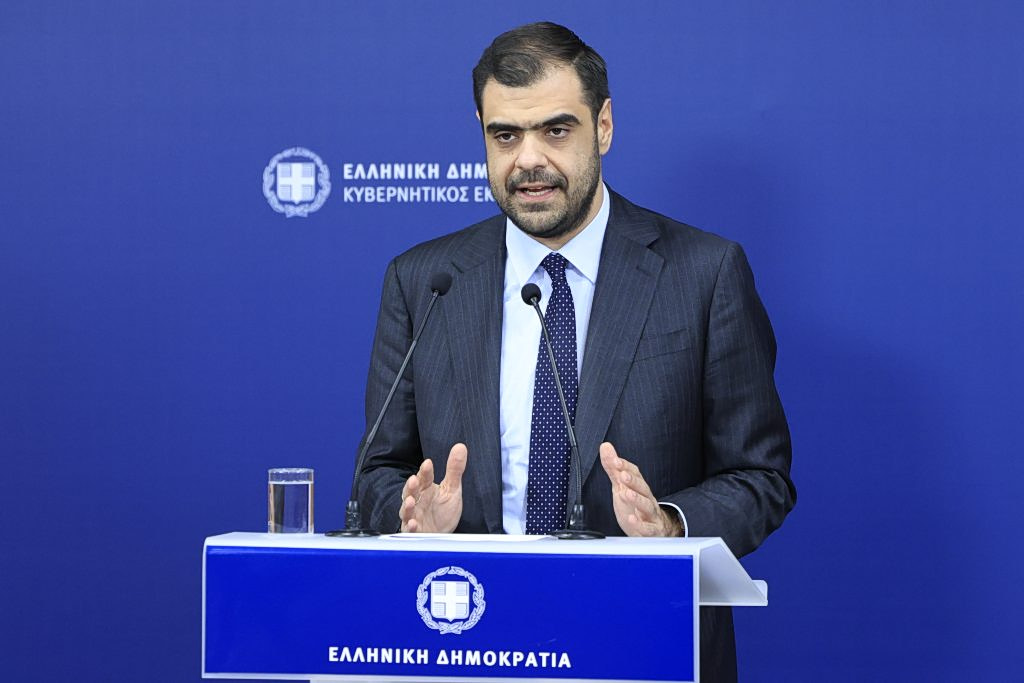
 Greece’s unemployment rate fell to 7.9% in July 2026, down from 17.9% in July 2019, according to figures cited by government spokesman Pavlos Marinakis.
Speaking to political reporters, Marinakis said Greece has recorded the largest decline in overall unemployment among European Union member states and now has a lower unemployment rate than Finland, Spain, Sweden and France.
He also highlighted an increase in household incomes, saying Eurostat data showed that workers in Greece have higher net incomes than those in 10 other EU member states. Greek household incomes have increased by more than 30% over the past six years, he said.
For a single employee without children, net income increased by 37.8% from 2019, equivalent to almost €5,900, or nearly €1,000 per year.
The earnings of two working parents increased by 31.6% over the same period, translating into an additional €964 per month, according to Marinakis.
Annual incomes for couples with two children, where only one parent works and earns the average wage, increased by 33.2%.
Marinakis said the recovery was particularly significant because net earnings for these household categories had declined between 2015 and 2019.
He acknowledged that major challenges remain, particularly the inflation and housing crises.
Employment reaches 25-year high
The first seven months of 2026 recorded the strongest balance between hiring and departures in 25 years, according to Greece’s ERGANI employment information system.
The balance was positive by 323,136 jobs, the highest figure for the first seven months of a year since 2001.
July 2026 was also the strongest July in 18 years across the various unemployment categories.
Unemployment among men fell to 5.9%, from 14.5% in July 2019. Among women, it declined to 10.4%, from 22.2%, while youth unemployment fell to 16.8%, from 37.6%.
The government also reported a sharp increase in recorded overtime through the Digital Work Card system. More than 5.7 million overtime hours were recorded during the first seven months of 2026, about 1.54 million more than during the same period in 2025, an increase of 36.8%.
Government plans 30% cut in electricity costs
Marinakis also presented the government’s plan to reduce electricity costs by 30% over three years, following commitments made by Prime Minister Kyriakos Mitsotakis at the 90th Thessaloniki International Fair.
The plan includes continued investment in renewable energy, faster development of energy storage facilities and further electricity interconnections for the islands.
The government also plans to intensify efforts to reduce electricity theft and overdue debts and continue energy-efficiency programs for households and public buildings.
Installed renewable energy capacity has reached 18 gigawatts, compared with 6.3 gigawatts in 2019, according to the government.
A total of €5 billion has been earmarked for energy-efficiency measures through the Social Climate Fund, the Islands Decarbonization Fund and the escape clause.
Greece to acquire two Italian frigates
Greece and Italy have signed an implementing agreement in Rome activating a program for Greece to acquire two Italian FREMM frigates of the Bergamini class.
The agreement was signed in the presence of Greek Defense Minister Nikos Dendias and his Italian counterpart, Guido Crosetto.
The first frigate is scheduled to be transferred to Greece in the first half of 2028, followed by the second in the first half of 2029.
Dendias said the FREMM frigates are high-specification vessels and that planned modifications, already under discussion with their manufacturer, would make them “extremely powerful.”
More than 5,000 permanent teachers appointed
The government also outlined preparations for the new school year, covering 13,842 schools, more than 1.27 million students and over 145,000 permanent teachers.
On Aug. 11, authorities announced 5,259 new permanent teaching appointments, bringing the total number of permanent appointments since 2019 to 53,912.
Following the first round of substitute-teacher hiring, the government aims to have about 30,000 teachers in schools from the first day of the academic year.
Marinakis attacks Tsipras and PASOK
During the briefing, Marinakis sharply criticized former Prime Minister Alexis Tsipras over his comments on the economy and other issues.
He accused Tsipras of making “incredible lies without shame” and called on him to apologize over the Thessaloniki Metro, referring to him as the “prime minister of tarps” and arguing that the project was not operational when it was handed over.
Marinakis also criticized the previous government over railway signaling, saying it had left the system only 1% complete, while the current government had completed it and introduced measures including geolocation and the European Train Control System (ETCS).
He rejected Tsipras’ claims about political favoritism in the health sector and criticized his economic program as a “manual of political fraud” that, he said, went even beyond 2015.
Marinakis questioned the cost of proposals involving pay increases for doctors and nurses, seasonal firefighters, free transportation and tax credits for children.
He also dismissed discussion of a possible coalition government involving Tsipras as “ridiculous,” saying the question should instead be addressed to PASOK–Movement for Change.
The government spokesman also criticized PASOK over its calculations of the cost of proposed measures, saying the opposition party had failed to account for expenses extending through 2030.
Marinakis calls Turkish marine parks a “firework”
Regarding marine parks, Marinakis described Turkey’s initiatives as a “firework” that produces “no result,” while stressing that Greece would defend its national interests.
He said Greece would not retreat and was “stronger than ever, militarily and diplomatically.”
Asked about the possibility of a crisis with Turkey, Marinakis said the country needed a stable government capable of responding to such a situation. He said Mitsotakis had demonstrated that he could manage a potential crisis, while emphasizing that “there is no danger at this time.”
Marinakis also referred to Greece’s relations with Saudi Arabia, saying Athens was strengthening bilateral ties. He said the continued deployment of a Patriot missile battery was included in two decisions by the Government Council for Foreign Affairs and Defense (KYSEA).
He also mentioned a recent visit to Egypt, during which Greece reached a preliminary understanding with the Egyptian government regarding the Monastery of St. Catherine in Sinai. The electricity interconnection with Cyprus, he said, would proceed according to schedule.
Changes to domestic violence response
On the case of the murder of Kyriaki Griva, Marinakis said Greece had taken steps to improve its response to domestic violence.
He said 63 new domestic violence offices had been established nationwide, while panic buttons and safe houses were now available across the country.
He also pointed to changes in how complaints are handled and how victims are transferred to forensic services, as well as a guide for citizens, an evaluation form for police officers and a series of legislative changes.
“The entire management protocol has changed,” Marinakis said, describing Griva’s murder as a lesson for public officials.
Marinakis addresses Mazonakis death
Marinakis also expressed condolences to the family of singer Giorgos Mazonakis, who recently died.
“With Giorgos, a different era is leaving,” he said, adding that an investigation into the circumstances of the singer’s death is underway.
“Everything must be examined thoroughly,” Marinakis said. “There is an institutional framework; the local medical associations must implement it.”
He also extended condolences to the families and colleagues of Air Force pilots Ioannis Blesias and Dimitris Petrou, who recently died in a tragic accident.