 Μake us preferred on Google
 On the northeastern tip of Corfu, a quiet coastal landscape is once again at the center of a debate that has lasted more than a decade.
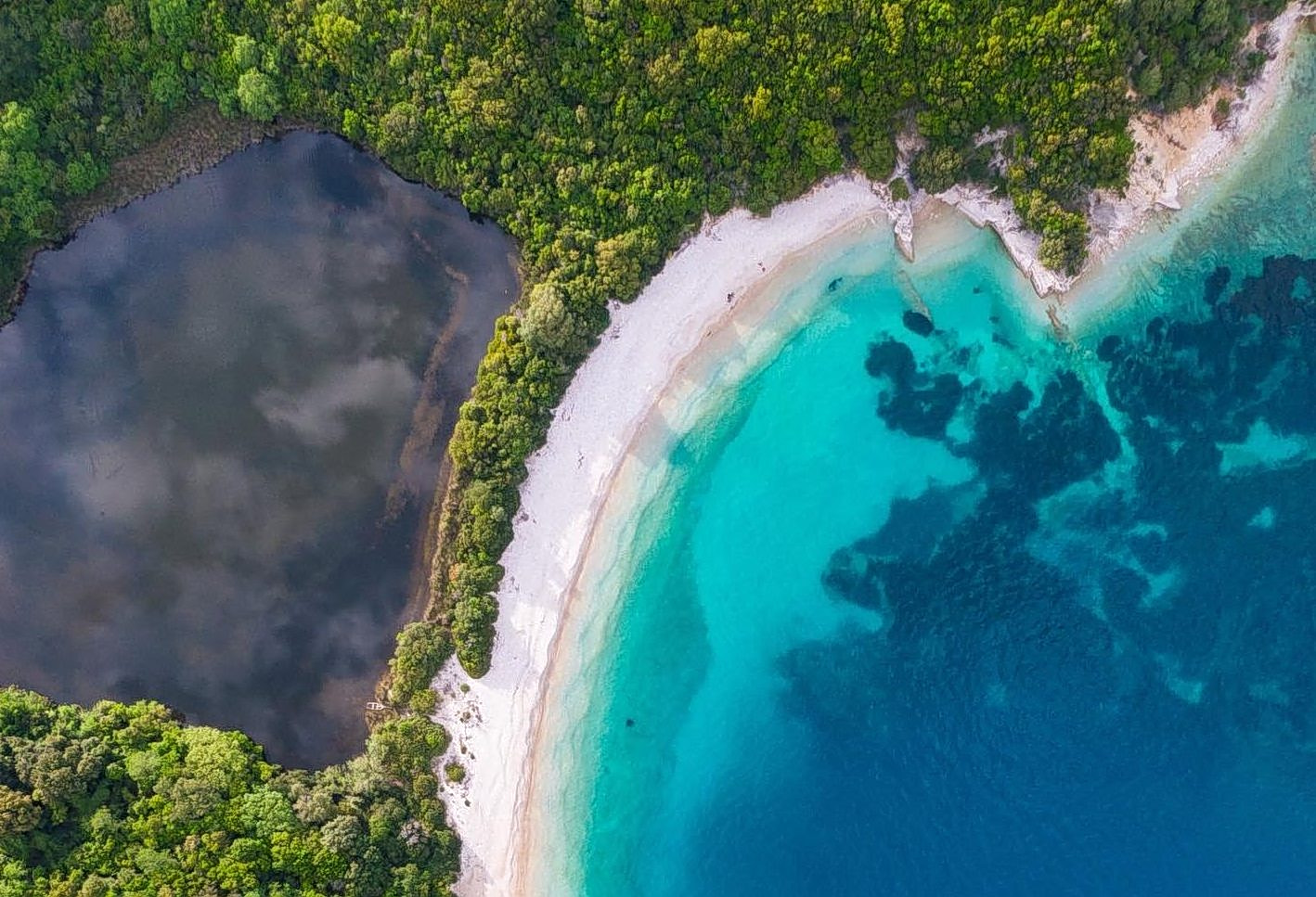
Erimitis, one of the last large undeveloped coastal areas on the Greek island, combines forest, three coastal wetlands, rocky shores and seven small bays that remain free of development. Its future has long divided residents, environmental groups and investors, raising a broader question about how the value of a place should be measured — as an investment, an ecosystem or a common good.
Standing above Vromolimnos Beach, one of Erimitis’ three wetlands, environmental group Erimitis Plous member Xenia Tomprou points toward a dirt road opened by bulldozers in 2021. The area was also part of the Kassiopi Project, which originally included a marina for 57 recreational boats.
“Think about what would happen here with the boats and the cars,” Tomprou says.
Then she falls silent.
For several seconds, only birds and the distant, steady sound of a fishing boat heading south through the Corfu Strait can be heard.
Tomprou explains the concept of an acoustic horizon: when noise decreases, the distance from which sounds can be perceived increases. In ecoacoustics, the composition of a soundscape can be used as data for monitoring ecosystems. Changes in biological sounds and human-generated noise, together with other indicators, can reveal changes in ecological conditions that are not always visible.
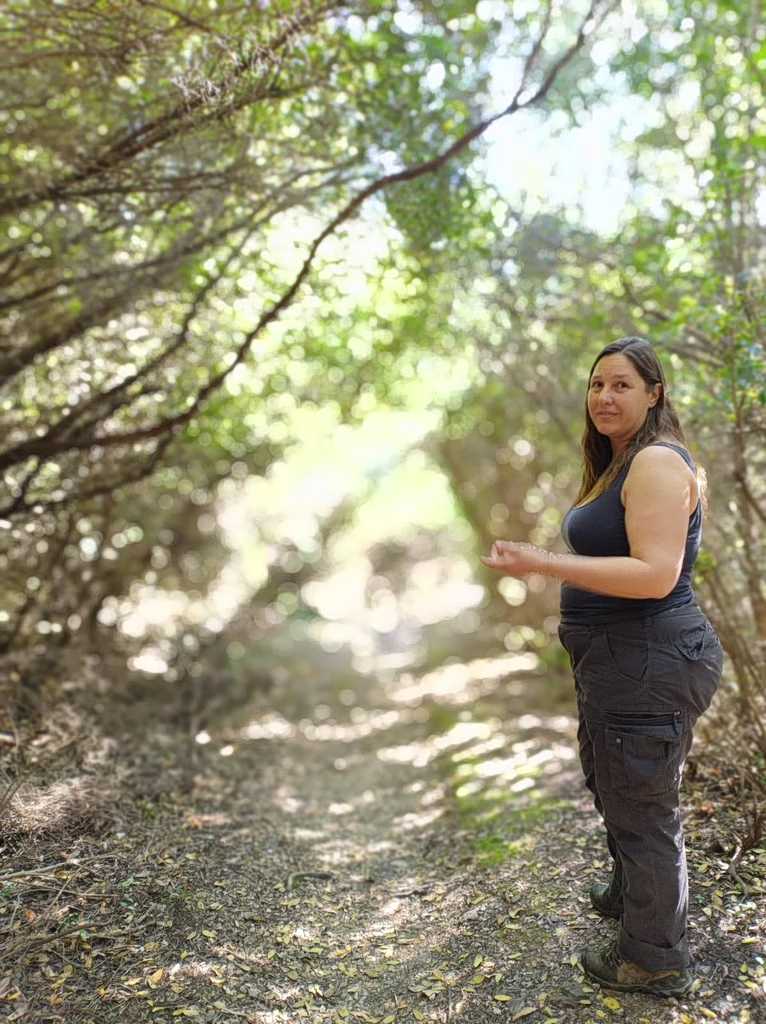
“Tour of the Erimitis forest with Xenia Tomprou, a member of the environmental group ‘Erimitis Plous.’ Source: Angelos Alexopoulos
A small landscape with many ecosystems
Erimitis contains a compact mosaic of ecosystems between Avlaki and Agios Stefanos.
The Save Erimitis campaign has compiled records from Flora Ionica documenting 282 species of plants and herbs, as well as an inventory listing 78 bird species.
Vromolimnos is also home to a population of Aphanius fasciatus, a small fish found in brackish coastal waters. The species is not considered globally threatened, but local Mediterranean populations have declined because of wetland degradation and the introduction of non-native species.
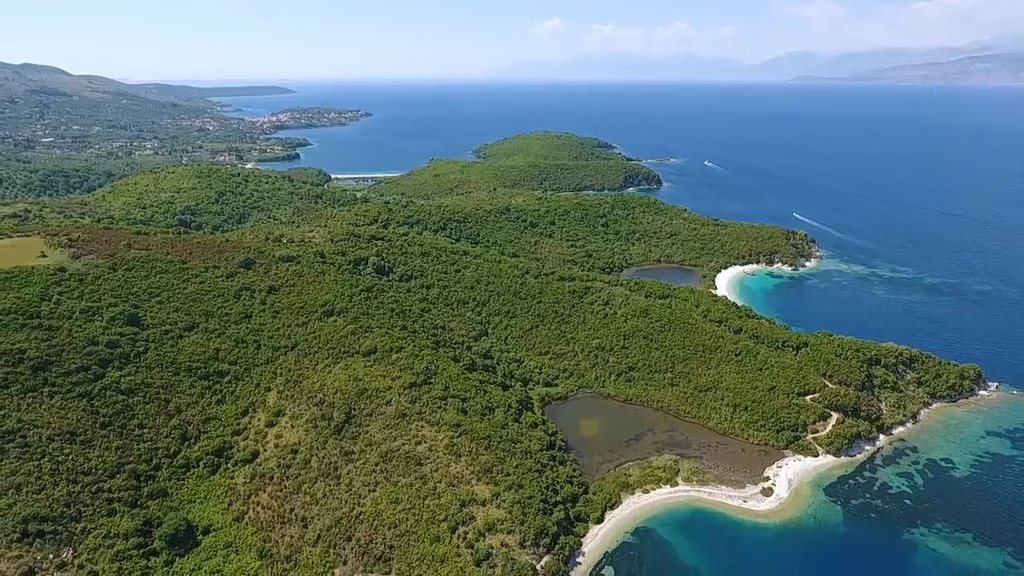
Panoramic view of Erimitis in northeastern Corfu. Source: Save Erimitis.
More systematic knowledge has emerged from the sea in recent years.
Since 2021, iSea, an environmental organization based in Thessaloniki, has been mapping and monitoring the marine area. It has identified five habitat types included in the European Union Habitats Directive: reefs, sandbanks, shallow bays and inlets, underwater sea caves, and Posidonia seagrass meadows. The latter are classified as a priority habitat.
The Posidonia meadows cover approximately 62.1 hectares. An estimated 3,384 tons of organic carbon are stored in the upper 60 centimeters of their sediments.
More than 200 marine species have been recorded in the area, including six species in a threatened category.
Aerial surveys found that more than 65% of the boats observed were anchored over Posidonia meadows, with greater pressure recorded at Aria, Vrachli and Akoli.
A changing environmental baseline
The scientific data also have a human counterpart: the memories of people who experienced a different Corfu.
Simon Karidis, a marine biologist and executive director of the Ionian Environment Foundation (IEF), recalls seeing spider crabs, sea anemones and seahorses frequently as a child in the waters where he swam.
Today, he says, many of them have disappeared from the places he remembers.
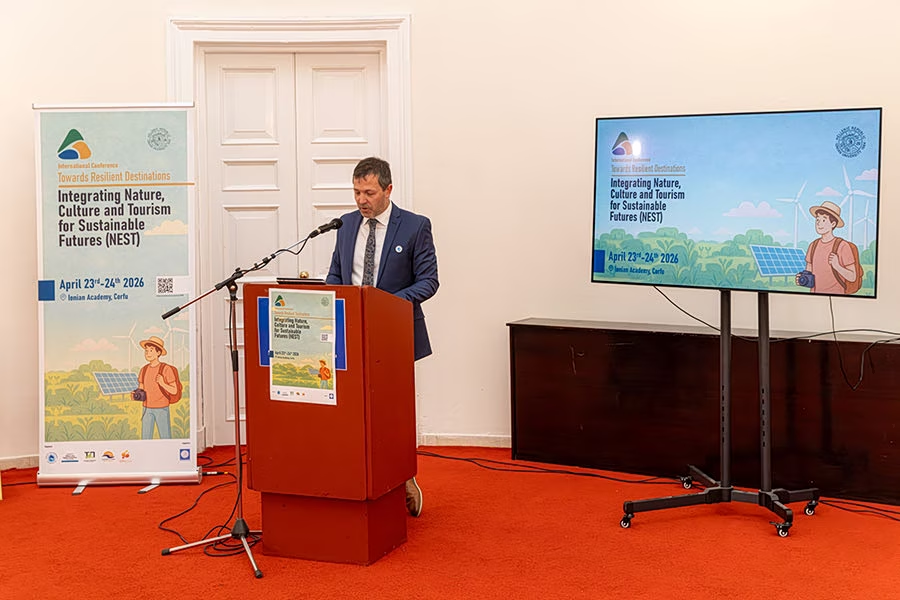
Simon Karidis, executive director of the IEF, opens the ‘Towards Resilient Destinations’ conference on April 22, 2026, at the Ionian Parliament. Source: IEF
Darrell Li, a zoologist and IEF ambassador, asks Karidis about the “baseline” of his young son.
The question refers to a phenomenon in which each generation tends to regard the environmental conditions it grew up with as normal, even when those conditions are already poorer than those experienced by previous generations.
“Even my own baseline has already shifted,” Karidis replies.
Darrell was the wife and collaborator of renowned British naturalist and author Gerald Durrell, who spent much of his childhood in Corfu and later helped make the island internationally known through his book My Family and Other Animals, published in Greek by Kaleidoskope.
Erimitis’ geographic position adds another dimension to its ecological importance.
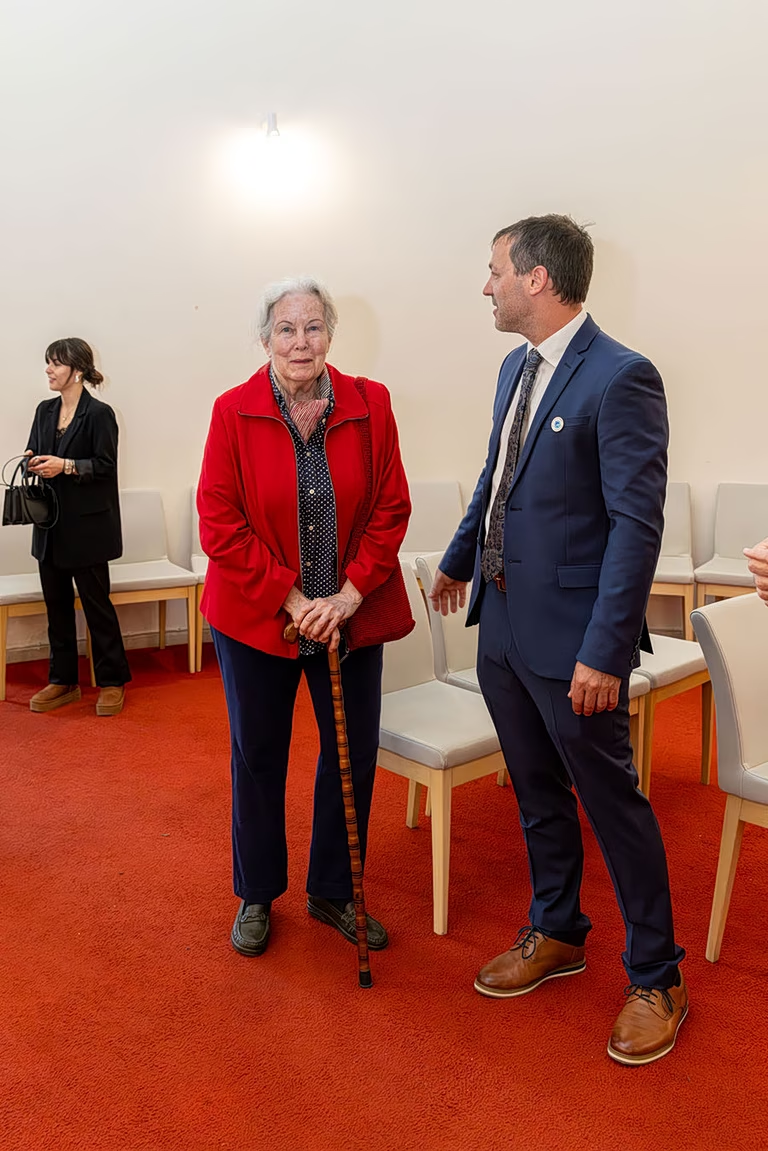
Darrell Li with Simon Karidis at the Ionian Parliament. Source: IEF.
Across the water on the Albanian coast lies Butrint, a 13,500-hectare Ramsar wetland. A 2021 study detected signs of Eurasian otters (Lutra lutra) in all three of Erimitis’ wetlands and considered natural movement of otters between Corfu and Albania highly likely.
Based on this biological connectivity, environmental groups have proposed a broader ecological corridor stretching from Butrint to Antinioti and Mount Pantokrator.
The IEF is already in contact with Butrint National Park to explore possibilities for cooperation between the two sides.
A 14-year dispute over Erimitis
The dispute over Erimitis’ future began during Greece’s economic crisis.
In 2012, the Hellenic Republic Asset Development Fund, known as HRADF, began the development process. In January 2013, the binding offer from NCH Capital was approved.
In 2014, the transfer of a special-purpose company was signed, granting a 99-year surface right for €23 million.
A separate tender for the ownership right followed in 2017, with a final accepted offer of €2.05 million.
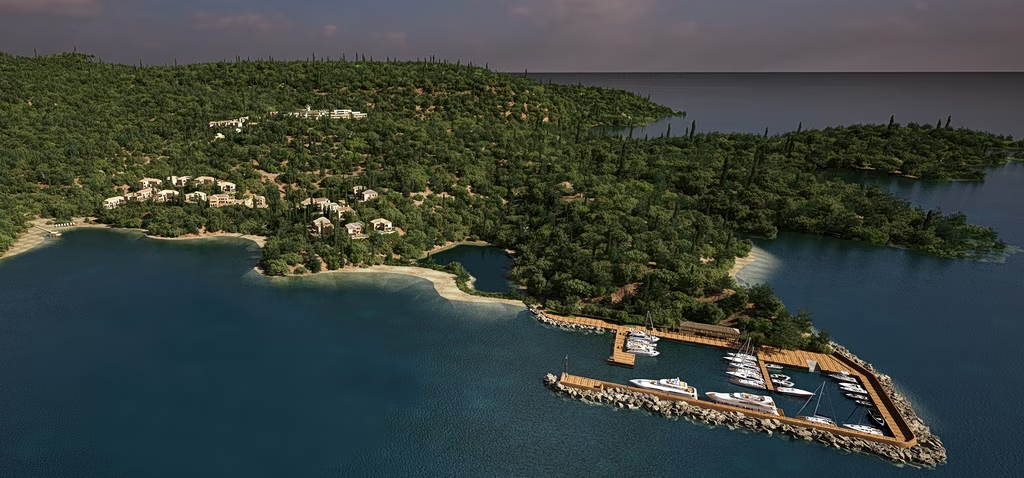
Model of NHC Capital’s tourism development project in Erimitis. Source: Save Erimitis
The Kassiopi Project presented in 2020 had a budget of more than €120 million. It called for a five-star hotel with 90 rooms and 76 suites, up to 40 villas and a 57-berth marina.
According to the project’s presentation at the time, construction would cover approximately 7% of the area. The plans projected 1,000 jobs during construction and 500 during operation.
Residents and local groups had already mobilized against the project since 2012, while Erimitis Plous acquired legal status in 2015.
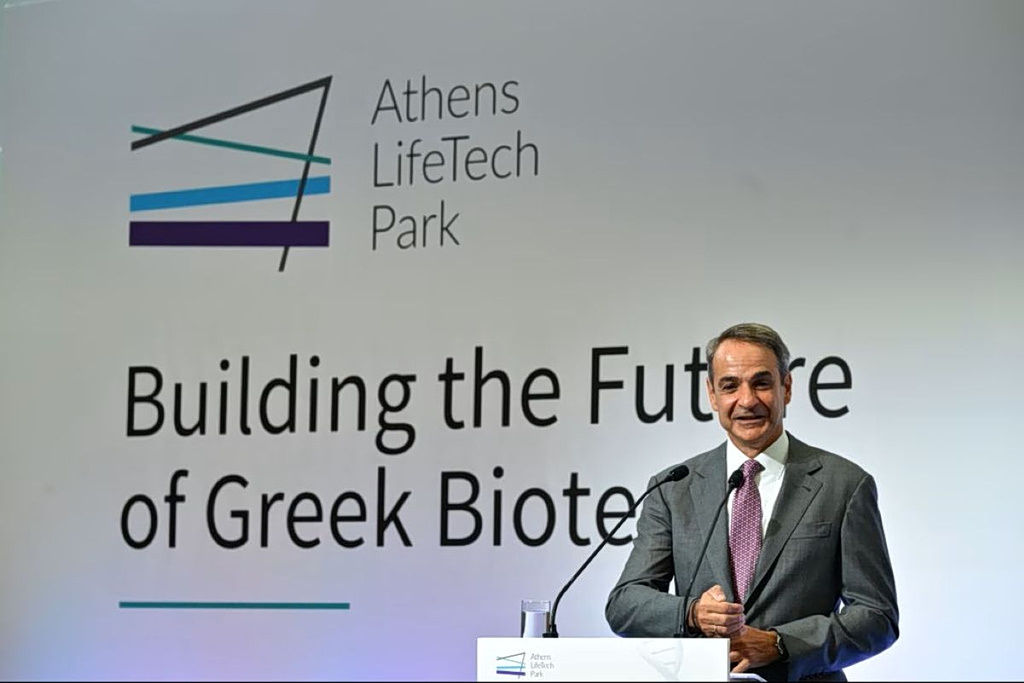
In July 2020, Prime Minister Kyriakos Mitsotakis, during a visit to Corfu, described the investment as strategically important for tourism.
In an unofficial video from the same visit, he can be heard saying that the area “will burn at some point and start again,” and shortly afterward, “we did the right thing.”
One month later, a wildfire burned more than 130 acres.
A team from the Directorate for Combating Arson Crimes, known as DAEE, investigated the causes. No final report assigning responsibility has been identified in the publicly available documentation.
Work began in the area in 2021, but NCH Capital’s plan was not implemented.
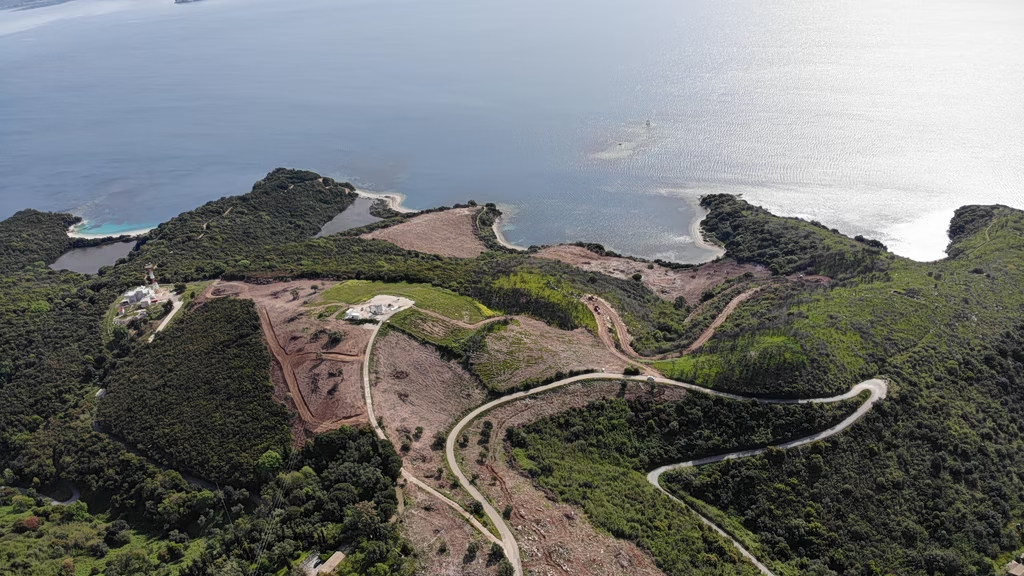
View of Erimitis after the 2020 wildfire. Source: Save Erimitis
What is known about the new project
Information about the sale of the Kassiopi Project began appearing in 2024. Since 2025, the property has appeared to be under the control of an investment group connected to Calamos Investments.
Information about the new development remains largely based on media reports.
Greek reports and The Sunday Times have referred to approximately 20% less construction, greater use of natural materials, architectural design by Sir David Chipperfield and the absence of a marina.
However, a complete and binding master plan with comparable figures has not yet been made public.
There has been movement at the permitting level. According to published information, the project’s environmental terms have been extended until April 22, 2031.
At the beginning of 2026, the new permitting process was still described as being at an early stage.
Critical information needed to assess the new proposal is still unavailable, including comparable figures for total construction, the number of beds and residences, seasonal water demand, wastewater, energy requirements and traffic loads.
From opposition to management
At the same time, the discussion among civil society groups has expanded beyond opposing development to considering what could happen at Erimitis if a different path were chosen.
Tomprou describes a potential ecological park with trails, a birdwatching observatory, educational activities and facilities for researchers, combined with small-scale visitation throughout the year.
The transition from opposition to management has not been without tensions.
A 2023 report by the Save Erimitis campaign documented disagreements surrounding the idea of a “BioPark.” Erimitis Plous argued that British experts had become involved without sufficient prior consultation with the local community and called for greater transparency and an equal relationship with the IEF.
Because the report is the campaign’s own assessment, it provides a record of the dynamics surrounding participatory management.
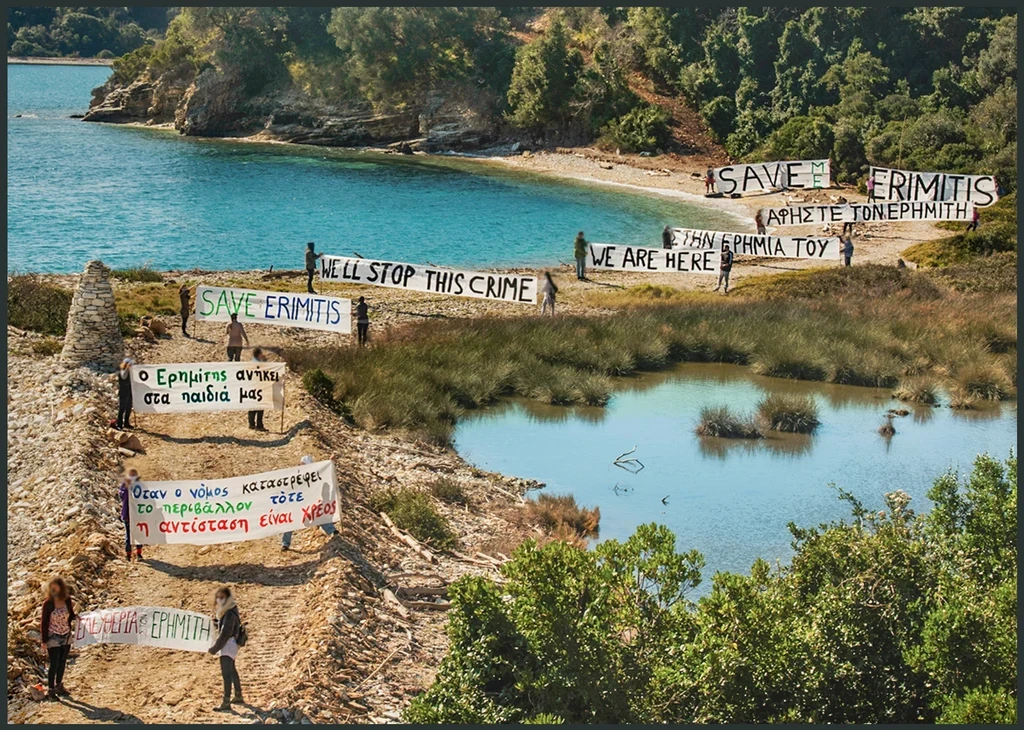
Citizens’ protest in the Erimitis area in February 2021, a few days after a bulldozer opened a road between Vromolimni Beach and its wetland. Source: Save Erimitis.
More recently, iSea has developed a proposal for a “Locally Managed Marine Area” that could cover 711 hectares — 186 hectares on land and 525 hectares at sea — with the local community playing a central role in management.
For now, this remains a proposed framework rather than an officially established protected area.
In 2025, iSea mapped approximately 560 stakeholders and individuals. In a separate survey, 519 people were approached and 202 questionnaires were completed.
A planned three-day series of co-design workshops did not take place for external reasons, while five comments were submitted during the public consultation.
The proposed management system would include a committee representing the local community, fishermen, tourism, local government and other stakeholders. The committee would examine monitoring data and could propose or approve changes to management rules.
Among the proposed measures are avoiding anchoring on Posidonia meadows, imposing a five-knot speed limit on boats, promoting sustainable fishing practices, creating ecological moorings and establishing rules for tourism activities.
The proposal also calls for systematic ecological and socioeconomic monitoring so that measures can be revised according to their results.
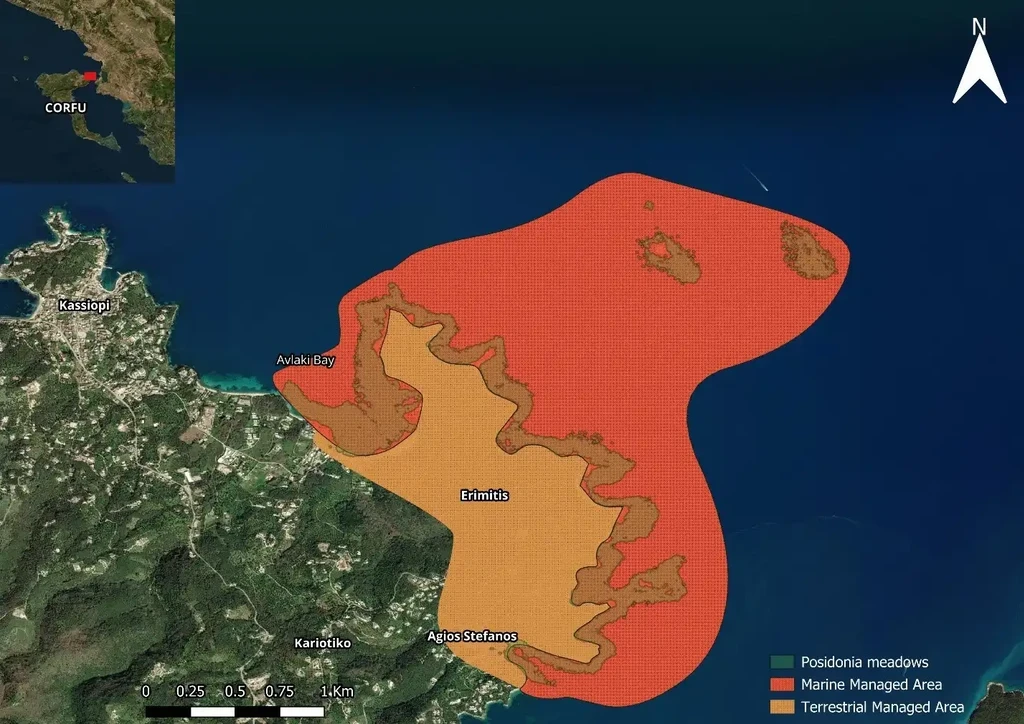
The iSea proposal for a Locally Managed Marine Area in Erimitis covers 711 hectares of land and sea. The map shows the proposed marine and terrestrial management zones, as well as Posidonia seagrass meadows. The plan has not yet been formally adopted. Source: iSea.
Bringing Erimitis into the classroom
The effort also has an educational component.
With support from the IEF, iSea created bilingual educational material for students ages 5 to 15, including role-playing games about management choices and outdoor citizen-science activities.
In 2025, the material was sent to 160 schools, some of which also requested online presentations from the organization’s team.
“Environmental protection starts with local communities and the people who make them up,” Karidis says.
He recalls the captain of the fishing boat involved in the visit to Erimitis, a man who earns his living from tourism but opposes further development because the undeveloped section of the coast is part of what he offers visitors.
According to Karidis, the captain told him that development was beginning to undermine the very thing he was trying to sell.
When the landscape is part of the product
The same issue was addressed at the “Towards Resilient Destinations” conference, co-organized in April by the IEF and Ionian University in Corfu.
The conference connected destination resilience with nature, culture, governance and the future of tourism. Its program included a marine visit by participants to Erimitis.
Dimitris Vayanos, a finance professor at the London School of Economics and one of the principal authors of the Pissaridis Report, participated as a speaker and placed the issue within the broader debate over Greece’s economic model.
Tourism generates income and employment, he said, but it is a relatively low-productivity sector compared with activities such as technology, manufacturing and financial services.
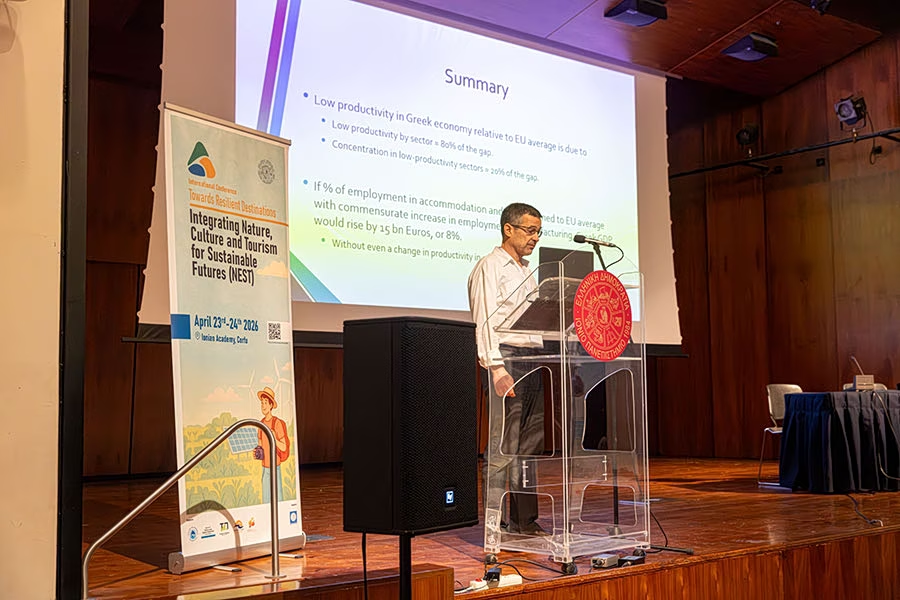
Dimitris Vayanos during his keynote speech at the ‘Towards Resilient Destinations’ conference. Source: IEF
For Vayanos, the question also concerns the overall mix of activities an economy wants to encourage and the resources it allocates to them.
Large tourism investments also consume limited resources — land, water and public infrastructure — and when they are accompanied by planning privileges, this should be taken into account in their economic assessment, he said.
A greater share of tourism revenues should also remain within local communities and be translated into infrastructure for residents, according to Vayanos.
There is also an important qualification to the general economic rule that larger businesses are more productive.
“I think tourism is an exception,” Vayanos says.
In a destination, small scale can itself be part of what visitors pay for: small tourism businesses, villages and experiences that preserve the scale and identity of a place.
An accommodation can be high-standard without being large.
Conversely, a resort that fits without difficulty in one geographic setting can disproportionately change the character of a small island.
That argument closely mirrors the experience described by Karidis’ fishing-boat captain: the value of the tourism product is not found only in what is designed for visitors.
Spatial planning, Vayanos argues, therefore needs to treat the island as a whole.
“Some parts of the island must remain untouched so that everyone else can benefit from them.”
Darrell identified another gap during the conference.
She argued that while interesting ideas for nature-based and cultural tourism already exist, effective coordination is often missing to turn them into practical solutions.
A wider regional debate
The dilemma over Erimitis’ future has taken on a greater political dimension in Albania.
A tourism development plan worth approximately €1.4 billion, linked to Jared Kushner, near the protected Vjosa-Narta area continues to provoke large demonstrations, symbolized by pink flamingos.
Albanian Prime Minister Edi Rama has defended the investment and said an environmental assessment will precede it.
The two cases differ significantly in scale, legal status and political context. But they raise a related question: What form of development preserves the value of the place in which someone is investing?
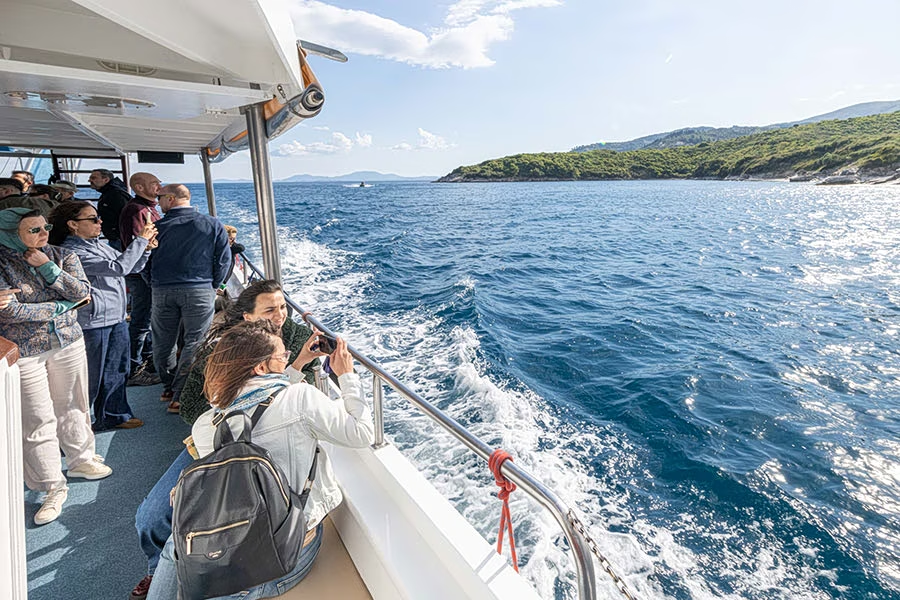
Moment from the marine excursion to Erimitis as part of the ‘Towards Resilient Destinations’ conference. Source: IEF
Darrell remembers the boat journey from Corfu’s city port to Erimitis during the conference.
As the boat traveled along the northeastern coast, it passed hotels and villas. The journey reminded her of similar boat trips she took with Gerald Durrell in the 1980s.
“And then the boat turned. In front of us appeared a green, golden, shining forest and the beaches of Erimitis. It is so precious,” she says.
Back at Erimitis, the acoustic horizon remains open, for now.
The new investment plan has yet to be presented in full. It also remains to be seen whether alternative proposals for protection and management can work in practice.
On the road to Corfu airport, Tomprou’s words at Akoli Beach linger:
“Whenever we come out of the forest onto the beach, I like seeing the expressions on the faces of the people I bring to this magical place. Surprise, admiration. Everyone stops for a moment.”