 Μake us preferred on Google
 Engineers advising residents in Kypseli, a densely populated district of Athens, have raised concerns about the structural safety of apartment buildings affected by construction of Metro Line 4, saying ground settlements have reached nearly four times the established safety limit and that damage and cracking are continuing.
The findings are contained in a preliminary report prepared by structural engineer Nikolaos Krasakis and mining engineer and National Technical University of Athens professor Dimitrios Kaliampakos. The two were appointed as technical advisers to residents by the Athens Municipal Council.
The report, presented by To Vima, was submitted to the Athens municipality on Wednesday, September 9, and discussed during a meeting of the municipal council.
The engineers say the information provided by Elliniko Metro, the state company overseeing Athens’ metro projects, is incomplete and contains errors and inaccuracies. They also warn that the delay in carrying out detailed structural assessments and beginning repairs leaves unresolved questions about the actual structural adequacy of the affected buildings.
Ground settlements exceed safety threshold
According to the engineers, differential ground settlements attributed to the tunnel-boring machine used to excavate Metro Line 4 have reached 55 millimeters, compared with a safety limit of 15 millimeters.
The 15-millimeter threshold was itself set at 75% of a 20-millimeter limit.
The report also says calculated building rotations exceeded the alarm threshold of 1/700, reaching as much as 1/350.
As a result of the settlements and building movements, the engineers say the remaining risk classification of most of the buildings has shifted from medium, classified as “yellow,” to high, classified as “red.” Under the assumptions used by Elliniko Metro and the project’s contractor, the latter classification can correspond to the presence of a structural problem.
Of the 14 buildings for which documents were provided, the Level I vulnerability assessments confirmed the originally estimated low-risk scenario, or “green” classification, in only three buildings.
Three were classified as medium risk, or “yellow,” while five were classified as high risk, or “red.” No assessment data were provided for the remaining three buildings.
Following Level II assessments, six buildings were classified as medium risk and one as high risk, while information was still unavailable for three buildings.
Engineers say data are incomplete
The engineers say the documents they received cover only 14 apartment buildings, while residents have reported damage in at least 25 buildings.
They also say that in three of the 14 cases, no post-tunnel-boring-machine Level I special vulnerability assessment was provided, preventing conclusions from being drawn. No Level III special vulnerability assessments were provided for buildings previously classified as high risk.
The report identifies what it describes as discrepancies and errors in the documents, including cases where a vulnerability assessment concerns a neighboring building rather than the one under examination.
It also cites discrepancies in reported construction dates and in descriptions of building construction. In one case, a building is described as having been constructed in 1960, while the damage report gives 1935-1945 as the construction period according to residents. In another, the dates are listed as 1950 and 1930-1940.
The engineers say such discrepancies can directly affect calculations of the buildings’ risk indicators and result in an underestimation of risk.
They further say the available information demonstrates that the initial assessments made by Elliniko Metro and the project’s contractor have failed to reflect the actual effects of the tunneling work.
Damage and cracks reportedly continue
The damage reports supplied to the engineers concern inspections conducted mainly in March, April and May 2026. Only two buildings were inspected again in July and August.
The engineers say this limits the ability of the reports to capture the current condition of the buildings because, according to residents and their own inspections, damage and the appearance of cracks have continued.
They argue that the effects of settlement and ground movement cannot be assessed solely through visual inspection. A change in a building’s geometry, they say, could alter its structural behavior and its ability to withstand seismic risk without necessarily producing visible signs in the structural frame.
The report therefore calls for detailed measurements and structural studies for all affected buildings.
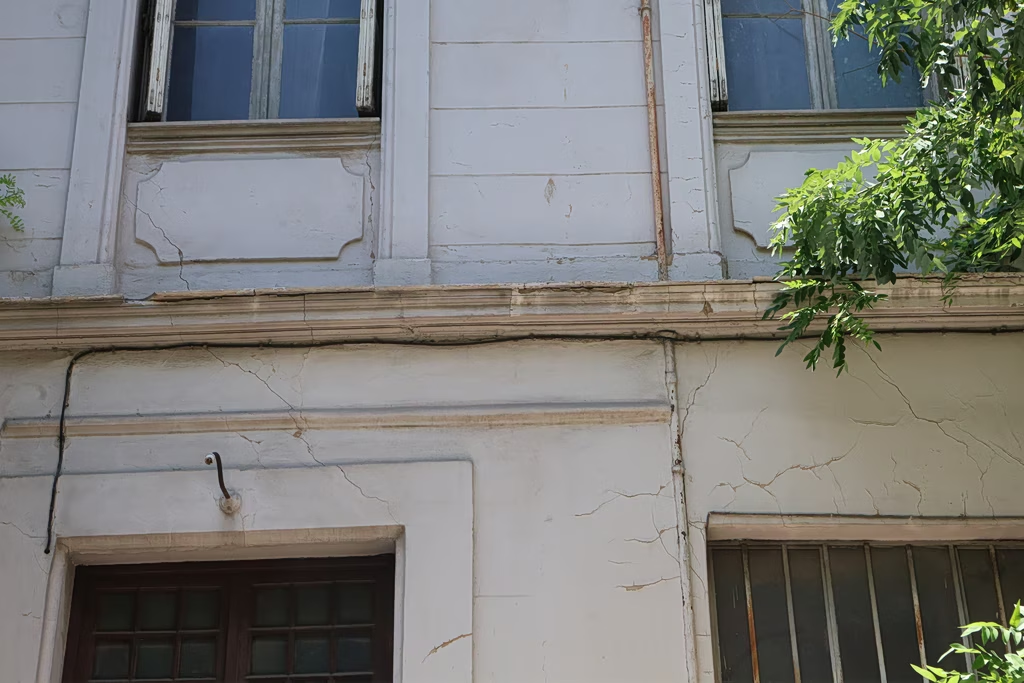
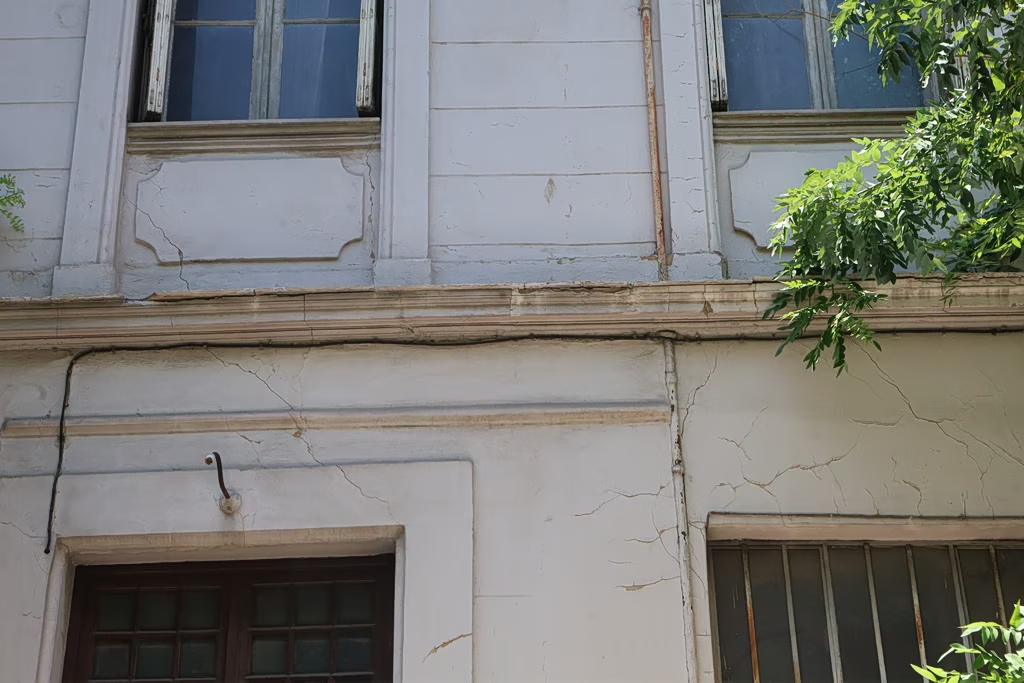
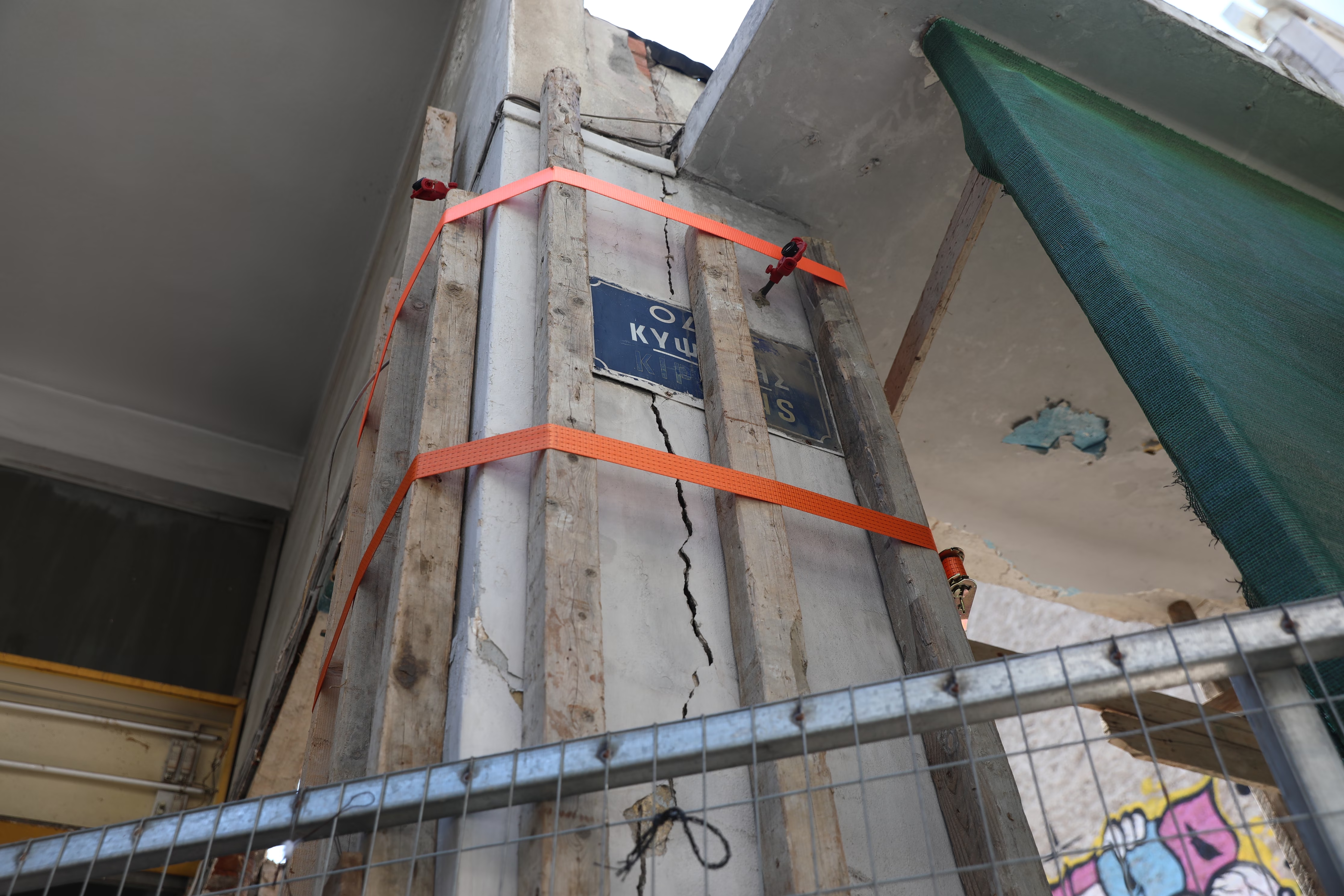
The engineers also say that damage to structural elements, including columns, has been identified in some buildings. They cite damage reports that explicitly refer to structural damage in two apartment buildings.
In eight buildings, the reports record cracks in columns that require further investigation to determine whether they are superficial or extend into the concrete.
The reports also document cracks at the junction between masonry walls and structural elements such as columns and beams. In four other buildings, inspectors recorded difficulties opening and closing doors, which the engineers say may indicate differential settlement requiring further investigation.
The engineers say their own inspections also confirmed damage to structural elements in several buildings.
Engineers call for studies before Metro work resumes
Krasakis and Kaliampakos say structural adequacy and repair studies must be completed, along with any resulting repairs, before any possible resumption of work by the tunnel-boring machine.
The machine is currently located beneath affected apartment buildings, some of which have significant damage, according to the report.
The engineers also point to the particularly small distance between the bottom of the buildings’ basements and the roof of the tunnel in the affected area.
They say they have requested additional information from Elliniko Metro, including the company’s existing technical assessment, project records for the affected section of Kypseli, tunnel-boring-machine pressure readings, monitoring data on ground settlements and building movements, and geotechnical and structural studies conducted before construction began.
According to the report, some of the requested documents were eventually sent to the Athens municipality following a written request by Mayor Haris Doukas. These included damage reports and vulnerability studies for 14 buildings.
The engineers say that without the remaining requested information, they can only form a partial picture of the situation.
Athens mayor calls for urgent action
Athens Mayor Haris Doukas said the issue was extremely serious and announced plans for a new emergency meeting of the municipal council.
“The structural adequacy assessments, repairs and works must be completed before the tunnel-boring machine resumes work,” Doukas said. He added that buildings classified as “yellow” and “red” require structural assessments and that any identified problems must be repaired immediately.
Doukas also said the authorities need to explain how the metro project will resume and invited residents and their technical advisers to a meeting on Monday to prepare a letter to the relevant authorities.
Panos-Parys Charlaftis, the deputy mayor for technical services, also questioned the lack of progress since the project was halted in May.
“The facts themselves are worrying,” he said, adding that regardless of how reassuring Elliniko Metro’s statements may be, the continued suspension of the project without information on when or how it will resume raises questions.
Preliminary report warns of unresolved safety concerns
The engineers stress that their report is preliminary and was prepared urgently to inform residents and authorities. They say they will submit a more detailed assessment once they gain access to the remaining documents and data they have requested.
Their preliminary conclusion is that the documents and inspections indicate damage to both structural and nonstructural elements of apartment buildings, as well as differential settlements that have reached nearly four times the safety limit.
They say structural adequacy and repair studies are necessary not only for the 14 buildings for which documents were supplied, but also for other structures that have sustained similar damage.
The engineers conclude that delaying the necessary studies and repairs is prolonging residents’ uncertainty and fear and, more importantly, leaves unresolved the question of the buildings’ actual structural adequacy in Athens, an earthquake-prone area.
The report is dated September 8, 2026, and was prepared by the technical advisers appointed by the residents and the Athens municipality.