The European Commission and the European Investment Bank have approved a €2.3 billion investment program under Greece’s Decarbonization Fund for Islands, paving the way for a broad package of energy and environmental projects across the country’s islands.
According to Greece’s Ministry of Environment and Energy, the approved projects form an integrated strategic investment plan aimed at transforming the energy and environmental systems of the Greek islands.
The Decarbonization Fund for Islands was established exclusively for Greece as a unified financing framework combining island electricity interconnections with clean energy generation, energy storage and electric mobility.
Where the €2.3 billion will go
The approved interventions are divided into four main categories:
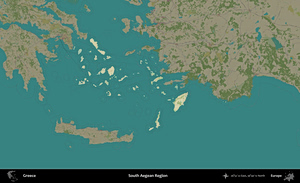
- €1.1 billion for electricity interconnections and related energy infrastructure in the Dodecanese, Cyclades and North Aegean islands.
- €977 million for renewable energy projects with storage, with particular emphasis on photovoltaic systems for self-consumption.
- €200 million for multipurpose dams and reservoirs.
- €56 million for electric vehicle charging infrastructure.
The photovoltaic projects are intended for a wide range of locations, including homes, hotels, restaurants, stores, offices, hospitals, care facilities, schools, public buildings, agricultural installations and cultivated land.
Interconnections and renewable energy
The investments are expected to help reduce the carbon footprint of Greece’s islands, strengthen their energy security and autonomy, and accelerate the green transition.
Electricity interconnection projects are considered particularly important because they will help integrate island electricity systems with the mainland grid and reduce reliance on oil-fired power generation.
They are also expected to allow greater use of clean energy, reduce energy costs and strengthen the tourism sector.
At the same time, renewable energy and storage projects are expected to increase the islands’ energy autonomy and improve the flexibility of their electricity systems.
Funding will depend on carbon prices
The fund’s estimated resources currently stand at around €2 billion, based on current prices for emissions allowances under the European Union’s Emissions Trading System.
The total amount available will depend on how the price of emissions allowances evolves during the fund’s operating period.
Greece’s Ministry of Environment and Energy, working with the relevant authorities, is now moving to specify the individual projects and prepare for the timely and effective implementation of the approved measures.
The goal is to strengthen the resilience of the Greek islands while advancing their energy transition.
EU climate commissioner backs the program
European Commissioner for Climate, Net-Zero and Clean Growth Wopke Hoekstra welcomed the completion of the program and its approval by the European Investment Bank.
“I warmly congratulate Greece on finalizing the design of the Program, which has been approved by the European Investment Bank,” Hoekstra said.
“Now is the time to implement the Program in practice,” he added, describing the fund as an example of how revenue from the EU Emissions Trading System should be used to finance clean energy that directly benefits consumers on the Greek islands.
According to Hoekstra, the investment will contribute to cleaner, safer and less volatile electricity, better interconnections and expanded electric vehicle charging infrastructure.
Greece says islanders should have equal energy security
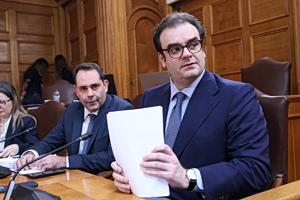
Greek Environment and Energy Minister Stavros Papastavrou described the approval as another important step in the country’s energy transition.
He said the government was securing another significant financing tool following the Social Climate Fund and turning its energy strategy into concrete projects for citizens.
“With the Decarbonization Fund for Islands, we are fulfilling a key commitment: that our islanders should have the same opportunities and the same energy security as every citizen in mainland Greece,” Papastavrou said.
He said the program would support more energy-autonomous and secure islands, affordable energy for citizens and businesses, clean energy from solar and wind power, and improved development prospects.
Papastavrou described this approach as “energy democracy,” saying that no citizen or Greek island should be left behind in the energy transition.
He also highlighted the cooperation between Greece, the European Commission and the European Investment Bank, thanking Deputy Minister Nikos Tsafos for his contribution to the project and Hoekstra for his support and cooperation.