 Μake us preferred on Google
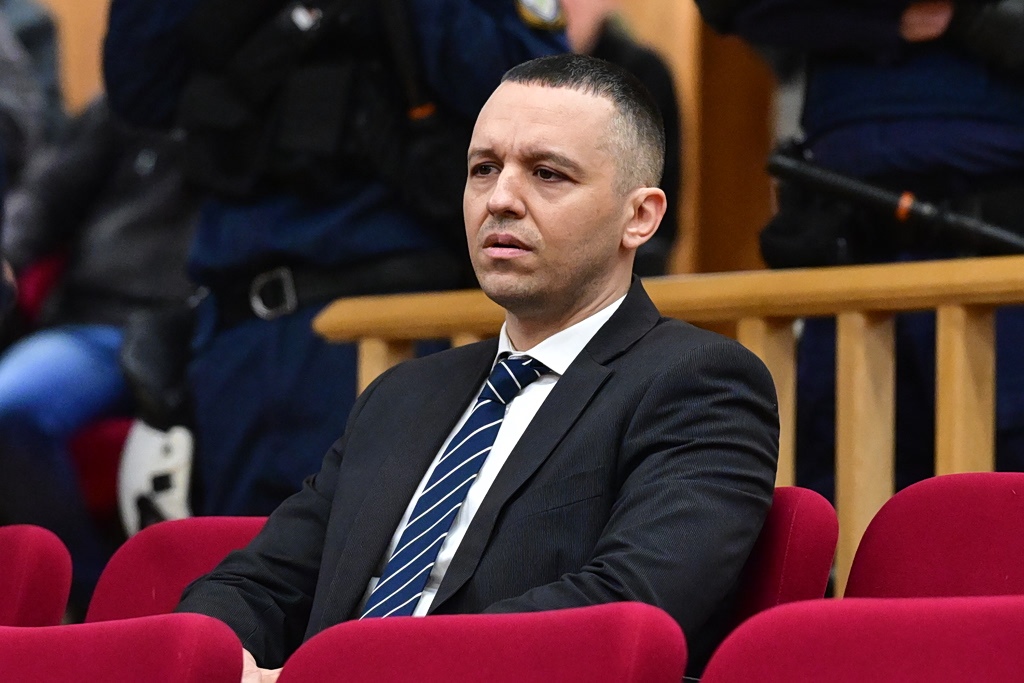
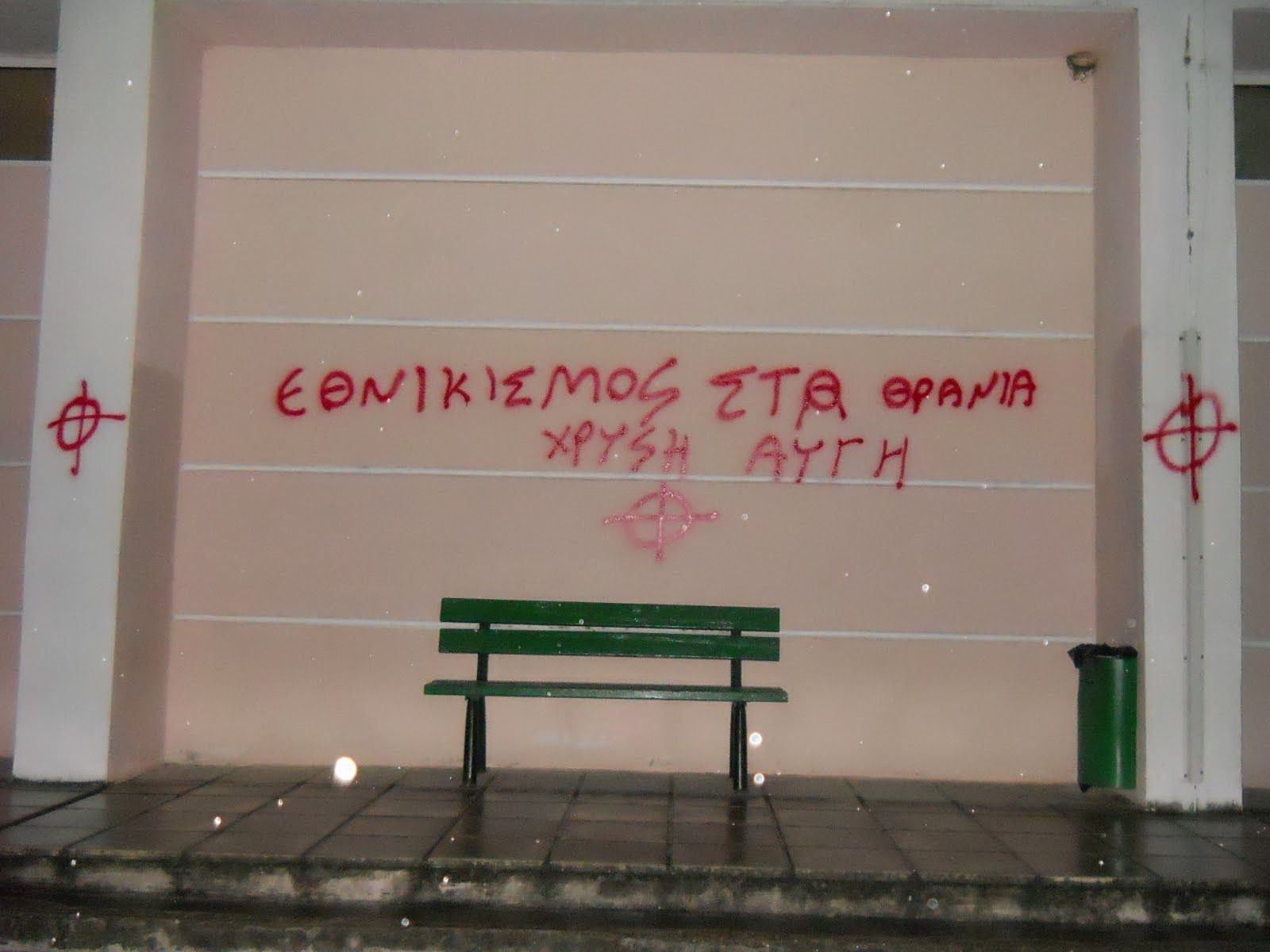
A network of Greek teachers and parents formed within the past year says it has documented dozens of incidents of far-right propaganda, racist behavior and violence in schools, while stressing that those involved are a minority of students. Representatives of the Antifascist Education Network spoke to Greek TV channel MEGA in the aftermath of the stabbing of an 18-year-old Egyptian student on Oct. 12. The unnamed student, a shipwreck survivor, was attacked outside his night school in central Athens and stabbed repeatedly in the back. Police have not established a motive. According to members of the network, some of the cases involve symbols, slogans and references to the neo-Nazi party Golden Dawn and its former leading figure, Ilias Kasidiaris, and range from graffiti on school grounds to threats against teachers and attempts to disrupt school activities.
‘All ages’
Panagiotis Giannopoulos, a network member, said that of the first 54 cases the group logged, through questionnaires filled out by teachers and parents in different parts of the country, 10% involved elementary schools and the rest middle and high schools. At the elementary level, he said, the cases included graffiti and swastikas, as well as teachers who treated children from other countries in unacceptable ways, telling them to “go back to your country” or lecturing pupils about “illegal immigrants” being responsible for crime. “There are threats, harassment and graffiti in schools everywhere, and even direct threats against teachers and parents,” he said, describing a wider rise of the far right in a number of countries. “These people feel they are riding the wave and are trying to impose their views this way, even though they are a minority. We should not forget that.” Giannopoulos was careful to stress that such views remain marginal. “The majority remains firmly opposed to these ideas,” he said.
How the far right reaches students
Olympia Georga, a secondary school teacher and network member, linked the current climate to Kasidiaris’s release from prison in mid-September. Throughout the summer, she said, far-right supporters had hyped his upcoming release with celebratory TikTok videos and online posts that contained outright threats. Golden Dawn, she said, still does highly organized work among students, handing out leaflets outside schools and relying heavily on the internet. One leaflet promotes the National Front, which she described as Golden Dawn’s youth wing, and calls on “little brothers” sitting at school desks to join.
“It’s a trend,” she said. “Most of them really are just following the trend without knowing what it means. But among them are some who understand very well what they are doing. They are members of organizations and fascist offshoots, trying to make their way back into Greek society by targeting its most vulnerable part, which right now is young people.” For a fad like this to have made it into schools, she added, “it means there is a mechanism behind it, an algorithm, money, funders.”
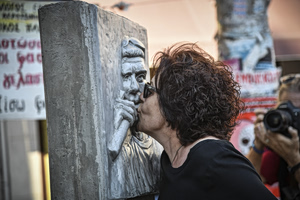
She recalled an event at the network’s antiracism festival featuring Magda Fyssa, whose son, the antifascist rapper Pavlos Fyssas, was killed by a Golden Dawn member in 2013. Fyssa opened her remarks by describing a day at Schinias beach, where she overheard a group of children aged 8 to 10 chanting “Blood, honor, Golden Dawn,” one of the party’s signature slogans. “Imagine a woman whose son was murdered by fascists hearing 8- and 10-year-olds shout that,” Georga said.
Some of the incidents the network has recorded are chilling, Georga said, including Nazi salutes on school trips to Kalavryta and the Kaisariani Shooting Range. Both are among Greece’s most important memorials to the Nazi occupation: German troops massacred the male population of Kalavryta in 1943, and executed 200 Greek prisoners at Kaisariani in 1944.
The attack in Metaxourgeio
Georga pointed out that there had been two attempted killings within the last 15 days. The first was the stabbing of an antifascist athlete in Elefsina by members of Propatria, which she described as a fascist offshoot, calling it a clearly fascist act. The second was the attack in Metaxourgeio. “We don’t know the motives yet, and it isn’t our job to know,” she said. “But it’s no accident that when we all heard about it, the first thing we thought was that it might be a fascist act, given the current climate.”
The Egyptian student was attacked on the evening of Oct. 12 outside the 6th Evening High School of Athens in Metaxourgeio, where he attends classes, after stepping out with a friend to buy water from a nearby shop. “There were about 20 of them. They started cursing at me and then they attacked me,” he told newspaper TA NEA, which obtained footage of the attack. He said he had never seen the attackers before. According to the newspaper, the 18-year-old student has been in Greece for about a year and a half and lives in a shelter for unaccompanied minors, since he has no family in Greece.
The footage shows a group of minors gathering on a pedestrian street, running at the two students and then scattering into side streets. His friend, also a minor, told police that about 15 people of Albanian origin attacked them, and that one of them chased the student into the schoolyard while stabbing him. Police seized a bloodied 11-centimeter (about 4-inch) blade at the scene. The student underwent surgery at Sotiria hospital because the knife had punctured his lung, and was reported in serious condition. The police investigation is ongoing.
“We still don’t know whether the incident was actually racist,” Giannopoulos said. “But even if it wasn’t, it is certainly part of a situation in which gangs attack and knife whoever they come across, especially if they have slightly darker skin.”
The silent majority
Georga said most students reject these views but stay quiet. She described class discussions in which three students out of 25 espoused such ideas, only for classmates to approach her during the break to tell her they did not agree. When she asked why they had not spoken up, she said, the answers fell into two camps. Some were afraid, because the minority uses intimidation, in words and in actions, to impose silence. Others felt the debate was so crude and irrational that engaging would only drag them down.
“Parents need to be very careful,” she said, “especially parents of middle and high school students.” She pointed to the case of the Nationalist Youth Organization of Thessaloniki, whose members went on trial this spring. The group was exposed, she said, only because a mother took to the police the messages her child had been receiving, with instructions on how to ambush anarchists, antifascists and young singers. Its tactic, according to Georga, was to draw minors into criminal acts so they would be tied to the organization and unable to leave.
‘Not a trend’
Vera Athanasiou, a psychologist who also took part in the program, rejected the description of the phenomenon as a trend, arguing that the label misses the point. Children today feel a strong need to follow trends, she said, because they tie it to their self-worth, as if they only count when they do what everyone else is doing. Preadolescence, she added, now begins as early as age 8.
“Kids who chant these slogans didn’t just wake up one day, hear them somewhere and adopt them,” she said. “There is a breeding ground where these children are incubated. There are homes where they hear and see these things.”
Families often give children unrestricted access to information, Athanasiou said, and constant exposure breeds familiarity. Over time the ideas come to feel normal and can become part of a child’s identity, especially when they offer a way into a group. “You always need to belong,” she said.
Research shows, she said, that a teenager who would hesitate to act aggressively on his own is far more likely to do so when a group is behind him, watching. Violence earns him hero status among his peers and proves he lives by the group’s rules.
Athanasiou linked this to Kasidiaris’s release, which she said his followers have turned into a story of heroism: a hero vindicated and walking free. That is how he is presented, she said, and how he is embraced by the young people who become the movement’s most zealous foot soldiers.
“That swagger, which we often underestimate, creates such familiarity that when the knife ends up in your hand, you think it’s normal, because you’ve seen it so many times,” she said.
Source: TA NEA