Greece’s tourism map is entering a new phase of restructuring. The new Special Spatial Planning Framework for Tourism, to be presented Monday by Tourism Minister Olga Kefalogianni and Environment and Energy Minister Stavros Papastavrou, introduces differentiated development rules by region, with particular focus on the islands. Rather than treating the islands as uniform tourism “showcases,” the framework divides them into zones, imposing limits where overtourism has exhausted the capacity of local communities, while at the same time attempting to maintain the necessary balance with a tourism market still seeking room for growth.
According to a latest draft obtained by TO VIMA, the number of tourist beds allowed will depend on each area’s position on the “tourism saturation” map. In saturated island municipal districts, classified as “Controlled Development Areas” (Category A), the maximum limit for new tourist accommodation is set at 75 beds, although as of Friday there remained the possibility that the final cap could be raised to 100. In “Developing Areas” (Category B), however, the limit rises to as many as 350 beds.
Different Speeds of Development
The new framework effectively creates different development speeds even within the same island. Corfu is a characteristic example. In the municipal district of Corfu Town, considered saturated, the proposed upper limit is 75 or 100 beds, depending on the final decision. In nearby districts such as Faiakes and Agios Georgios, however, significantly larger hotel units of up to 350 beds would be permitted.

In Zakynthos, meanwhile, the new model creates three separate development zones. The saturated municipal districts of Zakynthos Town, Arkadioi and Laganas fall under the strictest restrictions. Alykes (Category B), however, moves into the intermediate category, while the districts of Artemisia and Elationas are classified as “early development” areas (Category D), where new investments will be permitted provided the accommodations are rated from three to five stars/keys, or two stars/keys if they meet strict environmental performance standards.
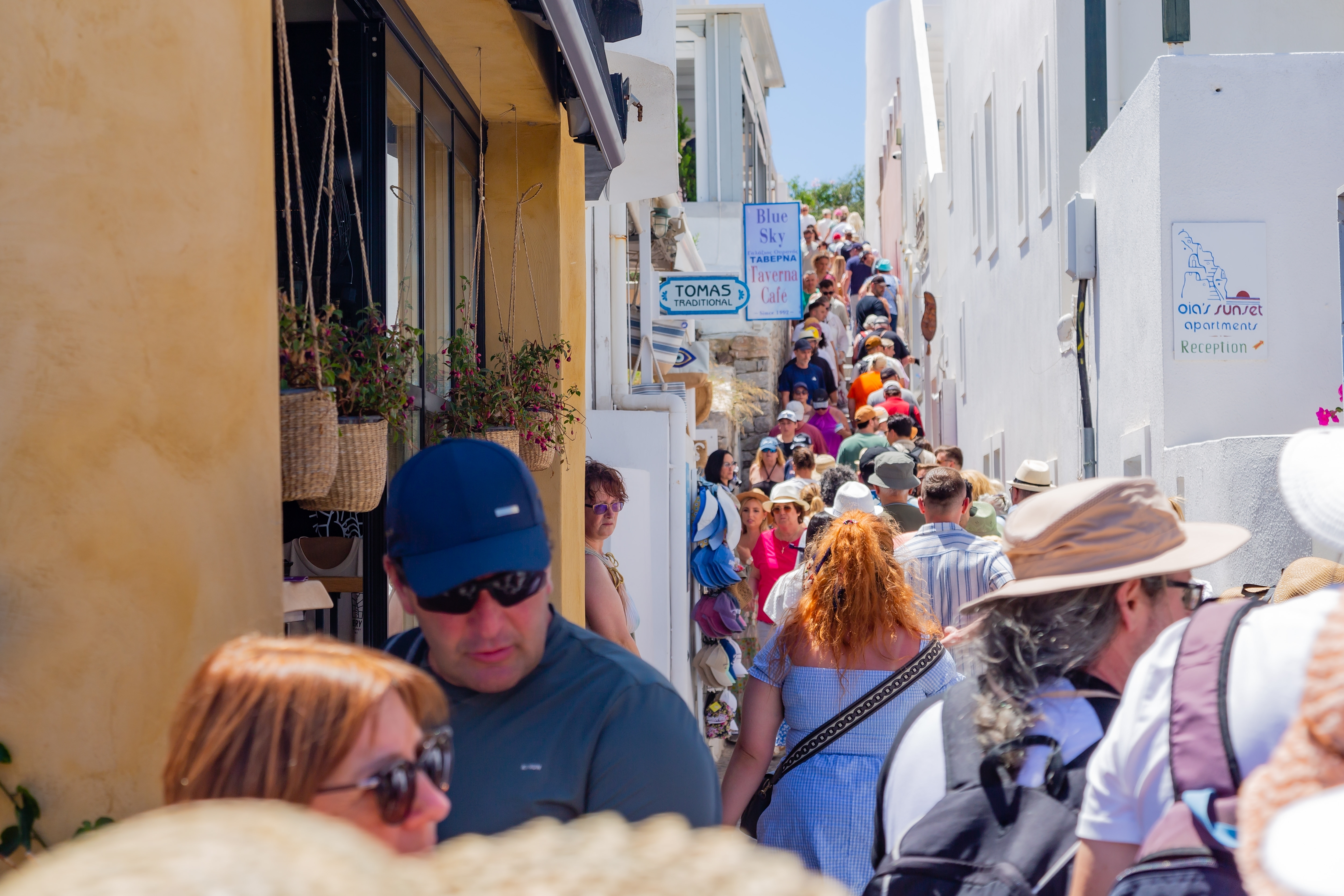
Entire islands such as Skiathos, Mykonos, Santorini and Kos are classified as saturated, with the exception of the Dikaios area on Kos, which falls under the developing category. Also included in the saturated category are the municipal districts of Zakynthos Town, Arkadioi and Laganas on Zakynthos; Ermoupoli on Syros; Afandou, Ialysos and Kallithea on Rhodes; Tinos, excluding Exomvourgo and Panormos; and Corfu Town. On Crete, the areas of Malia, Hersonissos in Heraklion, and Nea Kydonia in Chania are also included. These areas will face the strictest restrictions regarding the number of beds allowed in new tourist accommodations.
As of Friday morning, however, the prevailing scenario favored the stricter cap of 75 beds rather than 100. Since the issue remains a key point of negotiation between ministries and tourism industry stakeholders, the final limit could still be set higher.
Focus on Upgrades and Sustainability
Beyond zoning distinctions and bed restrictions, the new framework proposes a broad package of interventions aimed at upgrading the quality of Greece’s tourism product, with emphasis on sustainability and modern infrastructure.
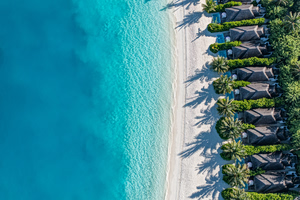
In particular, it introduces the possibility of incentives for the environmental upgrading of existing tourist accommodations. At the same time, it promotes the development of modern low-impact hospitality models, such as luxury camping facilities, or glamping.
Special importance is also placed on the establishment of special levies for saturated, developed and developing areas. These fees will apply across the entire tourism sector, including simple rental rooms, with revenues directed toward funding urban renewal projects and infrastructure supporting tourism activity.
The Island Categories
The islands — excluding Evia and Crete — are divided into three categories.
The large islands of “Group I,” those exceeding 300 square kilometers, including Andros, Zakynthos, Thassos, Karpathos, Corfu, Kefalonia, Lesbos, Lefkada, Lemnos, Naxos, Rhodes, Samos and Chios, will see designated tourism development zones outside urban plans, along with protections for natural and cultural environments where tourism construction may be limited or prohibited altogether. Incentives for upgrading existing accommodations are also included.
Similar incentives are proposed for the 49 islands between 20 and 300 square kilometers in “Group II,” which includes Mykonos, Paros and Santorini, among others. Restrictions are also foreseen on the construction of new three- to five-star hotel units.
The same restrictions for new accommodations apply to “Group III,” which includes all remaining islands, as well as every small land surface within Greece’s maritime space measuring less than 20 square kilometers. For islands smaller than 1,000 stremmas (roughly one square kilometer), only mild marine recreation activities are proposed.
As for Greece’s coastal zone, the proposal calls for a complete ban on construction and landscaping interventions within 25 meters of the shoreline — or, where the shoreline has not officially been defined, within 25 meters of the waterline itself.