 Μake us preferred on Google
 Greece’s education minister unveiled proposals to reform the country’s high school exam system Tuesday, launching a national dialogue on a new model that could reduce the number of exams, cut material, and factor in students’ overall performance across multiple school years.
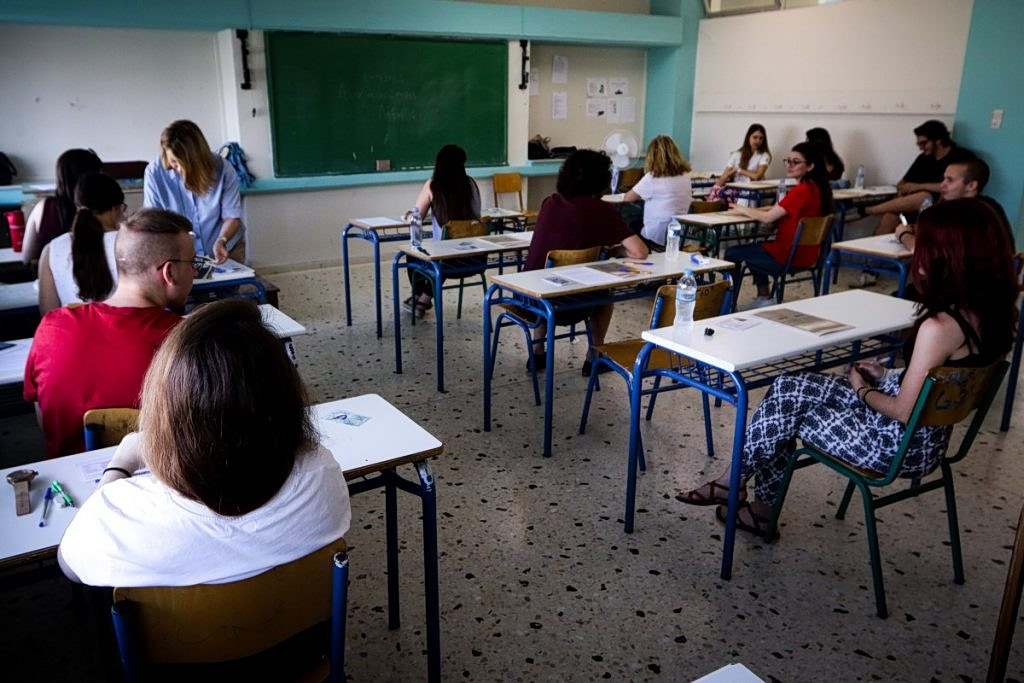
Speaking to a parliamentary committee, Education Minister Sophia Zacharaki outlined the framework for discussions on a redesigned high school system and the introduction of a National Baccalaureate-style diploma. She argued that the current system has turned the final years of high school into a “preparatory stage for exams,” undermining meaningful learning.
Zacharaki said that in the final year of high school, many students are frequently absent toward the end of the academic year, while teachers feel pressured by an extensive syllabus. As a result, she noted, real learning often shifts outside school to private tutoring, not by choice but because of systemic demands.
The minister said the goal is to create a fairer and more reliable system to certify knowledge, one that reflects a student’s overall learning path rather than performance in a single set of exams. As part of the dialogue, officials will consider whether first-year high school grades should count toward the final score for university admission. She noted that in 12 European countries, final admission scores are typically weighted 30% on oral assessment and 70% on written exams.
Zacharaki stressed that the reform is not about increasing exams but about streamlining them. In the final year of high school, the number of tested subjects could drop from six to four, along with a reduction in required material. She also proposed a fairer balance between oral and written assessments in the second and third years of high school, with the exact ratio to be determined through the dialogue.
Key directions under discussion include strengthening the high school diploma as a meaningful, internationally recognized qualification; counting high school grades—especially from the second and third years—toward final results; combining in-school performance with national exams; reducing both material and tested subjects; and enhancing the national question bank and grading framework.
The minister emphasized that any changes would be introduced gradually, with pilot phases, independent evaluations, and a sufficient transition period. Continuous teacher training and professional support would be a core requirement for success.
“No reform can succeed without teachers,” Zacharaki said, highlighting ongoing professional development as essential before and during implementation.
She reiterated that the national dialogue will proceed without predetermined decisions and invited political parties to contribute. The process aims to produce legislative proposals by November, ideally with cross-party support.
“The goal is a high school with substance, a diploma with credibility, and a system that is fairer for students and families,” Zacharaki said, adding that success would be “a success for the country, not just for one government.”
The dialogue is set to follow a nine-month timeline, including thematic working groups, regional forums, public consultation, and a final roadmap for implementation.