 Μake us preferred on Google
 Athens and Tripoli on Monday reaffirmed a shared commitment to deepen cooperation and intensifying bilateral contacts, seen as essential for regional prosperity, diplomatic sources said following Greek Foreign Minister Giorgos Gerapetritis’ high-profile visit to the Libyan capital, while maritime delimitation was a dominant theme of talks in Tripoli.
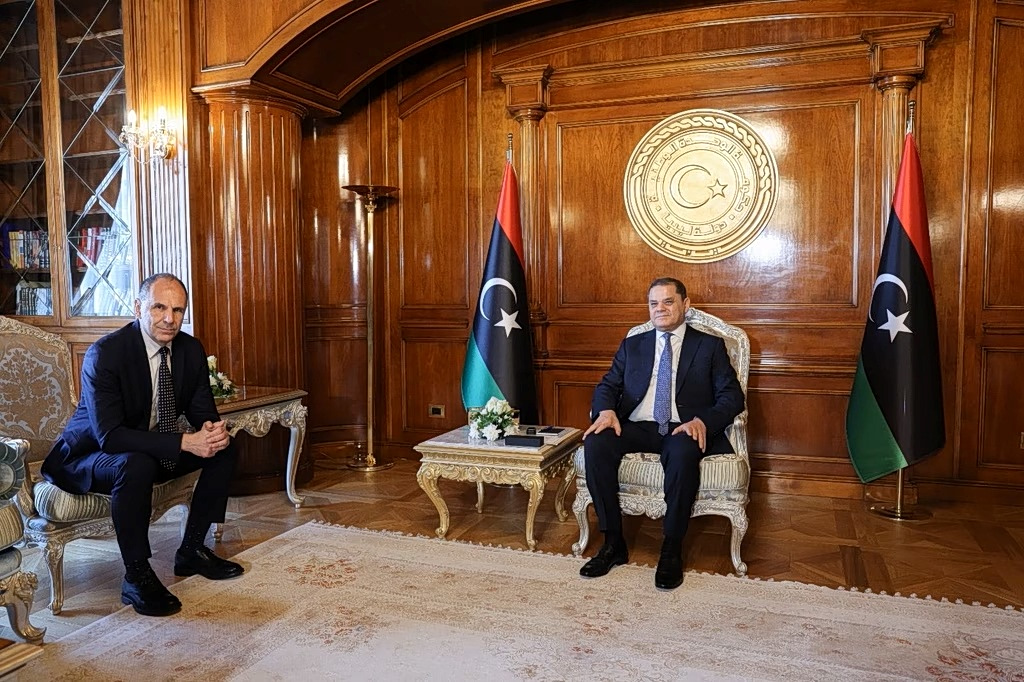
Gerapetritis held separate talks with Libyan presidential council head Mohamed al-Menfi, Government of National Unity (GNU) Prime Minister Abdul Hamid Dbeibah and acting Foreign Minister Taher Al Baour.
Greek officials stressed that the massive North African country’s unity and stability are directly linked to peace and prosperity in the eastern Mediterranean, reaffirming Athens’ readiness to contribute. The minister also welcomed progress in bilateral ties since his July 2025 visit.
Progress in previously frosty relations included a first round of technical talks on maritime boundary delimitation in September 2025; the launch of direct flights between Athens and Tripoli/Benghazi; expanded cooperation in trade and investment, and Athens’ backing for Libyan positions in international forums.
Both sides agreed on the need for continued cooperation, candid dialogue and trust-building.
Maritime Zones
In terms of the all-important issue of maritime jurisdiction, Greece reiterated its aim to delimit Exclusive Economic Zones (EEZ) and continental shelves with Libya, in line with international law, including United Nations Convention on the Law of the Sea (UNCLOS). A new round of technical talks is expected soon in Tripoli.
📍Tripoli
FM George Gerapetritis had a meeting with the PM of the Government of National Unity of Libya, Abdul Hamid Dbeibah pic.twitter.com/QGbLwbsFkB
— Υπουργείο Εξωτερικών (@GreeceMFA) April 27, 2026
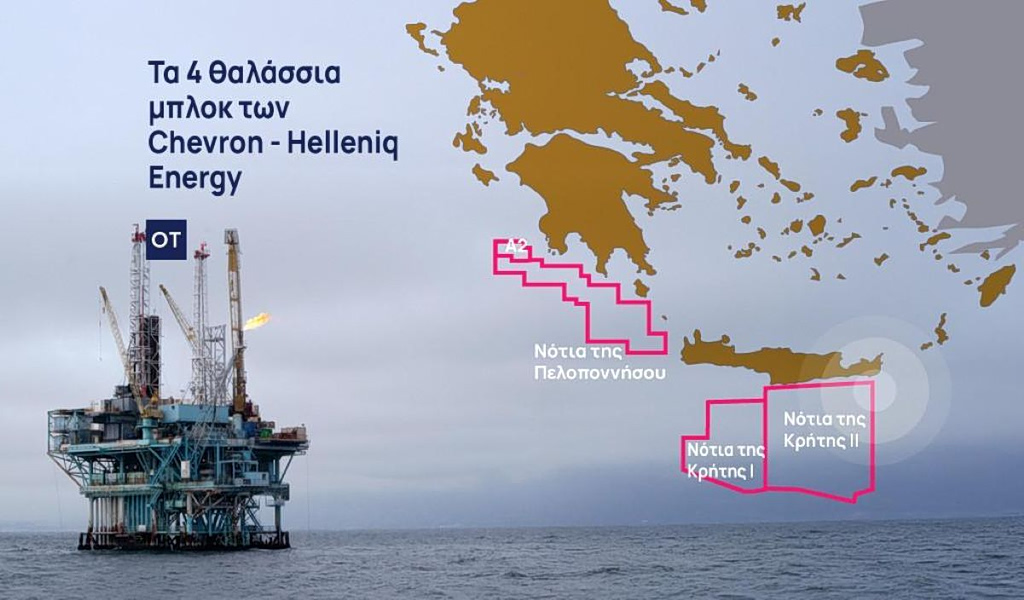
A map shows three offshore maritime blocks offered up by Greece for hydrocarbon research and exploitation, located south of Crete and south, southwest of the Peloponnese.
Migrant smuggling
On his part, Gerapetritis noted that migration flows from western Libya to Greece remain nearly zero, but warned against the emergence of a “new route” from eastern Libya. As in previous talks, Gerapetritis conveyed Greece’s offer to enhance cooperation and training for the Libyan coast guard.
Additionally, the two sides agreed to revive a joint committee to update existing agreements and negotiate new ones. They also plan to boost trade and promote investments in energy, construction, logistics, and transport.
A Greek business delegation is expected to visit Tripoli soon, while both countries will work toward establishing maritime passenger and cargo links.
The purported lists of contacts that the Greek minister will meet reflects the core agenda of the visit, with Gerapetritis reportedly aiming to secure a clear timetable for the continuation of technical talks between the two sides on formally delimitating exclusive economic zones between the two countries in the central and eastern Mediterranean.
According to To Vima, the launch of consultations was announced in Athens last September during a visit by al-Baour. The next round of technical-level discussions is expected to take place in Tripoli, with the timing potentially to be determined during Monday’s meetings.
📍Tripoli
Bilateral mtg between FM George Gerapetritis & the Acting FM of the Government of National Unity of Libya, Al Taher Salem Al Baour, followed by expanded talks between the two delegations. pic.twitter.com/IWC4OU4jrx— Υπουργείο Εξωτερικών (@GreeceMFA) April 27, 2026
Background
The issue of maritime delimitation and Exclusive Economic Zones (EEZs) in the eastern Mediterranean has emerged as one of the most complex and persistent geopolitical disputes involving Greece, Libya and Turkey.
At the heart of the disagreement is the delimitation of maritime zones — including the continental shelf and EEZ — which determine rights over natural resources such as hydrocarbons. Greek officials maintain that these issues constitute the only outstanding dispute with Turkey, insisting they must be resolved under international law, particularly the UN Convention on the Law of the Sea (UNCLOS).
Turkey, however, rejects key provisions of UNCLOS and argues for a broader negotiation framework, claiming entitlement to a “fair share” of maritime zones in the Eastern Mediterranean.
The controversial 2019 Turkey–Libya memorandum
Tensions escalated significantly in 2019 with the signing of a controversial maritime memorandum between Turkey and Libya’s Tripoli-based government. The agreement attempted to define EEZ boundaries between the two countries despite the absence of direct coastal adjacency.
The deal effectively “erased” Greek islands from the map, ignoring their maritime rights — a move Greece considers illegal and contrary to international law, a position also supported by the European Union and Egypt.
The memorandum has since become a central point of contention, deepening the rift between Athens and Ankara and complicating relations with Libya.
Libya’s role and competing claims
Libya itself has taken positions that challenge Greek maritime claims. It has objected to Greek EEZ declarations and offshore exploration plans south of Crete, arguing that parts of these zones overlap with Libya’s own continental shelf rights.
Tripoli has also used diplomatic channels, including submissions to the United Nations, to contest Greece’s maritime planning, reinforcing its stance in line with the Turkey–Libya agreement.
At the same time, Libya’s internal political division — between western and eastern authorities — has added further uncertainty, with different factions taking varying positions on the agreement and broader maritime negotiations.
Recent diplomatic efforts, including renewed talks with Libya, aim to establish a framework for technical negotiations on EEZ delimitation and reduce tensions in the region.