 Μake us preferred on Google
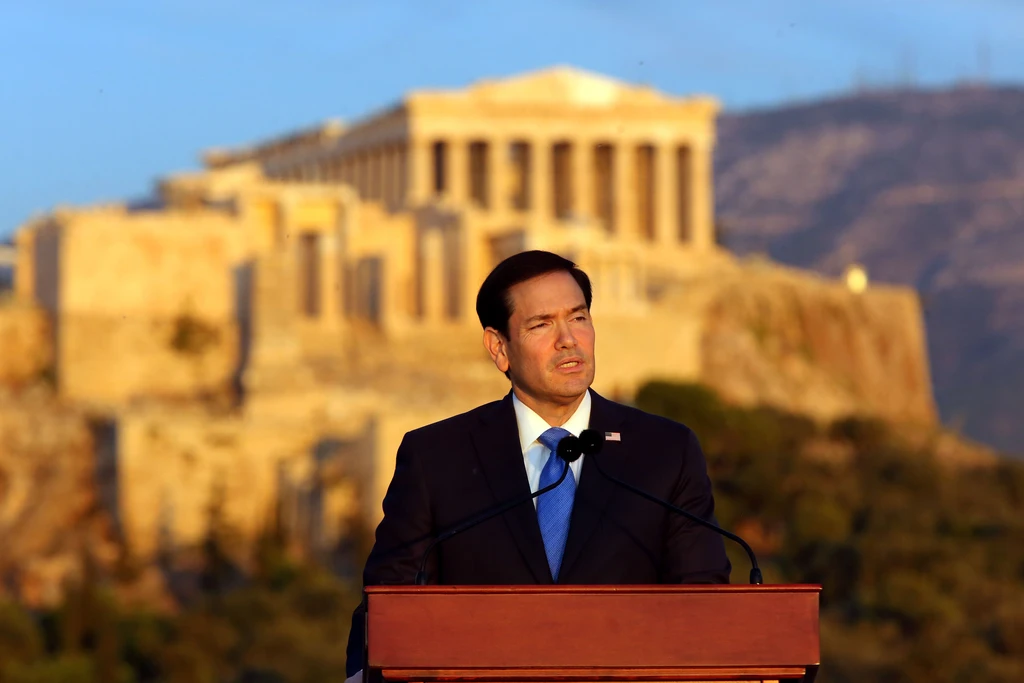
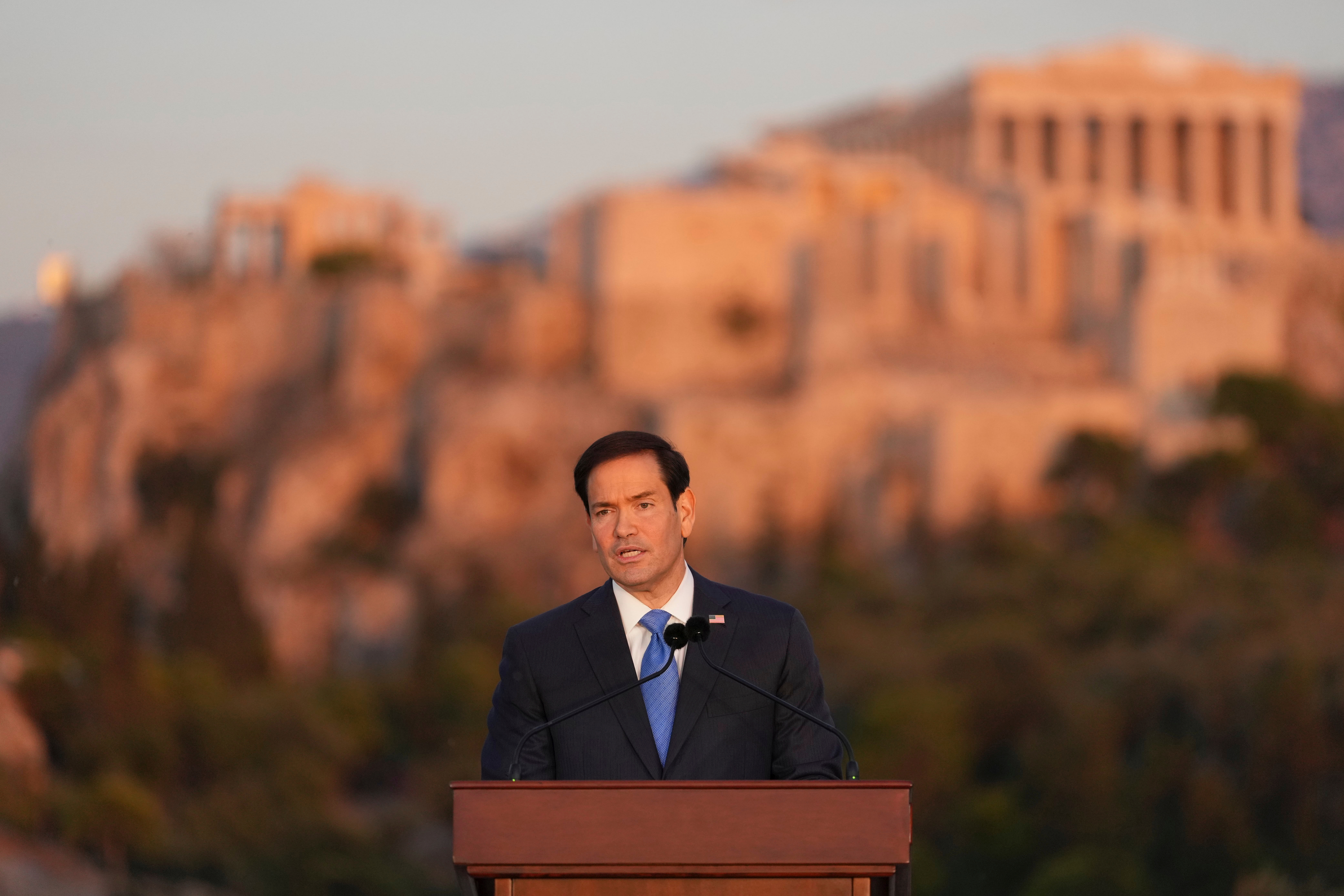
 Can Greece act as a “bridge” between Europe and the United States, as Kyriakos Mitsotakis suggested in front of Marco Rubio? The question does not concern Athens. It concerns the major European capitals and Washington, which in the “Trump 2.0” era are locked in an open, long-running confrontation over a series of structural strategic and ideological differences centered on defense and the role of the US in NATO. What does interest the Greek capital, however, and what was clearly reflected during the US Secretary of State’s visit to the country, is the further deepening of ties with Washington.
Even if some in Athens still hope that the Euro-Atlantic relationship will carry on undisturbed, the reality is that in the current, extremely fluid situation, the government is tying the country more tightly to the wagon of the powerful. And this despite the fact that the way US foreign policy is conducted is, by general admission, at odds with the basic principles of international law, respect for international organizations and multilateralism, values that Greece has consistently defended.
The thinking that prevails at the Greek Prime Ministers Office and the Foreign Ministry is captured in the words of an official with full knowledge of the government’s strategic planning: “Our relations with the United States are one thing and our relations with the European Union are another. We have maintained the highest level of contacts with Washington, in an entirely dignified manner. Besides, the theory about middle powers is fine, and the results of cooperative formats are even better, but what we need is the superpower.” A diplomatic source, of course, adds that “it is all a matter of strategy; we do not align ourselves with anyone.”
An Indispensable Ally
After the outbreak of the war in the Middle East, and amid the ongoing debate over the future role of the US in the Western security system, Athens saw a significant opportunity both to strengthen its position in the Eastern Mediterranean and to attract Donald Trump’s interest. To this end, it promoted the energy projects of the Vertical Corridor and hydrocarbon exploration in the Ionian Sea and south of Crete, with majority American participation. Defense spending was increased, with the ratio remaining clearly in favor of American weapons at 80-20. Responsibilities were taken on in the field, in line with Washington’s demands that Europeans take on “their fair share of defense.”
Needless to say, Athens did not raise the slightest obstacle to the use of the military facilities at Souda and Alexandroupoli, allowing the Americans to be closer to the fronts in Ukraine and Iran. Despite the visible distance between the Prime Ministers Office and the White House, mainly in terms of symbols and the way power is exercised, these initiatives by Athens ultimately led to Marco Rubio’s words of praise: “Greece is an indispensable partner in NATO, as well as a pillar of the United States’ presence in the wider region.” Indeed, from the perspective of the US Secretary of State, whose positions are much closer to the State Department establishment than those of Donald Trump, Greece has gained comparative advantages in the wider region and is now a strong link in the Western security system, also working to protect American interests, especially in energy and investment.
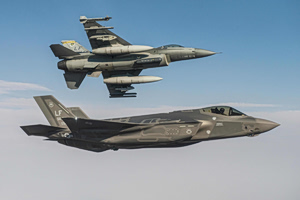
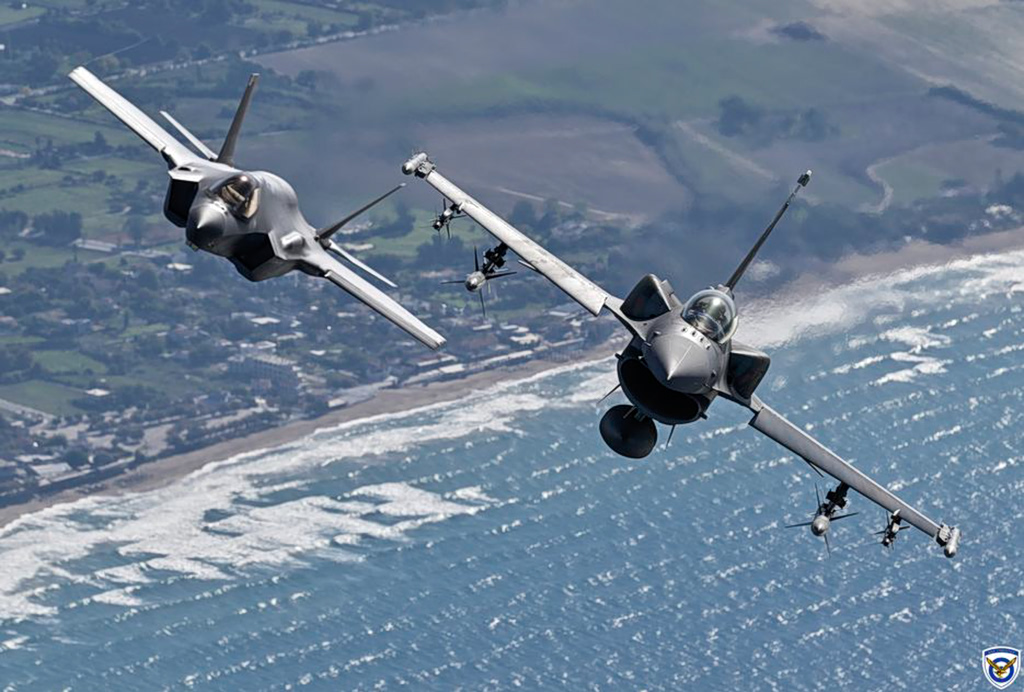
Regardless of whether the US reduces its presence in the Eastern Mediterranean in the near future to turn toward the Indo-Pacific, Greece’s vital space will remain at the center of American interest. This is best reflected in the concrete willingness to strengthen defense cooperation and, above all, in the new $4 billion arms agreements, a far from negligible sum. According to sources at the Prime Ministers Office and the Foreign Ministry, this alignment on defense answers the criticism, which is to some extent well-founded, that the relatively limited chances of successful drilling and of further activating the Vertical Corridor are not enough to guarantee the national benefits that were announced.
Greece, Turkey And The Cable
The government, of course, presents stronger relations with Washington as the most effective way to shield Greek positions in the Aegean and the Eastern Mediterranean, repeatedly pointing to the ongoing energy projects. As is well known, such projects have a distinct geopolitical dimension, which in the case of Greek-Turkish relations takes on an existential character.
They also serve as perhaps the only way to capture Mr. Trump’s interest. Telling is the scale the discussion has reached in recent hours about a possible American intervention with Turkey, aimed at allowing the surveys for laying the Greece-Cyprus cable to continue unhindered. Marco Rubio publicly supported any pipeline or electrical interconnection that helps diversify the energy mix and reduce dependence on Russia, but he also repeated (to Kathimerini) Washington’s standard language of equal distances: “We intend to use all of our diplomatic efforts to remind all parties how important this is to us.”
In other words, if there are interventions, they may concern everyone involved. It should be noted, of course, that Washington has no direct connection to the project, which is being carried out by French companies under the supervision of Paris, through which efforts are being made to find a modus operandi with Turkey. According to cross-checked information, Foreign Minister Giorgos Gerapetritis gave Marco Rubio a full analysis of the situation in the Eastern Mediterranean, with the upcoming resumption of the surveys in mind, and conveyed the argument that Turkey cannot militarize the area, as happened near Kasos in the summer of 2024.
“What Mr. Rubio said is a message to Ankara,” says another government official with knowledge of the talks, adding that “there has never before been an incident during a cable laying; Turkey cannot send out frigates for every little thing.” Still, Mr. Gerapetritis was extremely careful in his public appearance alongside his American counterpart, avoiding any direct reference to Turkey. This is because Athens is trying, however difficult it may be, to free Greek-American relations from the trap of being defined by a third country, as it believes the constant comparison with Turkey leads international partners to the wrong conclusions.
Marco Rubio, of course, who understands the balances and the historical depth of Greek-Turkish differences, does not stray from the well-worn path of dozens of his predecessors: Washington’s ultimate goal is to achieve the highest possible level of relations with all countries of the Eastern Mediterranean, reconciliation among them and, quite obviously, the avoidance of any possibility of conflict.
The Day After
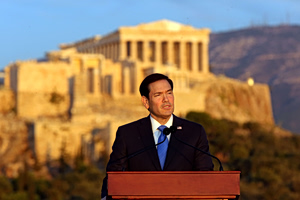
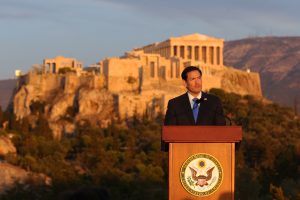
Mr. Rubio’s trip to Greece, just a few weeks before the midterm elections, took on, not so suddenly, a political significance in the United States. Quite a few people in Athens believe that if Mr. Rubio’s schedule had not included the speech at the Pnyx, then “there was no particular reason for the US Secretary of State to visit our country.”
Indeed, the image and the meaning of a largely lecturing speech to Europeans, full of logical and intellectual leaps as well as risky parallels between ancient Greek history and the modern era, worked as a resounding political manifesto, with the US Secretary of State seen as one of the next contenders for the US presidency. Understandably, the Greek government has the day after on the other side of the Atlantic in the back of its mind, betting a good deal of its money on Marco Rubio.