 Μake us preferred on Google
 Greece and the United States are deepening their strategic relationship across defense, energy, security, investment and technology, with U.S. Secretary of State Marco Rubio’s two-day visit to Athens highlighting the growing importance both sides attach to their partnership in the Eastern Mediterranean.
Rubio’s arrival on Tuesday night drew heightened attention across Athens, with traffic congestion reported on roads and highways along his route into the city. His arrival was met by an anti-war protest in central Athens, with demonstrators taking to the streets around Syntagma Square to oppose his visit.
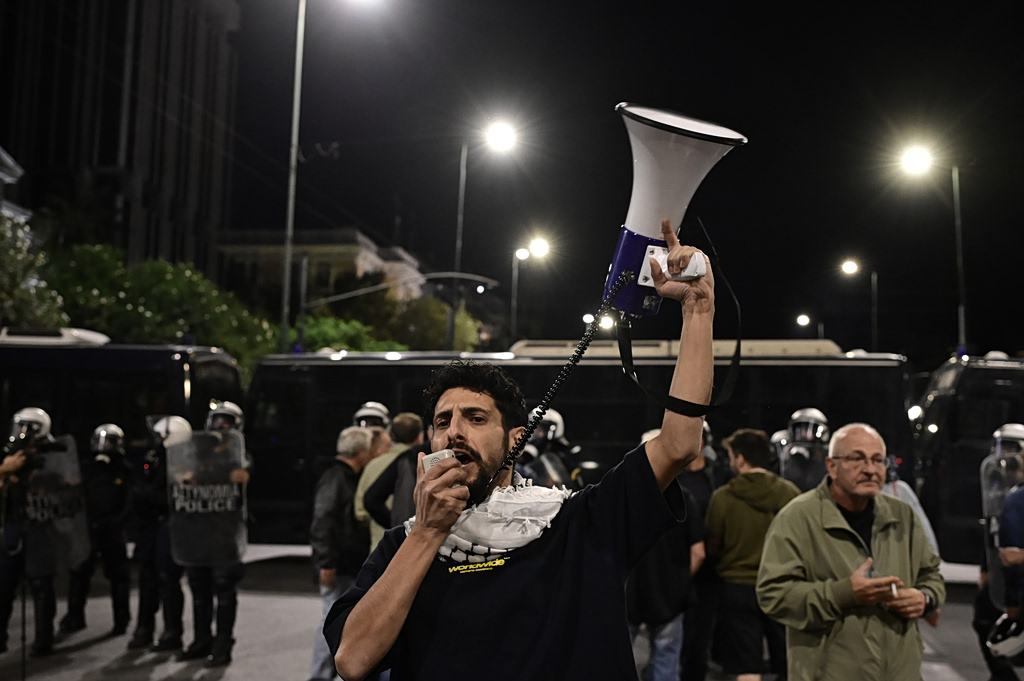
Rally by left-wing organizations and groups against the visit of U.S. Secretary of State Marco Rubio to Greece (Michalis Karagiannis / Eurokinissi)
At the Maximos Mansion, meanwhile, members of Rubio’s team met Greece’s unofficial four-legged celebrity, Peanut, who naturally stole some of the spotlight.
My favorite official I met today: Greece’s “First Dog,” Peanut! https://t.co/iyMg1H0ySu
— Caitlin Doornbos (@CaitlinDoornbos) October 7, 2026
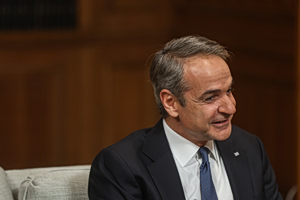
During their meeting, Prime Minister Kyriakos Mitsotakis said Greece-U.S. relations were at their “highest level ever,” while Rubio described Greece as a “pillar of stability” and a “model ally,” saying the two countries face many of the same challenges.
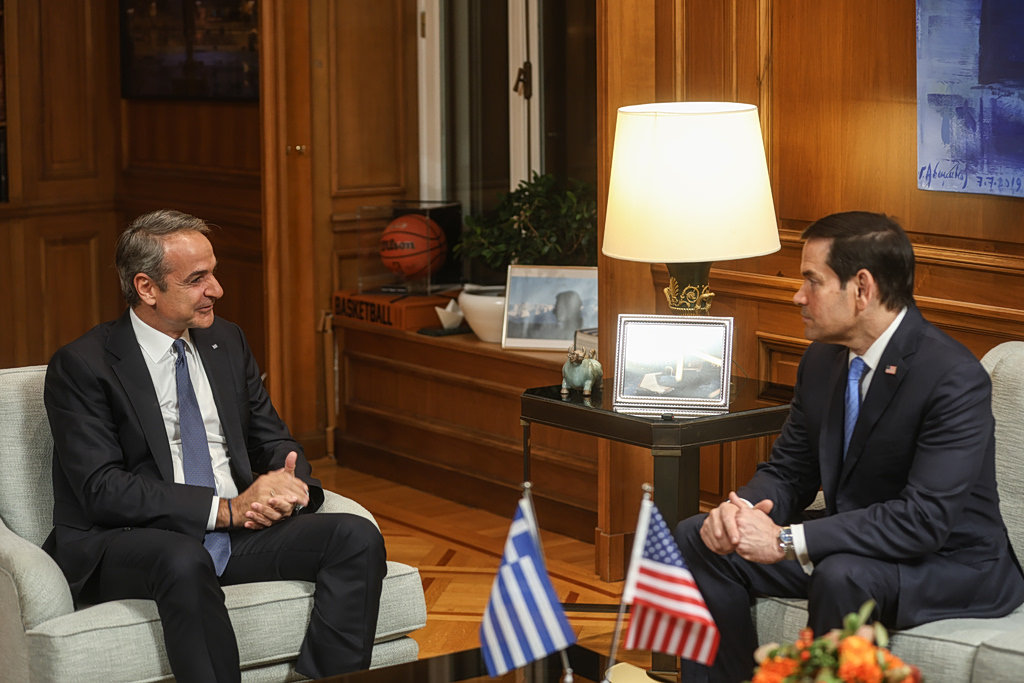
Greek Prime Minister Kyriakos Mitsotakis meets the U.S. Secretary of State Marco Rubio at Maximos Mansion, in Athens, Greece on October 7, 2026. Marco Rubio visits Athens to lead the U.S. delegation at the Sixth round of the Greece–U.S. Strategic Dialogue that takes places on the same day in Athens, Greece
Why did Rubio visit Greece?
The visit, which included the sixth round of the Greece-U.S. Strategic Dialogue, came amid what Greek officials described as profound geopolitical change, including the war in Ukraine, instability in the Middle East and threats to maritime security in the Red Sea and Strait of Hormuz.
The talks focused on defense, energy security, investment, maritime security and Greece’s broader role as a U.S. ally in the Eastern Mediterranean and beyond. They produced new agreements and commitments covering defense cooperation, intelligence sharing, critical supply chains and cultural heritage.
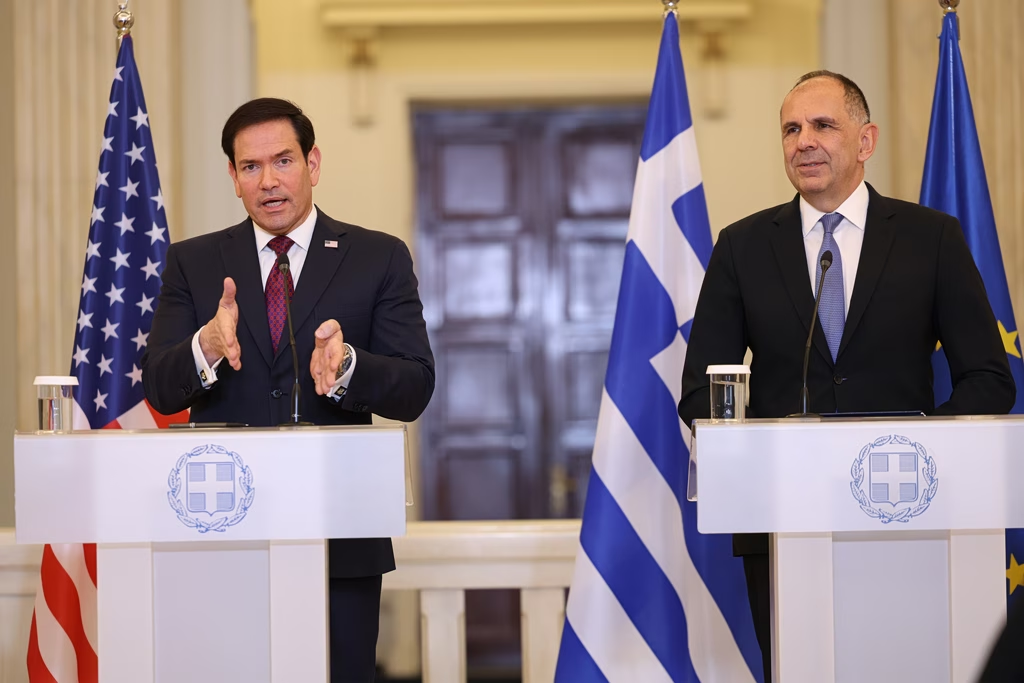
Ministry of Foreign Affairs. Meeting between Foreign Minister Giorgos Gerapetritis and his U.S. counterpart Marco Rubio. 6th Round of the Greece–U.S. Strategic Dialogue. Wednesday, October 7, 2026 (GIANNIS PANAGOPOULOS / EUROKINISSI)
The visit also reflected Washington’s expectation that European allies strengthen their own defense capabilities and assume a greater share of regional security responsibilities.
At the same time, Greece and the United States avoided publicly addressing tensions between Athens and Ankara. Rubio said sensitive regional issues were better handled through private diplomacy.
Defense at the center
Defense remains a central pillar of the relationship. Greece is acquiring 20 F-35 fighter jets and continuing the upgrade of its F-16 fleet to the Viper configuration. Eighty-three F-16s have entered the upgrade program, while modernization of another 38 F-16 Block 50 aircraft remains pending.
The broader U.S. defense agenda includes military sales worth about $4 billion, while the potential transfer of Stryker armored vehicles to the Greek Army is being considered separately. Athens is also seeking the AIM-120D AMRAAM and potentially the AIM-260 JATM for its F-16 Vipers and F-35s, while the JASSM-ER long-range cruise missile remains under consideration.
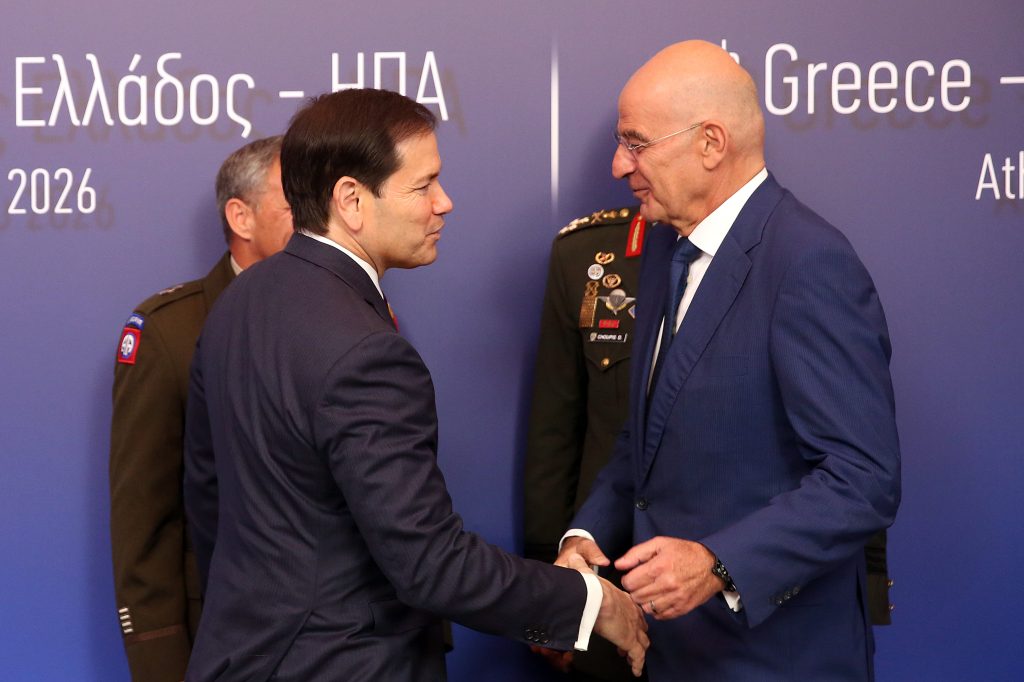
Sessions of the 6th Round of the Greece-U.S. Strategic Dialogue at a Hotel in Athens (POOL / ANA-MPA / Orestis Panagiotou / Eurokinissi)
The U.S. defense relationship also includes seven MH-60R Romeo anti-submarine helicopters and 35 UH-60M Black Hawks.
Rubio welcomed Greece’s policy of spending up to 5% of GDP on defense and described the country as an “indispensable NATO partner,” saying stronger NATO members make the alliance stronger.
New Greece-Florida defense partnership
A separate agreement established a direct partnership between Greece’s armed forces and the Florida National Guard under the U.S. National Guard Bureau’s State Partnership Program.
It provides for training, joint exercises and exchanges of expertise, particularly concerning military reserves as Greece implements its Agenda 2030 defense reforms.
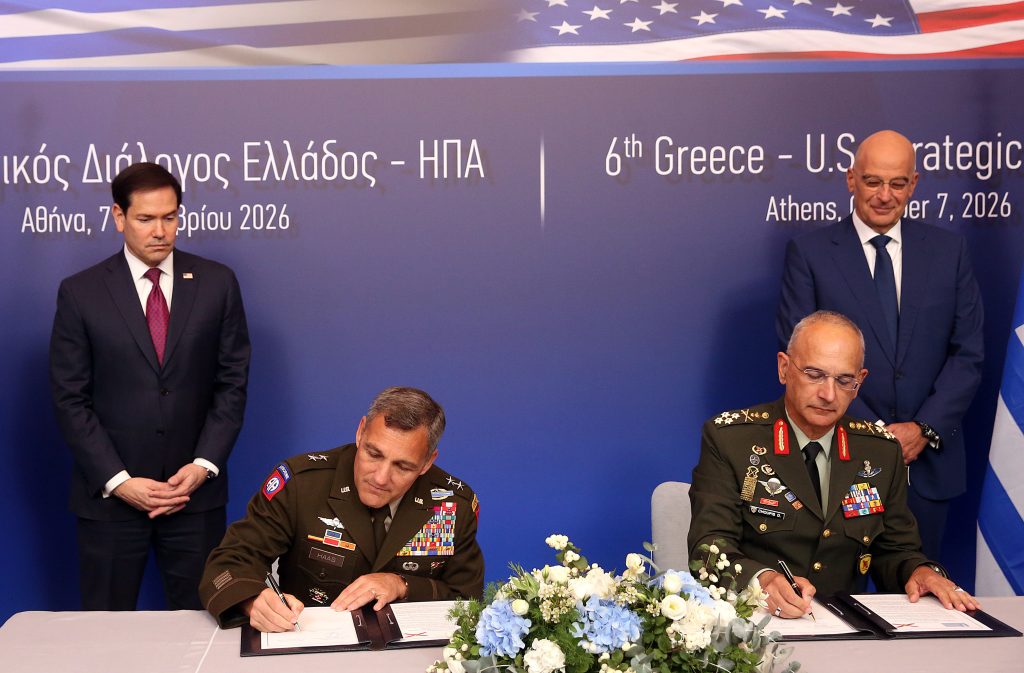
Sessions of the 6th round of the Greece-U.S. Strategic Dialogue at a well-known hotel in Athens, Wednesday, October 7, 2026. (POOL / ANA-MPA / Orestis Panagiotou / Eurokinissi)
The cooperation will also cover disaster response. Florida’s experience with hurricanes and other extreme weather will be exchanged with Greece’s experience responding to earthquakes and major wildfires.
The agreement was signed by Chief of the Hellenic National Defense General Staff Gen. Dimitrios Houpis and Florida National Guard commander Maj. Gen. John Haas, in the presence of Greek Defense Minister Nikos Dendias and Rubio.
Greece seeks a larger security role
Athens is presenting itself as a regional “security provider.” Gerapetritis highlighted Greece’s participation in the EU’s ASPIDES maritime operation, its deployment of Patriot air-defense systems in Saudi Arabia and its contribution to protecting the Republic of Cyprus.
He also reiterated Greece’s willingness to participate in a potential operation to keep the Strait of Hormuz open once hostilities have definitively ended.
Rubio also issued a warning concerning Iran, saying: “There is nothing that we want or need to do against Iran that we cannot still do.” He did not give a timeline or indicate that a particular operation was imminent.
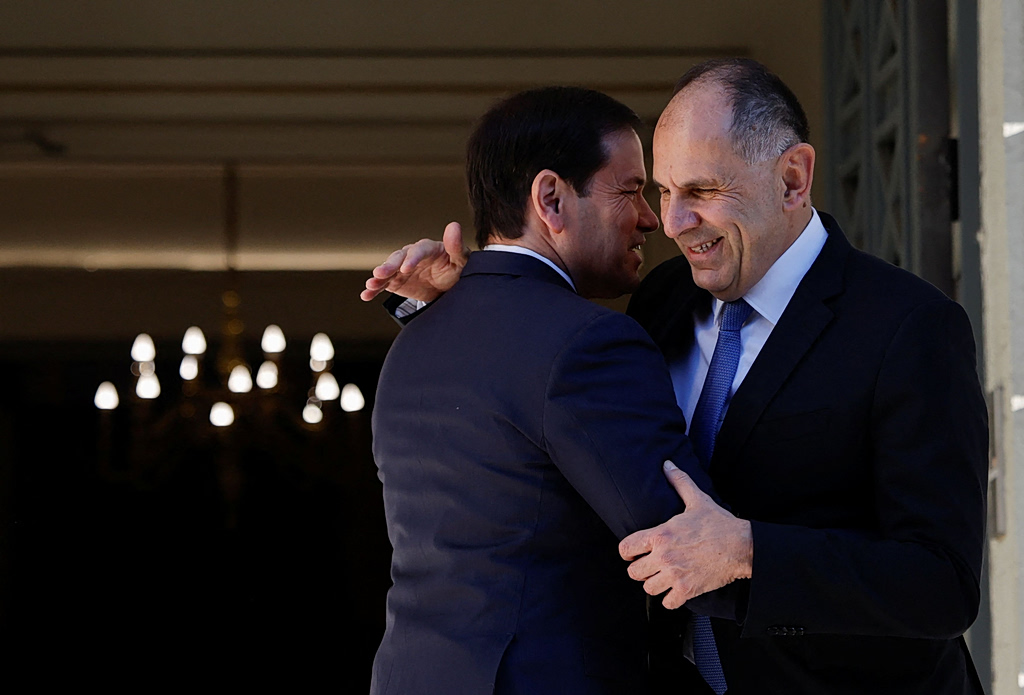
Greek Foreign Minister George Gerapetritis welcomes US Secretary of State Marco Rubio prior to their talks in Athens, Greece, October 7, 2026. REUTERS/Louiza Vradi
Greece’s strategic geography is also important to Washington, with Gerapetritis highlighting the U.S. military presence at Souda Bay in Crete and Alexandroupoli in northern Greece.
He described Greece as a bridge connecting Europe, the United States, the Middle East and the Arab world.
Mitsotakis also highlighted the importance of Greek ocean-going shipping, while Gerapetritis said the Greek-owned merchant fleet carries more than 20% of global LNG and contributes to energy security and resilience.
Energy becomes a strategic pillar
Energy was another major focus, particularly the Vertical Corridor, which would transport natural gas entering Greece north through the Balkans and into Central and Eastern Europe.
Gerapetritis called it the “backbone” for transporting U.S. liquefied natural gas to the region, while Rubio said its expansion had helped establish Greece as “a secure energy hub” and facilitated increased U.S. energy exports to Europe.
Athens is also seeking U.S. involvement in hydrocarbon exploration by ExxonMobil and Chevron, as well as electricity interconnections with Cyprus and Egypt.
Rubio argued that energy security is directly linked to national security and stressed the need for diversified supply routes. Greece did not receive an explicit U.S. commitment on the Great Sea Interconnector during the visit, although Washington supported the broader goal of stronger energy corridors and diversification.
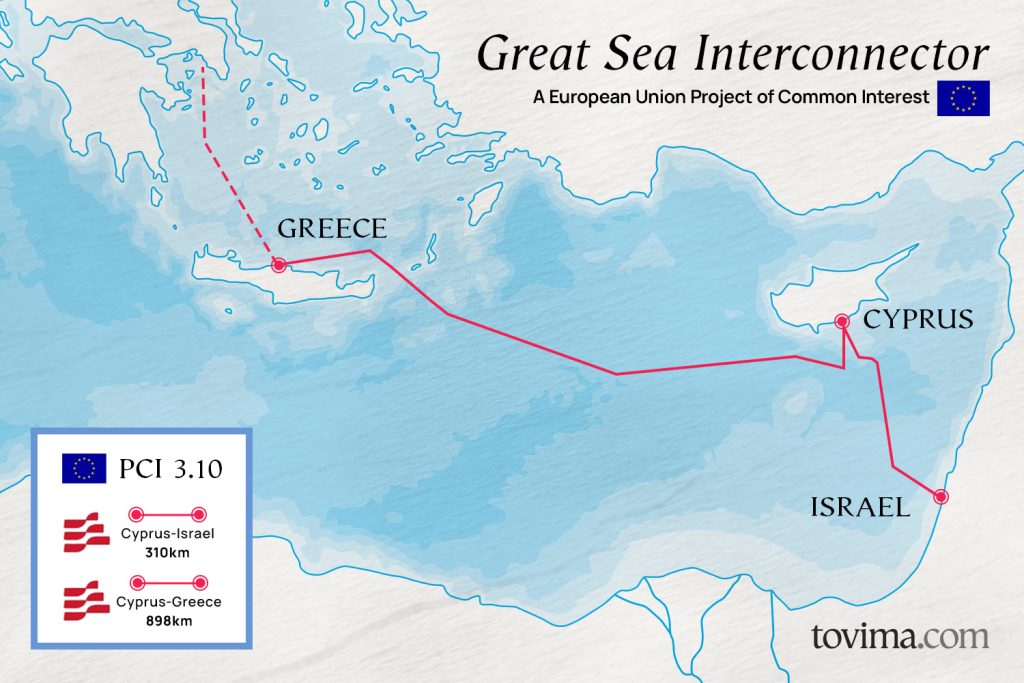
Turkey stays out of the public discussion
Despite the regional significance of several projects, neither Rubio nor Greek officials publicly mentioned Turkey.
Some of the projects involve disputes connected to the Eastern Mediterranean, including the Greece-Cyprus electricity interconnection and areas south of Crete covered by the disputed Turkey-Libya memorandum.
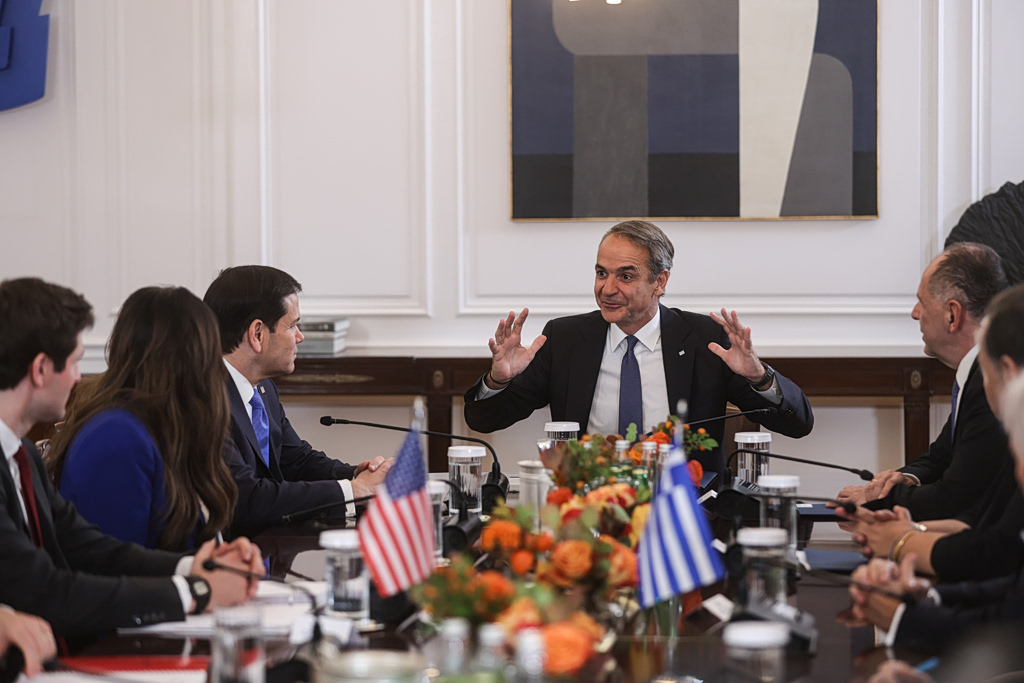
Greek Prime Minister Kyriakos Mitsotakis meets the U.S. Secretary of State Marco Rubio at Maximos Mansion, in Athens, Greece on October 7, 2026. Marco Rubio visits Athens to lead the U.S. delegation at the Sixth round of the Greece–U.S. Strategic Dialogue that takes places on the same day in Athens, Greece
Rubio acknowledged that some issues were “very sensitive” and said other countries were involved in complicating them. He stressed that such matters were better addressed through “private diplomacy” rather than news conferences.
“We want to be transparent, but there are things that are better not to be the subject of press conferences,” he said.
Intelligence, critical minerals and technology
The two countries also signed a memorandum to strengthen counterterrorism intelligence sharing between their law enforcement agencies, including information exchange concerning common threats such as migration flows and crime.
A U.S.-Greece Economic Security Declaration commits the two countries to working with like-minded allies on secure supply chains, including critical minerals.
Gerapetritis said the Strategic Dialogue, launched in 2018, has expanded to defense, energy, infrastructure, digital technology, law enforcement, maritime affairs and people-to-people ties. He also pointed to growing U.S. investment in Greek data centers and digital infrastructure as part of Greece’s effort to become a regional innovation center.
Greece, Cyprus and Israel
Athens also emphasized continued U.S. engagement with the Greece-Cyprus-Israel “3+1” framework.
Gerapetritis said he discussed Israel and the Middle East with Rubio, emphasizing the framework’s energy and geopolitical importance. The Greece-Cyprus electricity interconnection is ultimately intended to include Israel.
Greece is serving a 2025-26 term on the U.N. Security Council and is preparing to hold the rotating presidency of the Council of the European Union in the second half of 2027.
Rubio’s wider message from the Pnyx
Rubio’s most symbolic appearance came at the Pnyx, the historic hill where citizens of ancient Athens gathered for political debate, with the Acropolis and Parthenon behind him.
He used the setting to connect the modern U.S.-Greece relationship with what he described as a shared Western heritage, tracing it from ancient Greece and Rome through Christianity to the founding of the American Republic.
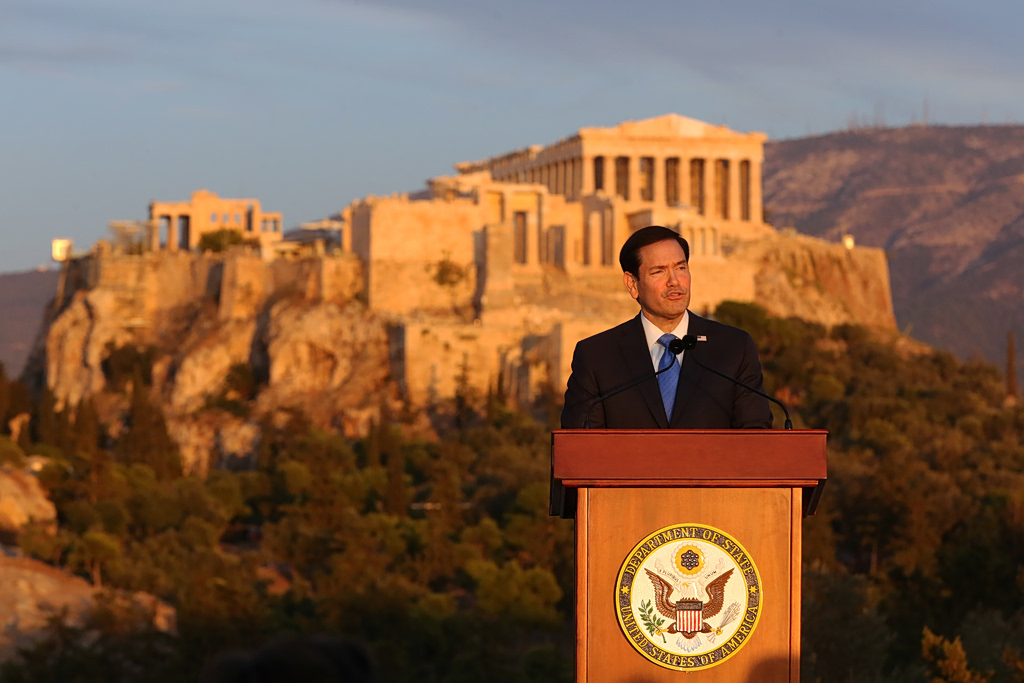
US Secretary of State Marco Rubio speaks on the Pnyx hill, Athens, Wednesday, October 7, 2026. Energy, security, defense, high technology, geopolitical developments, and the protection of cultural heritage are at the center of the meetings that US Secretary of State Marco Rubio will hold in Athens today. He arrived in Greece on the evening of Tuesday, October 6, for the 6th Round of the Strategic Dialogue between the two countries.
Rubio called for a “great renewal of the Western spirit,” arguing that Western societies had become too focused on safety and comfort. He urged Americans and Europeans to defend their shared heritage and confront a new era of great-power competition.
The speech also tied directly into the Trump administration’s “America First” approach. Rubio described the policy as the “unapologetic pursuit of national power,” linking it to manufacturing, military strength, secure supply chains and technological leadership in artificial intelligence, drones, advanced weapons, semiconductors, critical minerals, cybersecurity, energy and space.
He warned that “the next decade will write the story of the next century” and argued that the West faced a choice between maintaining its position and what he called “atrophy, servitude, and decline.”
The speech was carried live by most Greek television stations and was reposted on X by Elon Musk.
https://t.co/VqtIbnhisS
— Elon Musk (@elonmusk) October 7, 2026
Cultural ties and returned antiquities
The visit also produced a renewed cultural heritage agreement, extending the Greece-U.S. memorandum of cooperation until 2031. The agreement, in place since 2011, allows continued U.S. import restrictions on categories of Greek archaeological and ethnological material.
Between 2021 and 2026, 425 cultural objects were returned to Greece, including 98 under the memorandum. Another 15 Greek antiquities were handed over by the Manhattan District Attorney’s Office and its Antiquities Trafficking Unit on September 21, 2026.
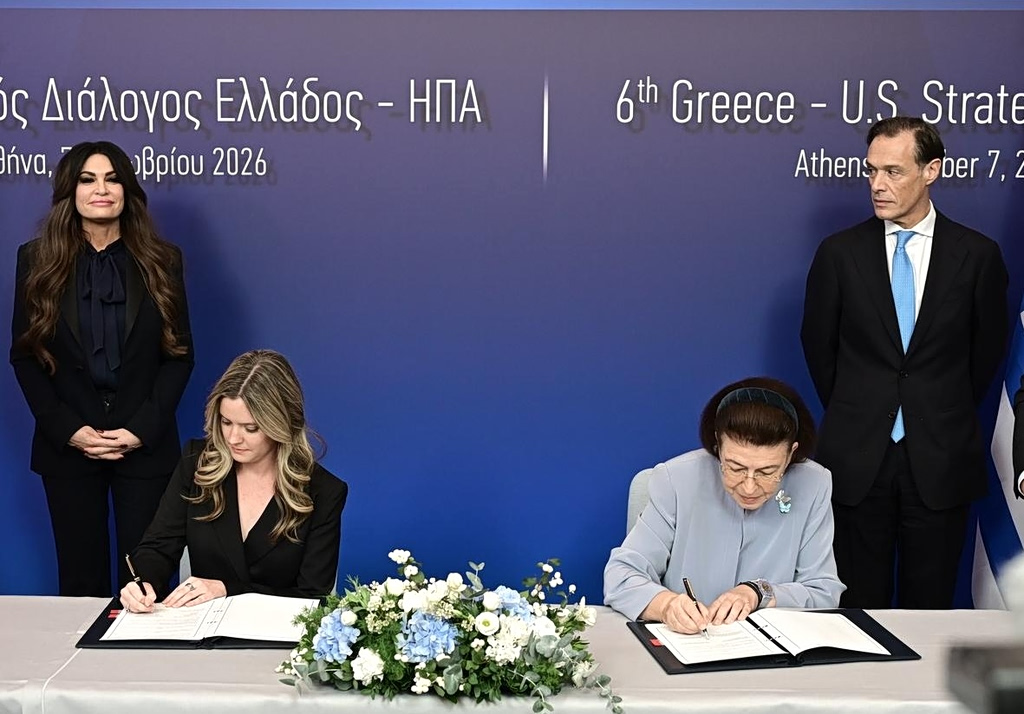
Sessions of the 6th round of the Greece-U.S. Strategic Dialogue at a well-known hotel in Athens (Michalis Karagiannis / Eurokinissi)
Greece plans to display some of the returned objects at the National Archaeological Museum next year.
The countries also agreed on initiatives marking the 250th anniversary of the Declaration of American Independence, focusing on the historical links between the American and Greek revolutions and U.S. Philhellenism.
Cultural cooperation will also extend toward the 2028 Los Angeles Olympics, including a planned Greek loan of sculptures to the Getty Museum and cooperation on a Cultural Olympiad.
A relationship expanding beyond defense
Rubio’s visit underscored a Greece-U.S. relationship that now extends well beyond military cooperation.
For Athens, the partnership supports defense modernization, U.S. energy and technology investment, and Greece’s ambitions to become a regional security and energy hub. For Washington, Greece is an increasingly capable NATO ally as the United States presses European partners to assume greater responsibility for defense and regional security.
The visit also showed the limits of what the two governments were prepared to discuss publicly, with Turkey-related disputes largely left outside the official statements and sensitive issues deferred to private diplomacy.
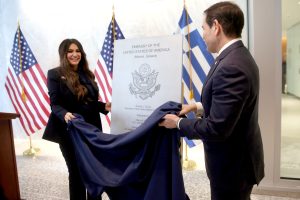
Rubio also backed U.S. Ambassador to Greece Kimberly Guilfoyle, saying she was “doing a very good job” amid recent controversy surrounding her.
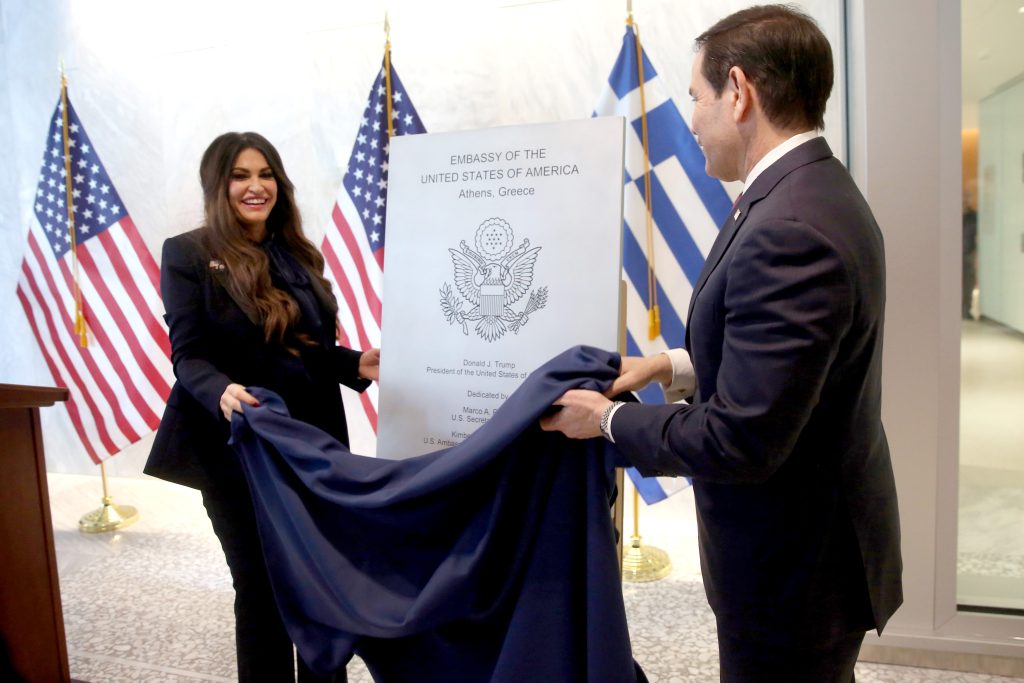
US Secretary of State Marco Rubio unveiling a new Embassy sign alongside US Ambassador to Greece Kimberly Guilfoyle (INTIME NEWS)
The result was a broad reaffirmation of the strategic relationship, combining defense, energy, intelligence, investment, technology, maritime security and cultural ties as Greece seeks to strengthen its role in an increasingly uncertain regional and international environment.