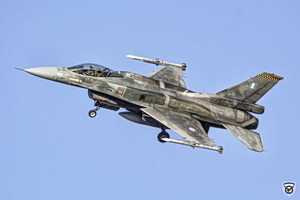
House lawmakers are laying the groundwork for a possible congressional challenge to any Trump administration effort to return Turkey to the F-35 fighter jet program, urging party leaders to be prepared to use a formal resolution of disapproval if the White House moves toward a new defense arrangement with Ankara.
The effort, led by Representative Dina Titus, Democrat of Nevada, comes after President Trump suggested that his administration could be open to a new defense understanding with Turkey ahead of the NATO summit in Ankara, despite unresolved legal restrictions stemming from Turkey’s purchase of the Russian-made S-400 air defense system.
At the center of the push is a letter now being circulated for signatures and expected to be sent to Representative Steve Scalise of Louisiana, the House Republican majority leader, and Representative Hakeem Jeffries of New York, the Democratic minority leader.
The letter argues that Congress should be ready to assert its authority under the Arms Export Control Act if the administration tries to move ahead with any transaction that would effectively open the door to Turkey’s return to the F-35 program.
The issue is also beginning to draw attention on the Republican side of the House Foreign Affairs Committee. Representative Brian Mast of Florida, the committee’s Republican chairman, is expected to receive a briefing next week on Turkey’s possible path back to the F-35 program and Ankara’s continued possession of the S-400 system.
It was not immediately clear whether Mr. Mast requested the briefing or whether it was initiated by the State Department. The distinction could prove significant. If Mr. Mast sought the briefing himself, it would suggest that concern about any possible opening to Turkey has reached the Republican chairman of the committee with direct jurisdiction over the issue. If the administration initiated it, the briefing could indicate that officials are trying to manage congressional resistance before moving further toward a legal or political arrangement with Ankara.
The letter follows remarks Mr. Trump made at the White House during a meeting with NATO Secretary General Mark Rutte. Asked whether he intended to travel to Turkey with a “big bag of gifts,” Mr. Trump left open the possibility of a new arrangement with Ankara.
The lawmakers also cite comments by Vice President JD Vance, who said an official review was already underway to examine how a possible sale could proceed legally. According to the letter, Mr. Vance said that Pete Hegseth and the entire team are looking at the issue right now.
Turkey was removed from the F-35 program in 2019 after it acquired the Russian-built S-400 missile defense system. Washington concluded at the time that the presence of the Russian system in a NATO country could expose sensitive information about the capabilities of the American fighter jet.
The letter reminds House leaders that in December 2020, during Mr. Trump’s first administration, the State Department imposed sanctions on Turkey’s Presidency of Defense Industries under Section 231 of the Countering America’s Adversaries Through Sanctions Act, known as CAATSA. Those sanctions have not been lifted and remain in force.
The legal argument in the letter is direct. Turkey’s purchase of the S-400 system was treated as a significant transaction with an entity operating for, or on behalf of, Russia’s defense or intelligence sectors. The lawmakers argue that there is no publicly available evidence showing that Turkey has removed the system, taken it out of operational use, or addressed the underlying cause that triggered the sanctions.
The letter also points to the National Defense Authorization Act for fiscal year 2020, which bars the transfer of F-35 aircraft to Turkey unless Ankara no longer possesses the S-400 system, provides assurances that it will not seek to acquire it again, and confirms that it has not accepted additional deliveries related to the S-400 or any other system that could compromise American defense systems.
The lawmakers also refer to a June 3 hearing of the House Foreign Affairs Committee, where Secretary of State Marco Rubio acknowledged that the administration remains bound by law to maintain sanctions on Turkey and cannot simply bring Ankara back into the F-35 program.
The message of the letter is clear: Turkey cannot return to the F-35 program as if the S-400 issue had never happened. For the lawmakers behind the effort, the matter is not only political or diplomatic. It is legal, institutional, and tied to the credibility of American law itself.
Congress does have a formal mechanism to challenge a major defense sale. A joint resolution of disapproval is the main tool available after the administration formally notifies Congress of a proposed transfer. The review window is limited, usually 30 calendar days, or 15 days for NATO allies and certain close American partners.
But the tool is difficult to use successfully. To stop a sale, the resolution must pass both the House and the Senate in identical form and then either be signed by the president or survive a presidential veto. A simple majority may send a political message, but it would not be enough to stop an administration determined to proceed. In that case, Congress would need a two-thirds majority in both chambers to override a veto.
The F-35 debate is unfolding alongside a separate but related dispute over the Trump administration’s intention to approve the sale of fighter jet engines to Turkey, a package valued at more than $700 million.
That case involves a formal notification to Congress for the sale of General Electric engines expected to be used in KAAN, Turkey’s first domestically produced fighter jet, and a centerpiece of President Recep Tayyip Erdogan’s effort to build a more independent Turkish defense industry.
In Washington, however, the proposed engine sale is not being viewed only as a narrow transaction involving aircraft components. It has reopened the larger question of whether the United States is preparing to ease pressure on Turkey despite Ankara’s continued possession of the S-400 system.
Four Greek American Republican lawmakers, Representatives Gus Bilirakis of Florida, Nicole Malliotakis of New York, Mike Haridopolos of Florida, and Jimmy Patronis of Florida, expressed deep concern in a joint statement over reports about the proposed defense sale.
They also said they strongly oppose any prospect of Turkey returning to the F-35 program unless Ankara fully complies with CAATSA.
Their intervention carries added political weight because it does not come from Democratic critics of Turkey policy, but from members of Mr. Trump’s own party.
Mr. Patronis, who was elected to the House this year in a special election, had Mr. Trump’s public backing. The president described him as a “wonderful friend” of his and the MAGA movement. Mr. Haridopolos, a former president of the Florida Senate, has also received public support from Mr. Trump.
Taken together, the moves suggest that congressional unease over a possible opening to Ankara is not confined to Democrats. It is also reaching Republicans who are close to the president on other issues, but who argue that Turkey should not be rewarded while it retains the S-400 system and continues to challenge American allies in the Eastern Mediterranean.
Still, if Mr. Trump is determined to move in that direction, Congress’s ability to stop him may be limited. The legal tools exist, but they are difficult to convert into binding action, especially against a president willing to treat the unwritten norms of consensus between the White House and Congress as obstacles rather than constraints.