
 Μake us preferred on Google
 Greek officials are trying to track whatever new developments emerge from the joint “Mecca Agreement” signed by Turkey, Pakistan, and Saudi Arabia, while also trying to see the bigger picture, at a time when Turkey’s foreign minister has been on an official visit to Egypt since Thursday. Egypt refused to join the defense pact.
On the first day of Hakan Fidan’s two day trip to Cairo, Turkey’s Ministry of Defense announced, as part of the new trilateral alliance, the creation of political and military mechanisms that will include the defense ministers, foreign ministers, and armed forces chiefs of the three countries.
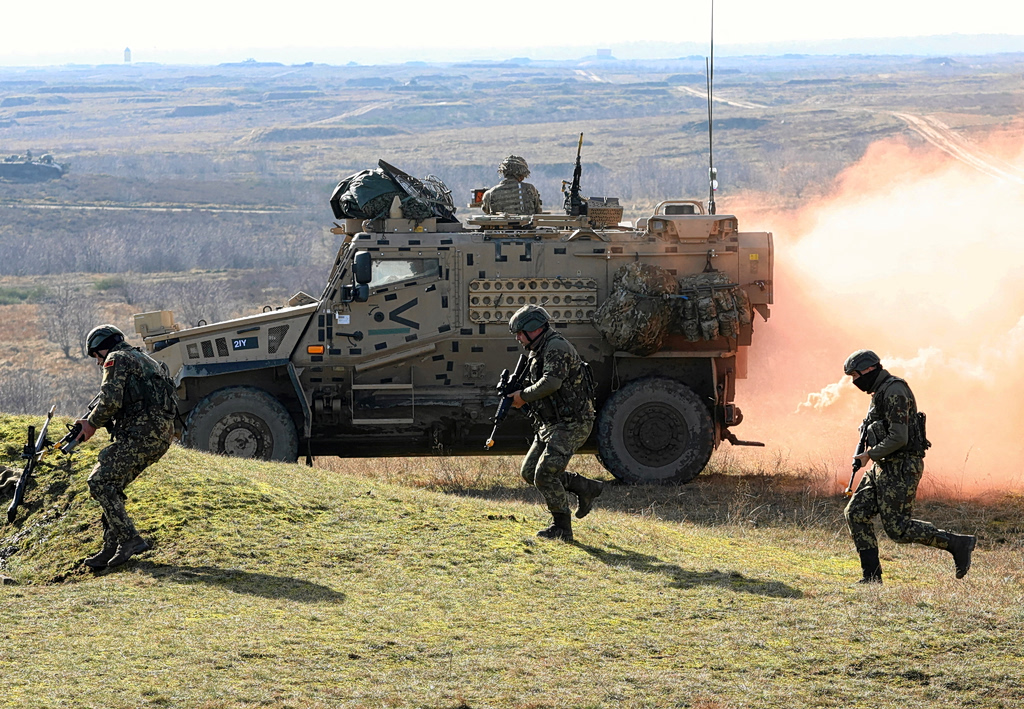
It also said joint military exercises are being planned, and that the trilateral cooperation could potentially include joint production and technology sharing in the defense industry.
On a first reading, Athens sees the initiative from the three states as an expected move, given the fluid situation with Iran and the disruptions in the Strait of Hormuz and the Red Sea.
For that reason, the Greek side did not read “Mecca” as a surprise shift on the geopolitical chessboard, but rather as the culmination of processes built on pre existing bilateral ties, since, for example, Saudi Arabia and Pakistan had already been linked by a defense agreement since September 2025.
For Greece, officials point out that this looks more like an opportunistic development that doesn’t really compare to the relationship Greece has built with Arab states over time. As the same sources put it, Greece “does not define itself in relation to others and is not driven by fear,” since, they stress, it “remains the country with the strongest ties to the states of the Middle East.”
Despite the potentially problematic aspects of the agreement, Athens is holding onto Ankara’s public assurance that this is a pact of “a purely defensive character” aimed at “deterrence.”
Athens Stays Cautious
Foreign Minister Giorgos Gerapetritis and U.S. Secretary of State Marco Rubio, in a recent phone call, discussed Greece’s role “as a pillar of stability in the region” and exchanged views on the situation in the Middle East and Iran.
What the Greek side understands is that this initiative is not really aimed at the Eastern Mediterranean but at the Middle East, with the three countries mainly seeking to leave a mark seen as a show of strength and unity.
Spotting a range of very different concerns within the “Mecca Agreement,” Athens remains extremely cautious both about its goals and content and about how it will actually be implemented, since it isn’t clear whether each of the three states is putting its own comparative advantage, defense, nuclear capability, or money, on the table for the other two.
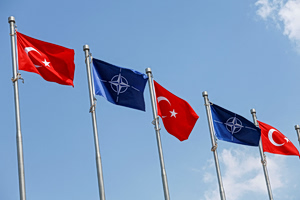
Discussion of a Muslim “mini NATO” has always existed, so this aspect doesn’t seem to be troubling Greece for now either, especially since NATO itself often struggles to move in step despite its large membership and resource contributions.
Athens is projecting confidence in its strategic relationships with countries like Israel, Egypt, Saudi Arabia, the United States, and the Gulf states, while at the same time dismissing any tendency toward “encirclement” scenarios, a line of rhetoric Ankara often uses about the alliances Greece has built with Cyprus, Israel, and France.
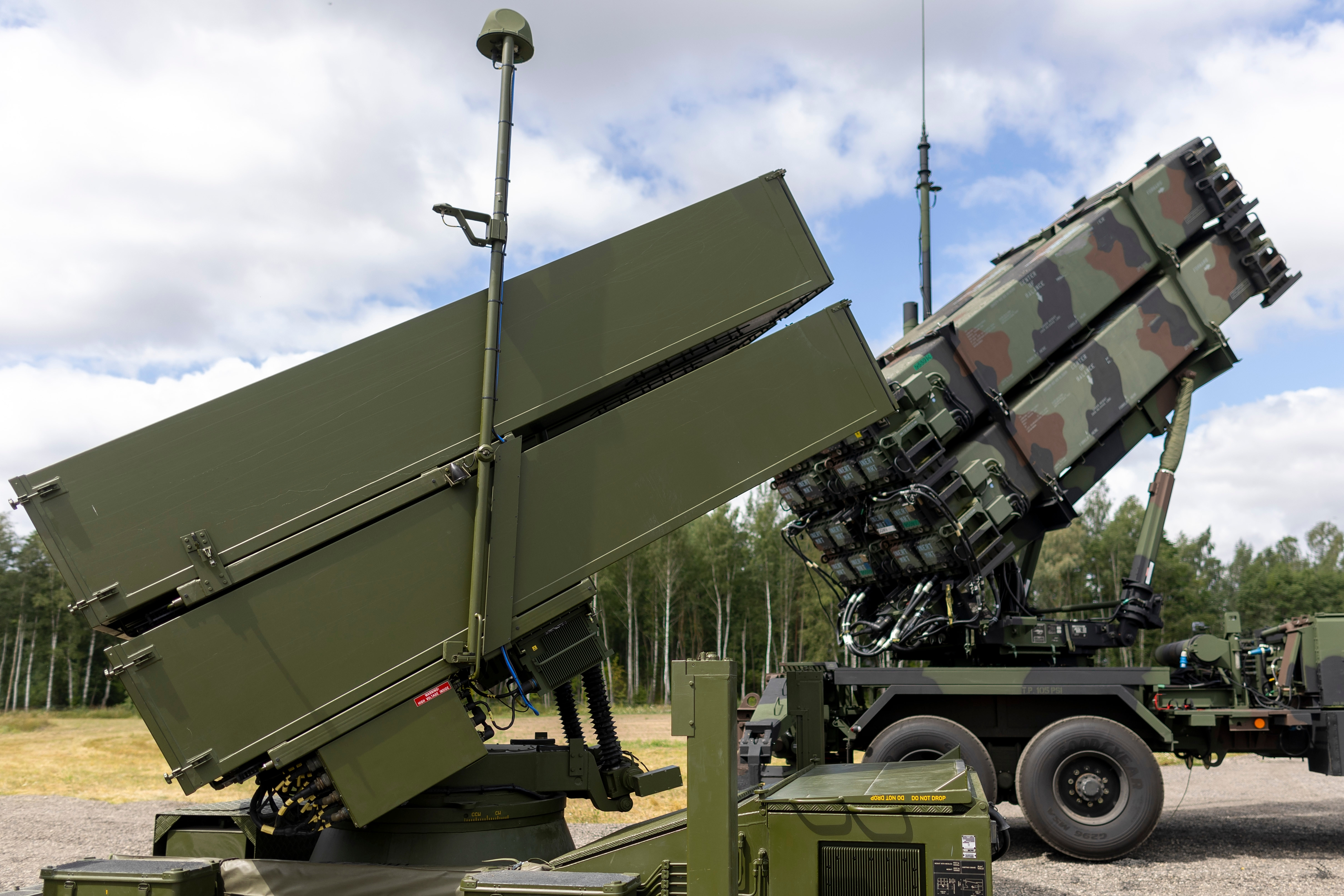
On a second reading, specifically regarding the Patriot missile batteries, a decision is expected within August on the monthly reassessment of whether the Greek force in Saudi Arabia should remain in the region, with the safety of military personnel as the main criterion.
The strategic partnership between Greece and Saudi Arabia remains solid, and within the next four months the second Greece Saudi Arabia Strategic Council will be held in Athens to strengthen bilateral cooperation. At the same time, building the relationship with Cairo remains an ongoing priority, and Egypt does not appear likely to join “Mecca” any time soon, mainly because doing so would undermine its regional role.
The issue will, however, come up during upcoming Greek Egyptian consultations. The “Israel” factor, whose “aggressive and expansionist policies” Erdogan has pointed to as the “core problem in the region,” continues to function for Greece, together with Cyprus, as a strong allied axis.
Attention going forward is turning to scenarios for accelerating closer cooperation between Israel, the United Arab Emirates, and India, a framework in which Athens and Nicosia also have a place.