 Μake us preferred on Google
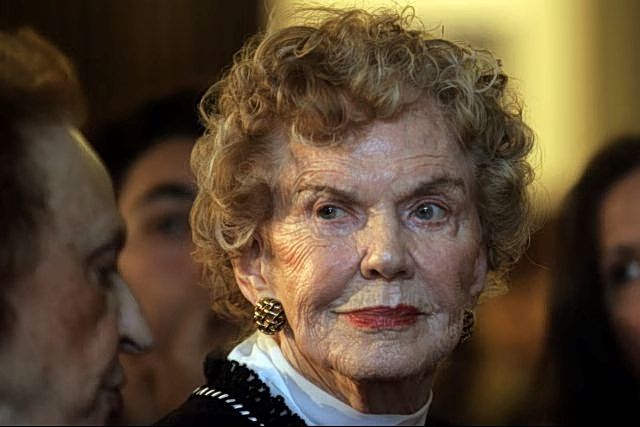
 American-born author and women’s rights advocate Margaret Chant-Papandreou, a prominent figure in Greece’s public life after the restoration of democracy in 1974 and the former wife of Prime Minister Andreas Papandreou, died Friday just two weeks before her 103rd birthday.
Born Margaret Esther Chant in Oak Park, Illinois, on Sept. 30, 1923, she studied journalism before earning a master’s degree in public health at the University of Minnesota. She met Andreas Papandreou in 1947 and the couple married in a civil ceremony in Reno, Nevada, on Aug. 30, 1951. They had four children: George, Sofia, Nikos and Andrikos Papandreou. Their marriage ended in divorce in 1989.
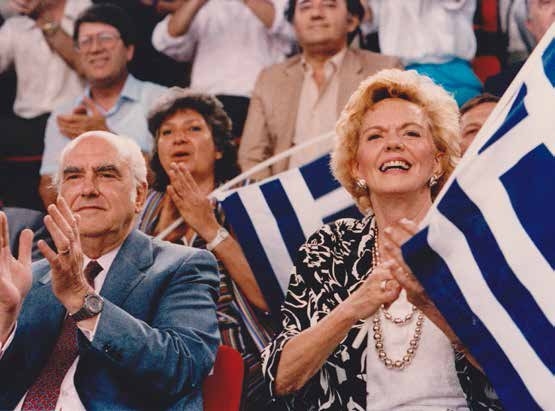
Margaret Papandreou, with then Prime Minister Andreas Papandreou, attend the Eurobasket final in Athens in June 1987.
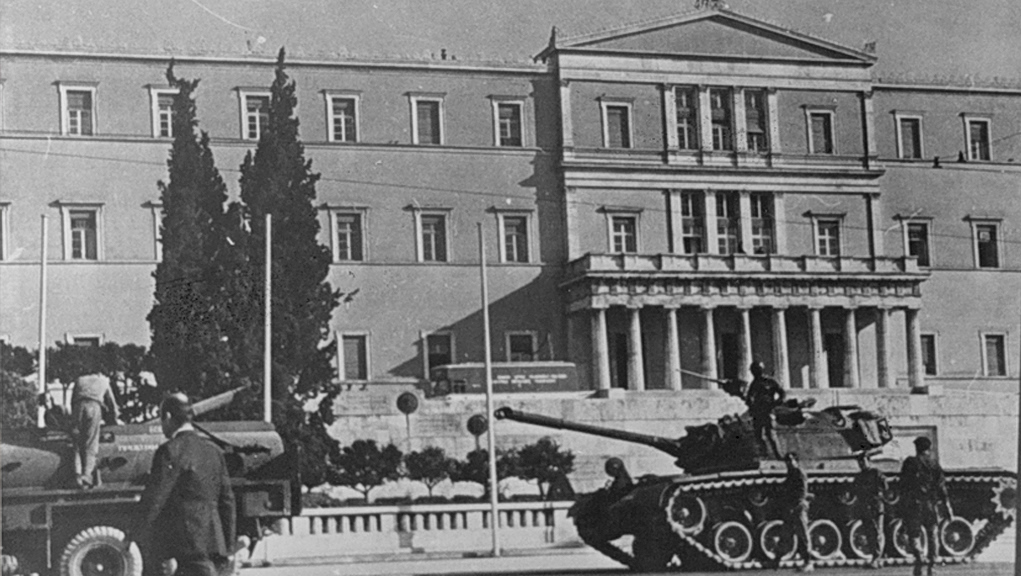
The family initially lived in the United States, where Andreas Papandreou pursued an academic career. They moved to Greece in the late 1950s, and Margaret Papandreou became increasingly involved in the country’s political and social life. When a military junta seized power on April 21, 1967, Andreas Papandreou was arrested and imprisoned. After his release, the family went into exile, first in Sweden and later in Canada, returning to Greece following the collapse of the dictatorship in 1974.
Papandreou subsequently developed a public role of her own, particularly through the women’s movement. She was a founding figure of the Women’s Union of Greece (EGE) and served as its president for eight years. The organization campaigned for changes to Greece’s family law and for greater equality for women. Contemporary reporting documented her advocacy for abolishing the dowry system, establishing civil marriage, reforming divorce law and strengthening women’s rights within the family.
The reforms introduced during the 1980s included the abolition of the dowry and establishment of civil marriage in 1982, as well as divorce by mutual consent and changes allowing women to retain their surnames after marriage and establishing greater equality between parents in matters concerning their children. Abortion was legalized in Greece in 1986.
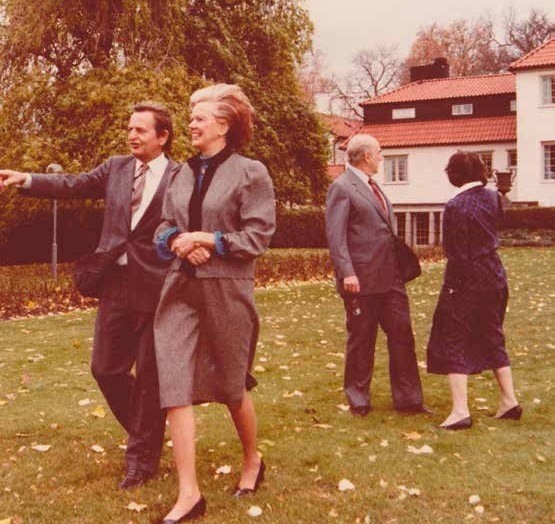
Margaret Papandreou, in the foreground with then Swedish Prime Minister Olaf Palme in Stockholm, 1985. Greek Prime Minister Andreas Papandreou is in the background.
Her activities extended beyond domestic women’s rights to international issues including peace and social justice. She also wrote books and newspaper columns, later publishing her memoir, Love & Power: A Midwestern First Lady, in 2014.
Her public life was closely intertwined with the political career of Andreas Papandreou, who returned to Greece after the dictatorship and founded PASOK. He became prime minister after the party’s 1981 election victory, leading Greece’s first socialist government. Their divorce in 1989 brought an end to a marriage of nearly four decades.
President Constantine Tassoulas paid tribute to Papandreou, saying her public activity had been associated with reforms to family law and advances in women’s social and political rights. PASOK leader Nikos Androulakis also expressed condolences, highlighting her role in the women’s movement and the founding of EGE.
Condolences were also extended by Prime Minister Kyriakos Mitsotakis.
Her first born, George Papandreou, served as Greece’s prime minister from 2009 to 2011.