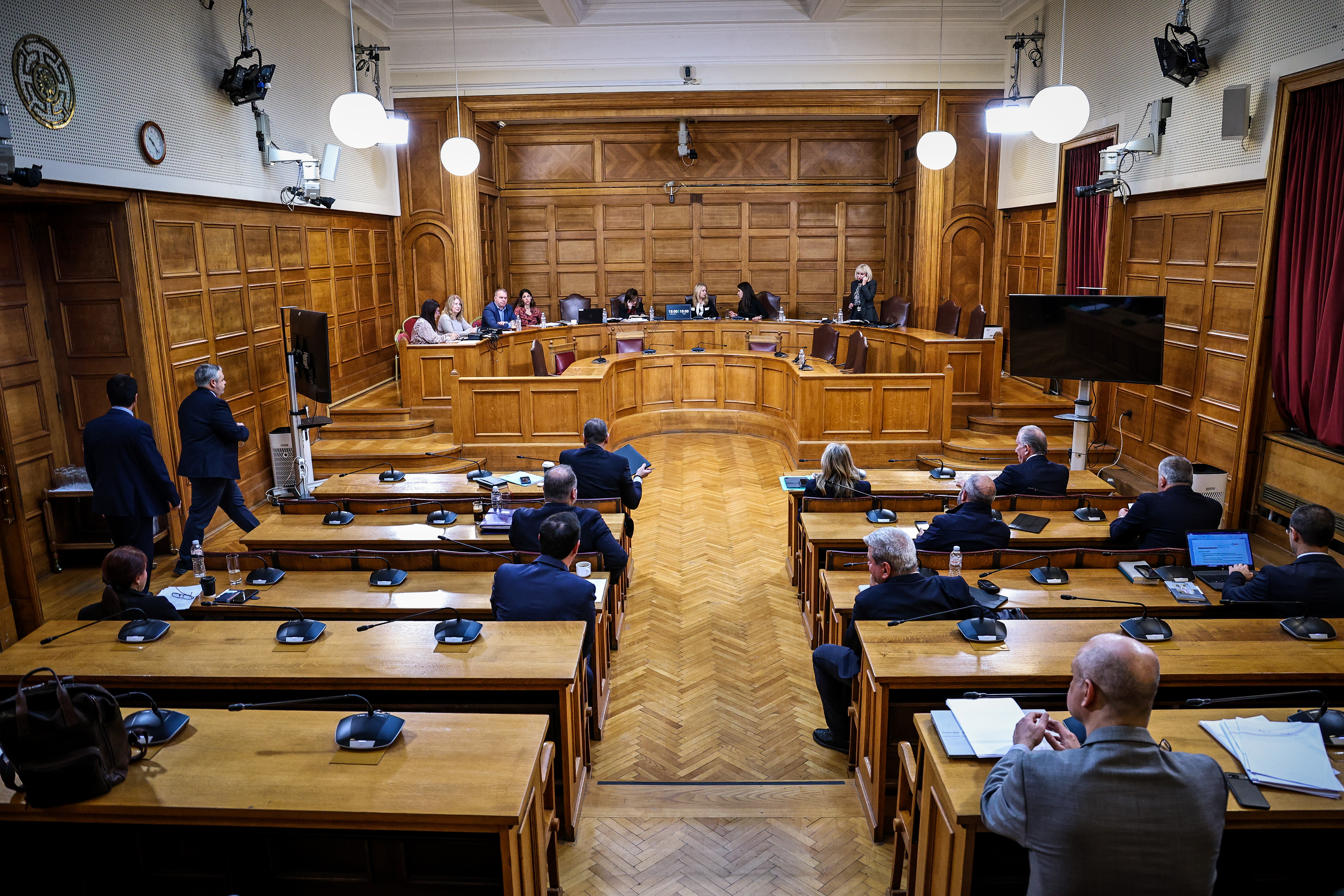
The parliamentary investigative committee examining the troubled Greek agency OPEKEPE (Payment Authority of Common Agricultural Policy Aid Schemes) is formally concluding its hearings, setting the stage for the submission of its final findings later this month.
The decision came after the testimony of the last scheduled witness and followed a tense session marked by clashes between the committee’s chair and opposition lawmakers. The committee voted by majority to extend its mandate until Feb. 27, allowing parliamentary parties to submit their conclusions by Feb. 24. A final meeting to discuss those findings is scheduled for Feb. 26.
Majority Approves Extension, Opposition Objects
Makarios Lazaridis, the ruling New Democracy party’s rapporteur, proposed the short extension to ensure that party reports could be filed with the committee’s secretariat by Feb. 24 and debated two days later. The proposal was approved following a roll-call vote.
Opposition parties, however, voiced objections to both the closure of the committee’s work and the limited time frame for submitting their reports.
Milena Apostolaki of PASOK argued that the investigative committee should not have been formed in the first place, saying her party had initially called for a preliminary criminal inquiry based on case materials transmitted by the European Public Prosecutor’s Office. She also criticized the government over its recently announced constitutional reform plans regarding Article 86 and the provisions governing ministerial accountability, accusing the government of failing to act decisively while in office.
Apostolaki further alleged that certain witnesses had been excluded from the proceedings and described what she called an “orchestrated cover-up.”
Basileios Kokkalis of SYRIZA reiterated his party’s request that the prime minister be called to testify. He expressed concern that the committee’s conclusion would not restore credibility to OPEKEPE or bring what he described as necessary “cleansing.”
Although critical of the process, Kokkalis agreed to the extension timeline.
The MP for the Communist Party of Greece Nikos Karathanasopoulos, also called for the committee’s work to continue and for additional witnesses, including the prime minister, to be summoned. He described the reporting deadline as too tight.
Chousein Chasan Zeimpek, an MP for the New Left, said his party maintained that the case warranted a preliminary criminal investigation rather than a parliamentary inquiry. He argued that key witnesses had not been called before the committee wrapped up its work.
Zoe Konstantopoulou, president of the Plefsi Eleftherias party, delivered a particularly forceful intervention during the final session. She criticized not only the ruling majority but also other opposition parties for what she described as a muted response to the committee’s decision to conclude its proceedings.
Konstantopoulou objected to ending the investigation at a time when, according to media reports, a new case file may implicate an additional 50 members of parliament. She spoke of what she termed a “frightening cover-up operation” and implied that some parties might be reluctant to push further fearing lawmakers from their own ranks are named in the new legal documents.