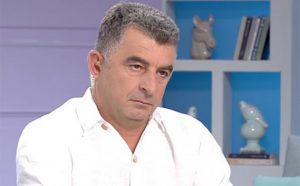
Just as Kyriakos Mitsotakis’s government thought they had managed to put the Predator surveillance scandal to rest, the prime minister’s own nephew has reignited the controversy. In a weekend interview, Grigoris Dimitriadis, former secretary-general of the prime minister’s office, claimed he had resigned in 2022 to “protect the government, the intelligence service, and the country,” a statement that raised more questions than it answered and sent the government scrambling on Monday.
Another spot of trouble for Mitsotakis and his administration is that Dimitriadis’s account conflicts sharply with his own sworn testimony. Lawyer Zacharias Kesses, who represents victims of the Predator surveillance scandal and has detailed knowledge of the case file, disclosed on Monday a statement Dimitriadis gave to the deputy prosecutor of the Supreme Court in June 2024. In it, Dimitriadis said he forwarded bulletins from EYP, Greece’s national intelligence service, directly to the prime minister without reading them himself, disclaiming any personal knowledge of or responsibility for the surveillance operation. That is a rather different picture from the one he painted over the weekend.
Government spokesman Pavlos Marinakis did his best to contain the fallout. Asked whether Dimitriadis or the prime minister was lying — Mitsotakis has stated publicly on previous occasions that he had no knowledge of the surveillance — Marinakis was dismissive. “Nobody is lying. Justice has ruled,” he said, urging reporters to move on from a scandal the government considers closed. “It is a serious matter, obviously. Justice ruled. A second-degree appeal is pending.”
On the interview itself, Marinakis was equally evasive. “Any citizen has the right to give an interview and offer their own answers and that goes all the more for someone who held such a critical position for three years,” he said. “It is not the government spokesperson’s job to comment on an interview given by a man who has been a private citizen for several years now, since his resignation.”
PASOK and SYRIZA seized on the interview as fresh evidence that the scandal remains far from resolved, renewing their calls for a parliamentary inquiry and pressing the government to explain the contradictions between Dimitriadis’s weekend statements and his sworn court testimony. The government accused them of disrespecting the judiciary.
The interview itself gave the opposition plenty to work with. Beyond claiming he had absorbed the political cost of the scandal to shield the government and the ruling New Democracy party, Dimitriadis pointed the finger squarely at the prime minister as the recipient of EYP intelligence reports, while insisting he himself was simply a victim of circumstances. He ruled out a return to electoral politics but said he would remain active as a supporter of his uncle, Prime Minister Mitsotakis and New Democracy.