 Μake us preferred on Google
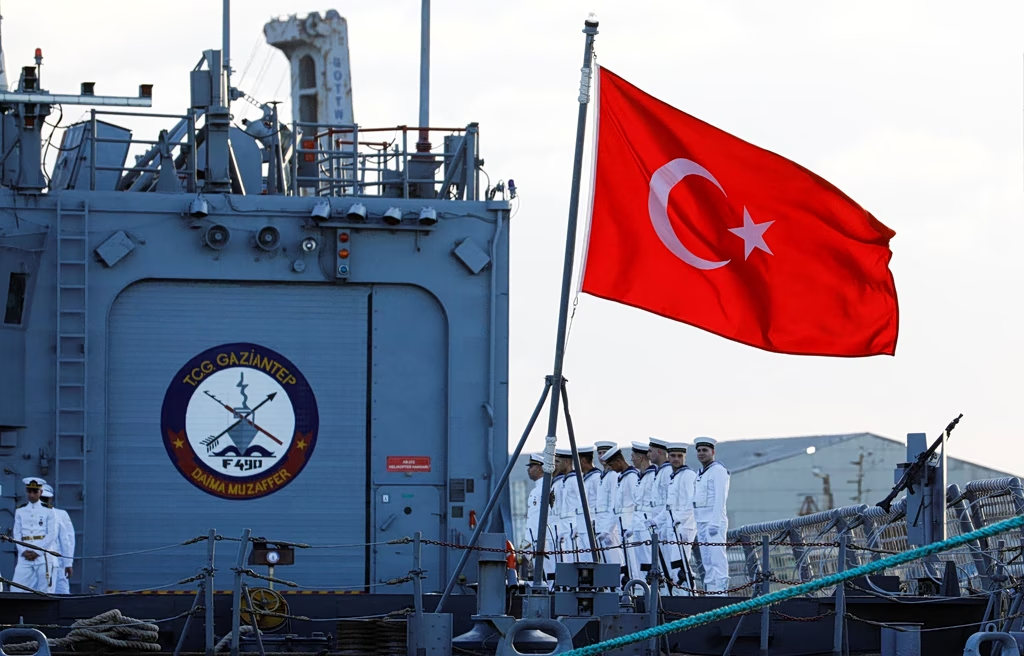
 A portion of Turkish media this week revisited nationalist rhetoric by portraying infrastructure work on the tiny isle of Ro as an instance of alleged “militarization”, while claiming that Greece is “setting up an army” just two kilometers from the Turkish coast.
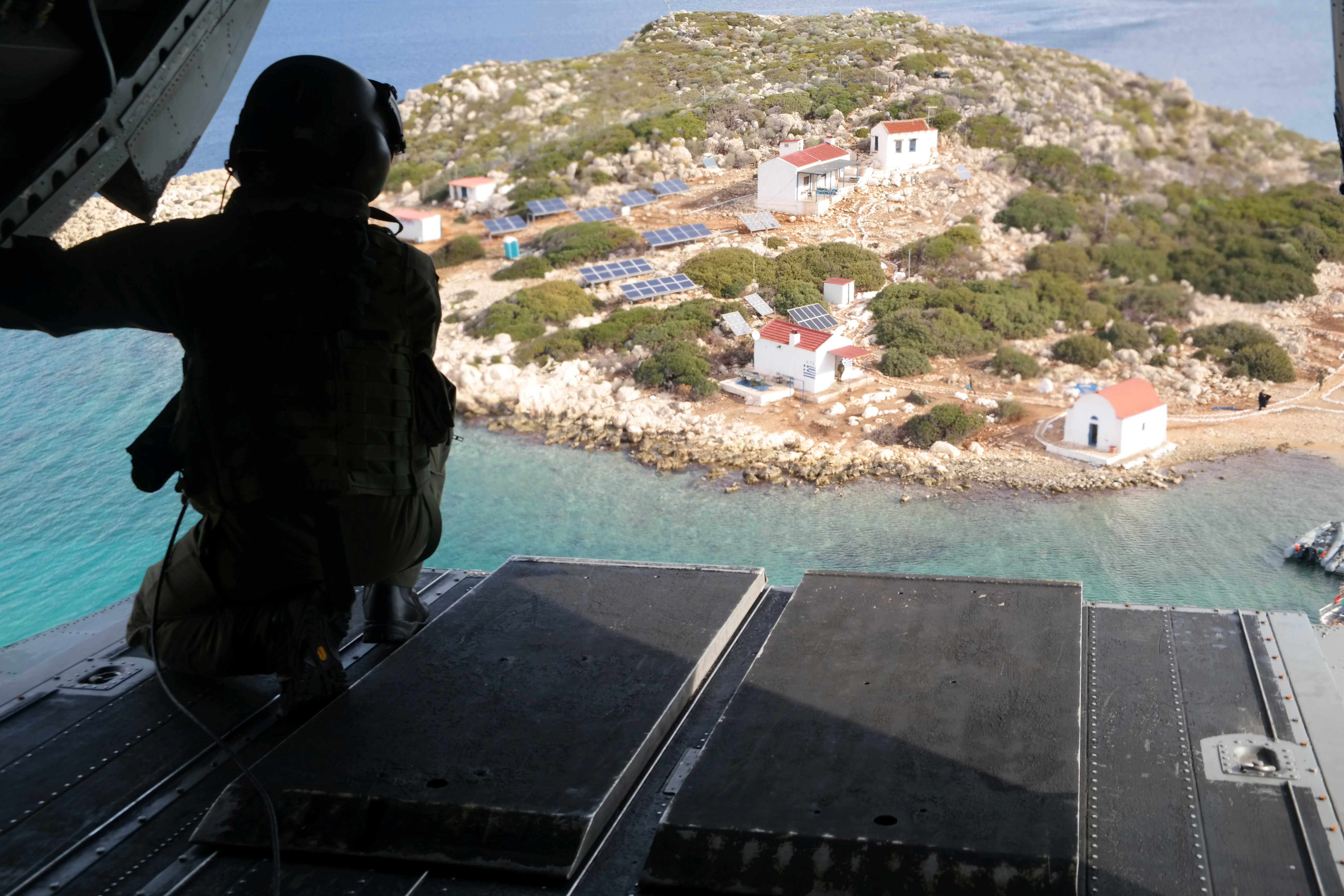
The sensationalist reports follow a Saturday visit by chief of the Hellenic National Defense General Staff, Gen. Dimitrios Houpis, to Ro for the inauguration of two new accommodation facilities for military personnel serving on the remote Dodecanese islet.
According to the Greek military, the facilities were built with a private donation.
The two buildings were launched a year after construction began and are intended to improve living conditions for personnel stationed on Ro, which lies just west of Kastellorizo (Megisti) in the extreme southeastern Aegean. A large number of military personnel attended the ceremony, prompting Turkish media to frame the otherwise routine project as evidence of an alleged “Greek military buildup” close to Turkey’s coast.
One media outlet claimed that Greece was placing military units “on every rock” in the eastern Mediterranean, while describing Ro as a new point of Greek “military mobilization” facing the Turkish coast. It highlighted the islet’s proximity to the coastal town of Kas in Antalya province, decrying what it called a Greek military presence at approximately 1,800 meters from the Anatolia mainland.
The reports also revived Ankara’s longstanding claims concerning the demilitarized status of Greek islands and islets in the eastern Aegean and Dodecanese.
Turkish officials and media have repeatedly invoked the 1923 Treaty of Lausanne and, in the case of the Dodecanese, the 1947 Paris Peace Treaty, in claiming that Greece is restricted from maintaining military forces there. Athens flatly rejects Ankara’s unilateral interpretation of the relevant treaties, as it says, and maintains that it is exercising its sovereign rights in accordance with international law.
The latest episode comes after a series of developments earlier this year that have again highlighted testy relations, despite a broader effort to maintain dialogue.
Ankara has also continued to challenge Greece over the status of its eastern Aegean islands and its maritime rights.
In May, Turkish Defense Minister Yasar Guler criticized what he described as the arming of islands that should have non-military status, while Greek sources rejected the claims as revisionist and reminded that “was it disputed is defended”. Turkey has also indicated a move to codify its contested maritime claims in the Aegean and eastern Mediterranean through proposed domestic legislation, including claims that Athens considers legally baseless.
Against this backdrop, Turkish media have increasingly presented relatively minor developments on Greek islands close to the Turkish coast through the lens of the wider strategic dispute. Athens, meanwhile, has stressed that its defense posture is driven by security requirements and that it does not accept unilateral Turkish interpretations of international law.
The Ro reports also link the issue to the Mecca Joint Defense Agreement, signed Aug. 7 by Turkey, Saudi Arabia and Pakistan.
The agreement commits the three countries to closer defense cooperation and establishes a mutual-defense principle under which an armed attack against one member is to be treated as an attack against all three. The pact is part of a broader effort by Ankara to deepen security and defense ties with Saudi Arabia and Pakistan amid heightened regional tensions.
Ro is a tiny Greek islet in the southeastern Dodecanese, close to the Turkish coast and southwest of Kastellorizo. Despite its size and lack of a permanent civilian population, it carries considerable symbolic and strategic significance because of its location immediately off the Turkish mainland. It is associated particularly with Despina Achladioti, known as the “Lady of Ro,” who lived on the islet for decades and regularly raised the Greek flag there until her death in 1982.