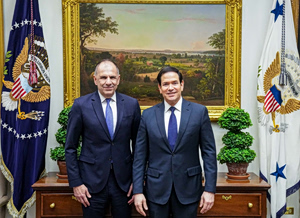
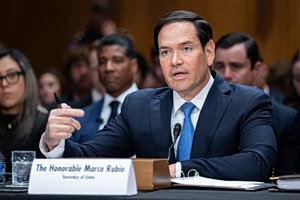
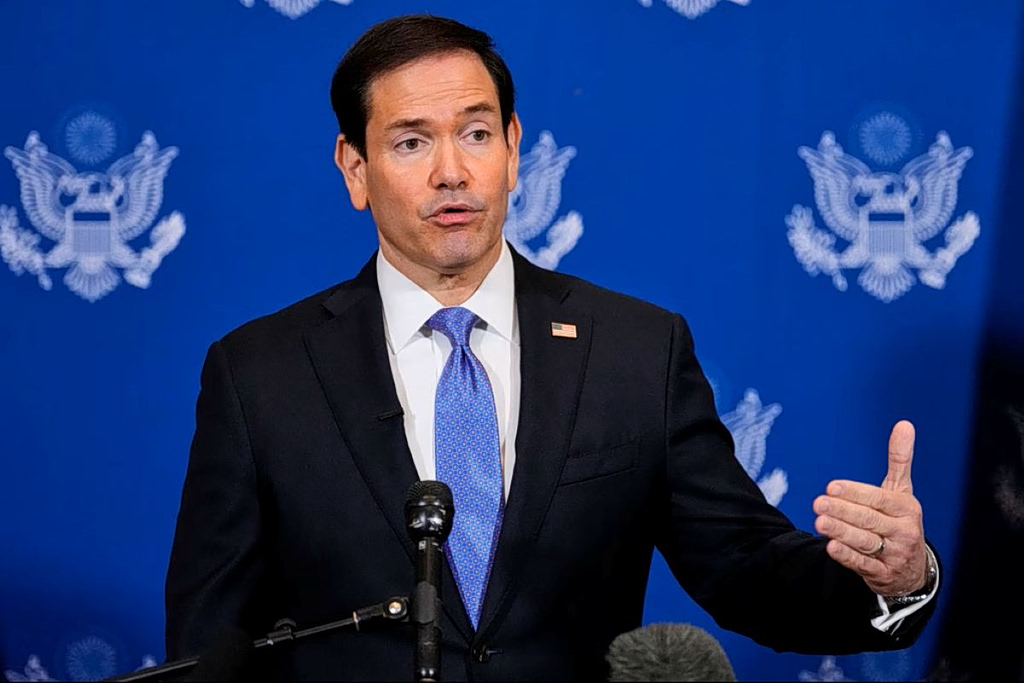
U.S. Secretary of State Marco Rubio arrives in Athens within the next 24 hours for the sixth round of the U.S.-Greece Strategic Dialogue. The visit comes at a time of sweeping geopolitical change and reflects how much deeper the bilateral relationship has grown in recent years.
Athens is paying close attention to one detail in particular: Rubio’s trip does not include a stop in Ankara. For decades, American diplomatic practice called for a rough balance in high-level visits to the region, so the absence of a matching Turkish leg carries real symbolic weight for the Greek side, especially amid ongoing tensions between Athens and Ankara. Washington is not expected to take a public position on Greek-Turkish disputes.
A delayed dialogue with a broad agenda
Rubio will meet Prime Minister Kyriakos Mitsotakis and Foreign Minister Giorgos Gerapetritis and lead the U.S. delegation at the Strategic Dialogue. The agenda covers defense and security, energy, regional stability, trade and investment, with special focus on connectivity and artificial intelligence. Originally set for December 2025, the dialogue was repeatedly postponed because of international developments. Holding it now, with the head of the State Department in attendance, is seen as a sign of Washington’s commitment to the partnership.
Energy and the Vertical Corridor
Energy cooperation will feature prominently. The Vertical Corridor is central to the U.S. strategy for diversifying Europe’s energy supplies and reducing dependence on Russia, and Greece is positioning itself as a key hub for moving American LNG into the Balkans and Eastern Europe. ExxonMobil and Chevron’s activities in Greek offshore blocks are also in focus, with U.S. backing for exploration and future drilling gaining added importance after Libya raised objections citing the Turkish-Libyan memorandum.
Defense ties
Defense remains one of the strongest pillars of the relationship. Greece is already moving to acquire F-35s and continues upgrading its F-16s to the Viper configuration. Washington, for its part, wants U.S. companies to win a bigger share of Greek procurement, much of which has recently gone to European and Israeli firms.
Cyprus
Rubio has reaffirmed U.S. support for a Cypriot-led, UN-facilitated settlement based on a bizonal, bicommunal federation, a position directly at odds with Turkey’s push for a two-state solution. Washington has also stressed that closer defense and energy cooperation with the Republic of Cyprus strengthens regional security.
Backing for Guilfoyle
Days before his arrival, Rubio publicly praised U.S. Ambassador to Greece Kimberly Guilfoyle, calling her “extremely effective” in advancing the Trump administration’s agenda in Greece and Europe and saying both he and President Donald Trump value her leadership in the region.
A longtime friend of Greece
Rubio’s engagement with Greek issues predates his time at the State Department. As a Florida senator on the Senate Foreign Relations Committee, he co-authored with Democratic Sen. Bob Menendez the 2019 Eastern Mediterranean Security and Energy Partnership Act, which expanded U.S. cooperation with Greece, Cyprus and Israel. In 2021, the two introduced the U.S.-Greece Defense and Interparliamentary Partnership Act, which supported Greek military modernization, opened the door to faster F-35 deliveries and strengthened the 3+1 format. That same year, Rubio joined Menendez and other senators in urging President Joe Biden to respond to Turkish actions in Varosha, Cyprus.
Taken together, the visit is more than another round of bilateral talks. It underscores Greece’s elevated role in U.S. planning for the Eastern Mediterranean, as Athens seeks to capitalize on its position in defense, energy and regional security.