 Μake us preferred on Google
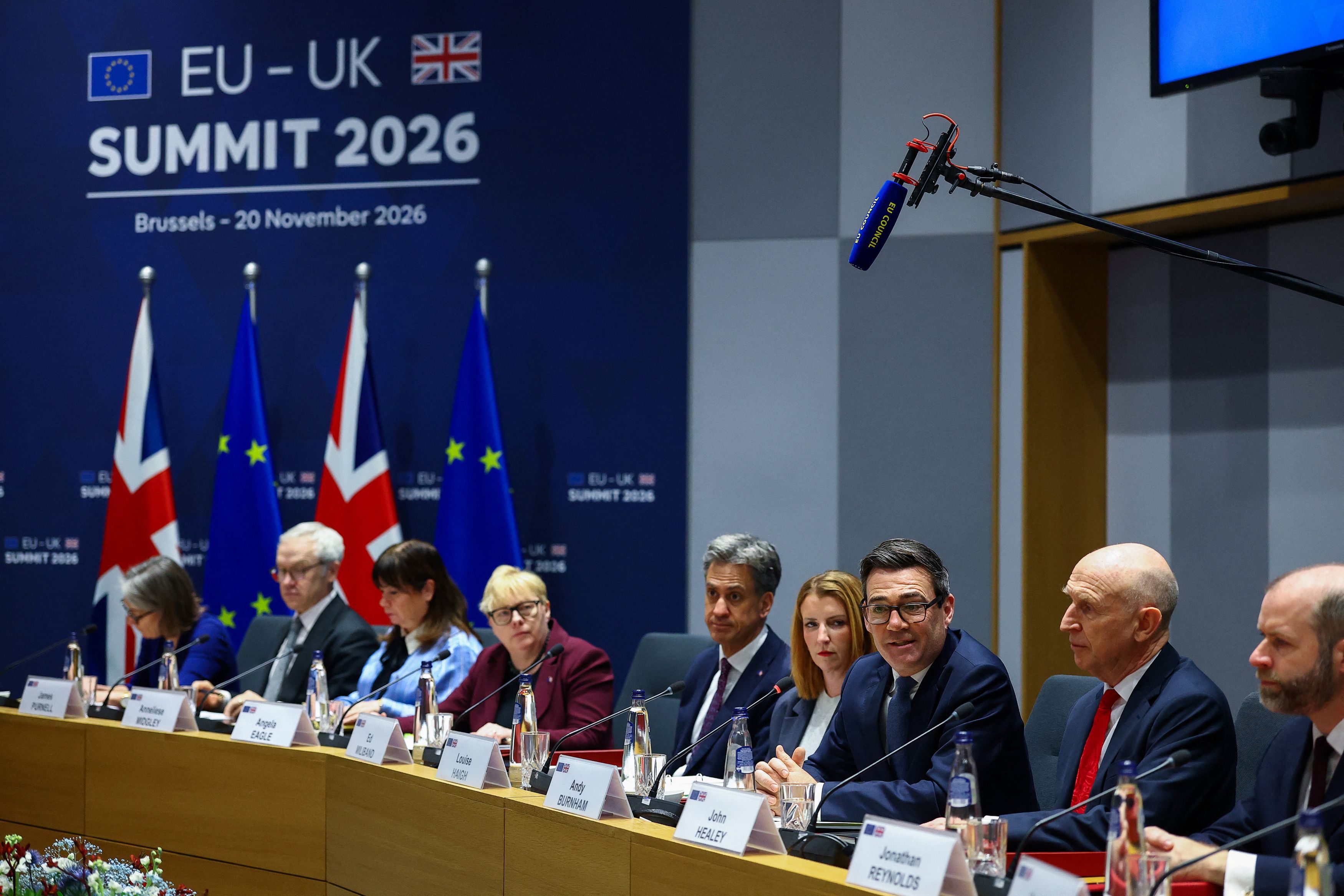
A decade after the Brexit vote, Britain and the European Union have agreed on a new package of measures aimed at bringing their relationship closer, with negotiations formally concluded at a summit in Brussels on Friday.
The deal comes as British Prime Minister Andy Burnham seeks to redefine the country’s relationship with the bloc, having openly questioned the benefits Britain gained from leaving. Speaking earlier this week, he called it an “obvious truth” that Brexit had cost the country more than it delivered.
Burnham has gone further by suggesting that Britain should examine all possible options for its future ties with the EU, including membership. His latest agreement with the bloc does not settle that larger question, but establishes a framework for cooperation in several areas.
Downing Street confirmed that the two sides had agreed on implementation timelines for a youth mobility arrangement, an agreement on sanitary and phytosanitary standards, and the connection of their emissions trading systems. A joint statement setting out further details is expected later Friday.
The negotiations took place against a backdrop of international uncertainty. Both Britain and the EU have increasingly emphasized their shared interests as they face the effects of the war in Ukraine, US tariffs, China’s influence over critical mineral supplies and the conflict in Iran.
“Britain and Europe share values, interests and a global neighbourhood,” Burnham said before the meeting. He argued that closer ties would help lower costs, keep prices down and expand opportunities for younger generations. “In a more dangerous world, we are stronger together,” he added.
What the new arrangements will change
For businesses, one of the most consequential parts of the package concerns agricultural trade. The planned agreement would remove many of the checks and certification requirements currently applied to cross-border shipments of animals, plants and related goods. Products ranging from seeds to sausages would be covered.
The British government estimates that reducing these barriers could bring £5.1 billion ($6.7 billion) a year to the UK economy. The arrangement, however, is not scheduled to come into force until March 2028.
Another measure would bring the British and EU carbon markets together. Linking the two emissions trading systems would mean goods such as steel would no longer face the other side’s border carbon levies.
The youth mobility agreement is designed to give people from Britain and EU countries the opportunity to work or study across the Channel for periods of up to three years. The number of participants has been a contentious issue: Britain initially proposed a ceiling of 50,000, but has accepted a limit of 100,000, EU diplomats said.
The unresolved questions
The package does not resolve a disagreement over what EU students should pay to attend British universities.
EU member states want their citizens to qualify for the same tuition rates as domestic students. Those fees are generally around a quarter of the international rates charged by British universities. The UK government, by contrast, favors offering EU students substantially reduced fees rather than full access to domestic rates.
The two sides now aim to reach a compromise within six months. It has not been established whether the agricultural and carbon-market arrangements are dependent on resolving the tuition issue.
A broader disagreement concerns the extent to which Britain will follow EU regulations in return for closer access to the bloc’s market.
The issue is particularly relevant to the automotive sector. Britain wants special treatment under the EU’s “Made in Europe” framework so that its car industry can benefit from European public funding, including procurement contracts and subsidies.
The EU has indicated that such an arrangement could be possible if Britain aligns its policies with the bloc’s trade measures. These include restrictions on imports of Chinese electric vehicles, including battery-powered and hybrid models, which the British government has so far been reluctant to adopt.
The final joint statement addresses the issue by saying that, in areas where cooperation has been agreed, Britain will “ensure outcomes consistent with relevant EU measures” to protect industries and prevent circumvention.
The wording reflects a proposal developed by France and Germany under which British cars could qualify for EU support if the UK follows the bloc’s evolving trade-protection policies.
Friday’s summit had originally been planned for July but was postponed after former British Prime Minister Keir Starmer resigned. Its conclusion marks a new effort to repair relations, although the remaining disagreements underline the limits of the latest rapprochement.