 Μake us preferred on Google
Greece is moving on two fronts in the Eastern Mediterranean, one energy-related and one geostrategic. The Chevron-HELLENiQ ENERGY consortium has started offshore geophysical surveys south of the Peloponnese. At the same time, Greece, Cyprus and Israel are holding a series of complex joint military exercises.
Together, the two developments serve as a practical response to the facts on the ground that Ankara is trying to create. Turkish Foreign Minister Hakan Fidan is again pressing his country’s claims, using recent diplomatic activity in Libya.
Surveys Underway
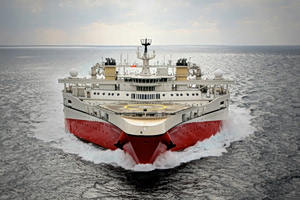
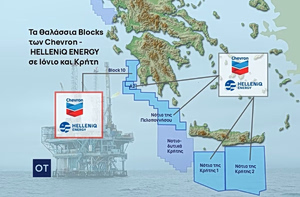
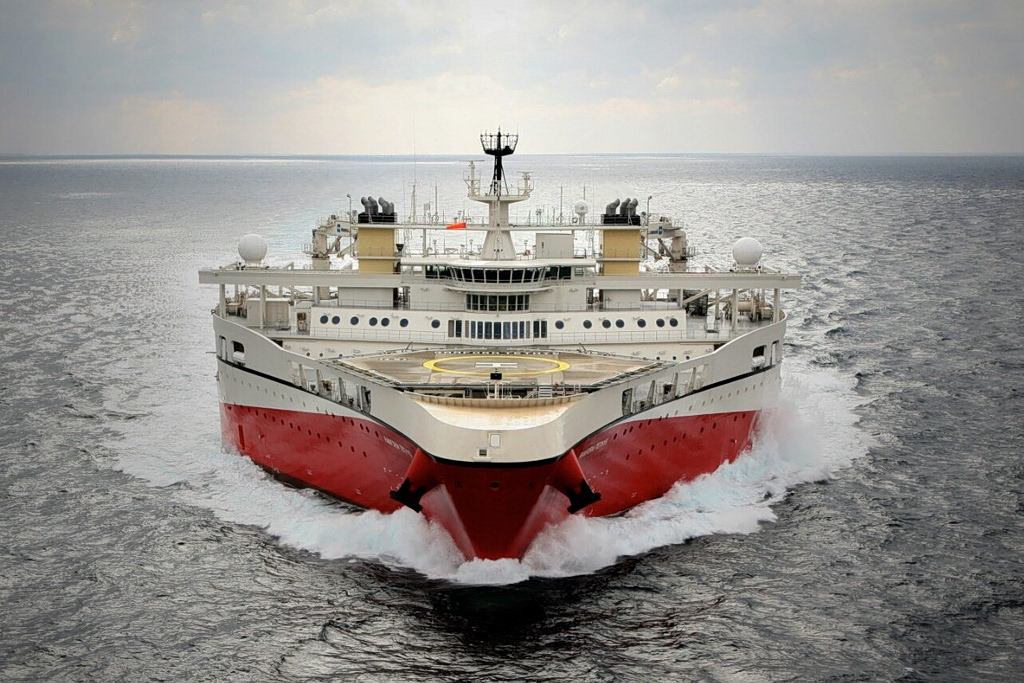
The surveys in the southern Ionian Sea and the sea of Kythira officially began under a NAVTEX issued by Greece, which runs until January 7, 2027. The seismic vessel Ramform Tethys is working in the “A2” and “South of Peloponnese” blocks.
According to the Greek notice to mariners, the Ramform Tethys has been sailing south of the Peloponnese since November 20, accompanied by two support vessels. Passing ships must stay eight nautical miles from its stern and three nautical miles from its sides, because the cables it tows can reach up to six nautical miles in length.
These operations are a precursor to future surveys south of Crete and will test Turkey’s claims in practice. Greek officials have said that surveys in the two blocks south of Crete, one of which is “South of Crete 2,” will take place in 2027.
Fidan’s Warnings
Speaking in the Turkish parliament, Fidan repeated Ankara’s claims and warned of a “decisive stance.” He also pointed to the ratification of the Turkey-Libya memorandum by the House of Representatives in eastern Libya as a diplomatic step forward.
Turkey is also preparing legislation on “Blue Homeland.” Taken together, these moves point to a possible new area of confrontation between Athens and Ankara once the Ramform Tethys deploys its cables in “South of Crete 2.” Turkey considers that area part of the Turkey-Libya memorandum.
Turkish officials have strongly defended the memorandum in recent days, despite near-universal condemnation of its ratification. The US State Department initially kept its distance. It later called the ratification an “unconstructive and provocative” development that increases tensions in the region.
Joint Exercises
On the ground, Greece, Cyprus and Israel are strengthening deterrence with joint air and naval exercises south of Crete and Cyprus. The drills include aerial refueling and air defense exercises, combining energy activity with regional defense cooperation.
Greece and Israel are holding exercises around Crete and in the Eastern Mediterranean more and more often.
Before last Monday’s and Tuesday’s aerial refueling exercises south of Crete, the Greek and Israeli navies sank a decommissioned frigate north of the island. Two days ago, together with Cypriot forces, they held an air and naval exercise south of Cyprus. Ta Nea says the drills show the high level of interoperability now reached by the armed forces of the three countries.