
 Μake us preferred on Google
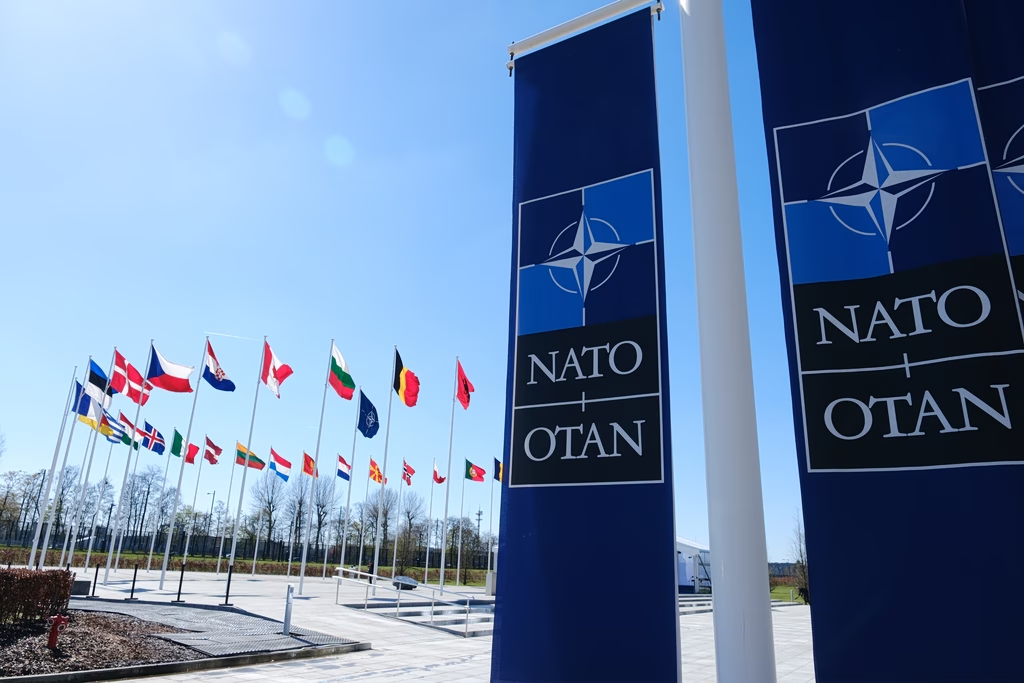
In closed-door peace talks over the past few months, President Trump’s son-in-law and special envoy Jared Kushner has discussed an idea once believed to be dead-on-arrival: NATO membership for Ukraine if it cedes territory to Russia, said people familiar with the matter.
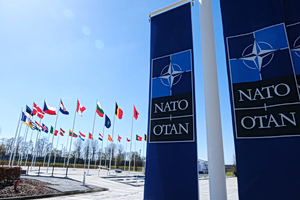
Moscow has fought for years to prevent Ukraine from joining the 32-member North Atlantic Treaty Organization. Trump himself ruled out NATO membership for Ukraine early last year as unacceptable to Russia .
But the idea has been raised in several conversations between European officials and Kushner and his fellow envoy Steve Witkoff in recent months, said people involved in the talks.
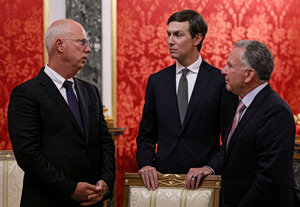
Most recently, Kushner discussed the possibility with Ukrainian President Volodymyr Zelensky and European officials at a Dublin military airfield last week, said people familiar with the discussion. There, the U.S. envoys met with Zelensky, his adviser Rustem Umerov, and selected European national-security advisers.
It also came up in at least one meeting last week in the United Arab Emirates, where Kushner and Witkoff were meeting with Ukrainians, Europeans and Russians in a series of meetings aimed at negotiating a deal to end the war, said people familiar with those discussions. The idea was raised in a phone call as early as August, one European leader said.
The U.S. has raised two possible scenarios in recent talks, according to people involved in the negotiations. The first would require Ukraine to give up the territory it still controls in a region of eastern Ukraine known as the Donbas, where the two sides have been battling for much of the war, in exchange for full NATO membership. The second idea was to freeze the conflict along the front line—which would leave part of the Donbas territory in Ukrainian hands—and give Ukraine security guarantees to protect it from a future Russian assault through an international treaty with the U.S., and potentially with European allies.
A U.S. official said negotiators are discussing many ideas, but both Ukraine and Russia would need to agree to any final deal.
Broaching the idea of NATO membership for Ukraine shows how far Washington might be willing to go to break a stalemate in talks between Russia and Ukraine. Trump and previous U.S. administrations have resisted offering Ukraine membership in the military alliance, fearing that doing so would risk drawing the West into a confrontation with Moscow. Some European leaders share that fear.
It isn’t clear how seriously the U.S. mediators are entertaining the idea or whether Trump has changed his view on Ukraine joining NATO . If the U.S. were to back the idea, it could expose tensions within the alliance, with members like Germany long opposed to Kyiv’s membership. The alliance can only expand by consensus.
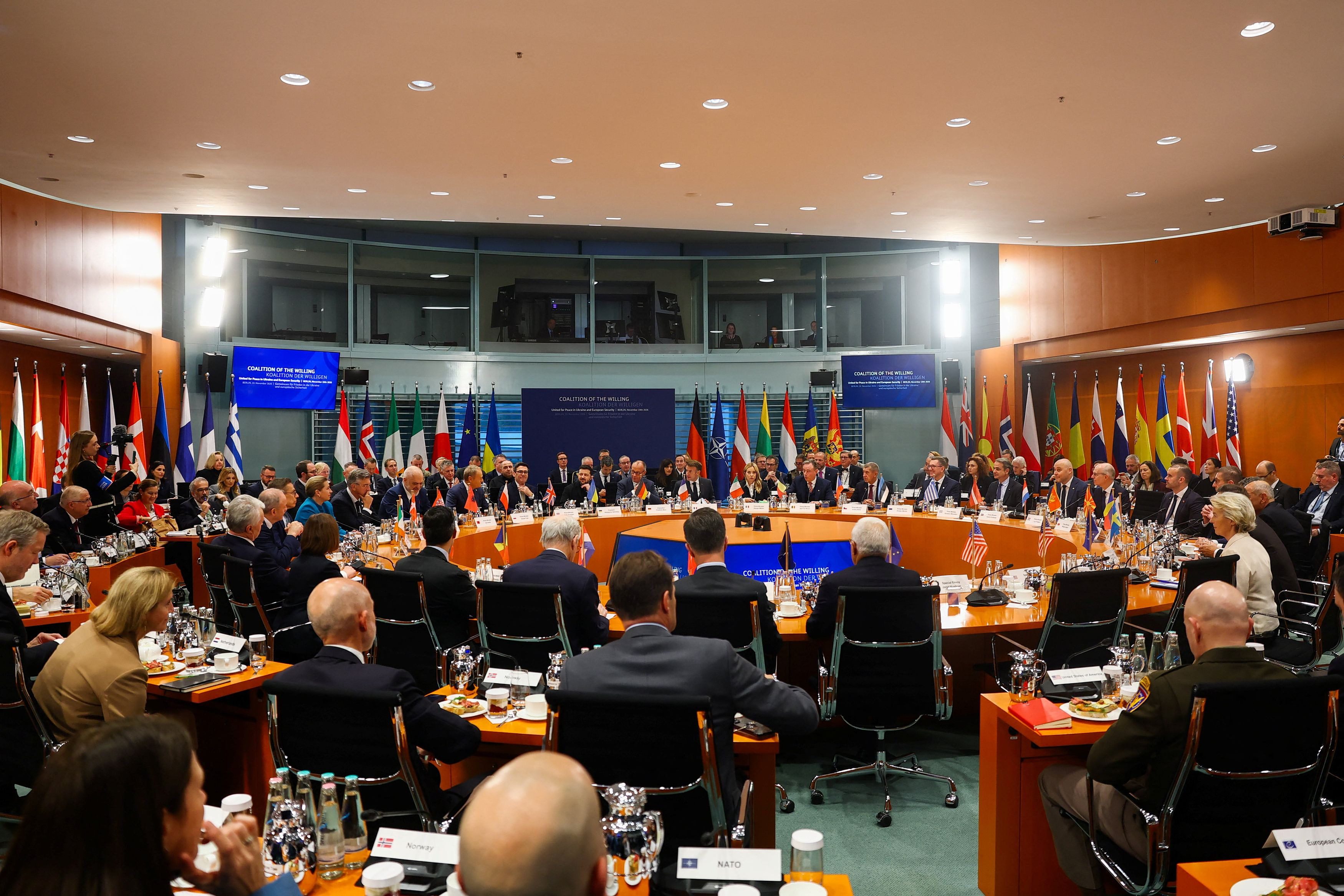
On Thursday, Kushner said the Russian government had gotten “comfortable” with NATO-like security guarantees for Ukraine. He and Witkoff met with countries supporting Ukraine in Berlin on Thursday to discuss future funding and security guarantees for Kyiv.
“There will be huge deterrence and massive consequences if it’s ever violated,” Kushner said, adding that Trump is open to giving such guarantees. “You make it so good that hopefully you don’t have to use it because the deterrence is so strong.”
Trump, who was returning from a summit with Russian President Vladimir Putin and Chinese leader Xi Jinping , called Kushner’s cellphone from Air Force One to say that Putin was tired of war and willing to settle, according to two people present. Speaking over the phone to European leaders, including Zelensky, who were gathered with Kushner, Trump said they could save a lot of money supporting Ukraine if they reached a peace deal with Putin.
After the Berlin meeting, French President Emmanuel Macron said it was time to discuss NATO membership for Ukraine. The issue of advancing Ukraine’s NATO bid came up in the Berlin talks, but the German hosts were unwilling to pursue it, people who attended the meeting said. German Chancellor Friedrich Merz , who is 70, told aides that Ukraine wouldn’t join NATO in his lifetime.
Last week, Zelensky said Kyiv was still discussing security guarantees with the U.S. and Europe, and that any deal would need to be approved by the Ukrainian people. He said U.S. negotiators have described those guarantees as bilateral agreements, “similar to what Israel has.”
He also acknowledged that the U.S. had raised the idea of Ukraine’s NATO membership. “The Americans raised a question: What if Ukraine joins NATO? Would Ukraine withdraw from Donbas?” Zelensky told journalists.
After nearly five years of war, Russia still hasn’t been able to take the whole of Donbas. Ukraine fears ceding the territory it controls there would help the Kremlin stage future offensives. “I have said repeatedly: Ukraine is not retreating and is not giving up its land to terrorists,” Zelensky said.
During talks in Abu Dhabi last week, Russian negotiators explicitly demanded that Ukraine abandon any ambition to join NATO, people familiar with the talks said.
In a paper distributed to negotiators and seen by The Wall Street Journal, Moscow demanded that Ukraine remove its aspirations to join NATO from its constitution. Russian negotiators also insisted that the alliance commit not to station troops or military equipment in Ukraine and that Western arms deliveries to Kyiv cease.
The demands—which were laid out in a so-called non-paper because they contain unofficial positions for the purposes of negotiations—went further. Moscow called for NATO to roll back its military infrastructure in Eastern Europe to 1997 levels, the year the alliance and Russia established a cooperation forum.
The document also insisted on the removal of missiles capable of reaching Russia from countries across Europe and the Caucasus, as well as the withdrawal of offers by France and Britain to extend nuclear protection to other European nations.
European negotiators dismissed the demands as maximalist positions designed to be opening bids, rather than a final settlement blueprint.
In keeping with agreements made with Russia, NATO hasn’t built significant military infrastructure in eastern member states, with the exception of radar systems in Poland and Romania, and a base for a German unit that will be permanently stationed in Lithuania. The latter move was a response to the Russian full-scale invasion of Ukraine.
Write to Bojan Pancevski at bojan.pancevski@wsj.com