 Μake us preferred on Google
The Greek government is expected to submit its 2027 budget to Parliament on Friday, raising its inflation forecasts for this year and next while projecting higher tax revenue, continued economic growth and a further decline in public debt. The most significant change from the draft budget presented in October concerns inflation, which is now expected to reach 4% in 2026, up from an earlier estimate of 3.8%. For 2027, the forecast has been revised to 2.8%, from 2.6%. The revisions reflect higher energy prices, which are feeding through to production, transportation and the cost of goods and services, adding to pressure on household purchasing power. The European Commission’s forecasts are higher still, putting Greek inflation at 4.1% this year and 3.2% in 2027.
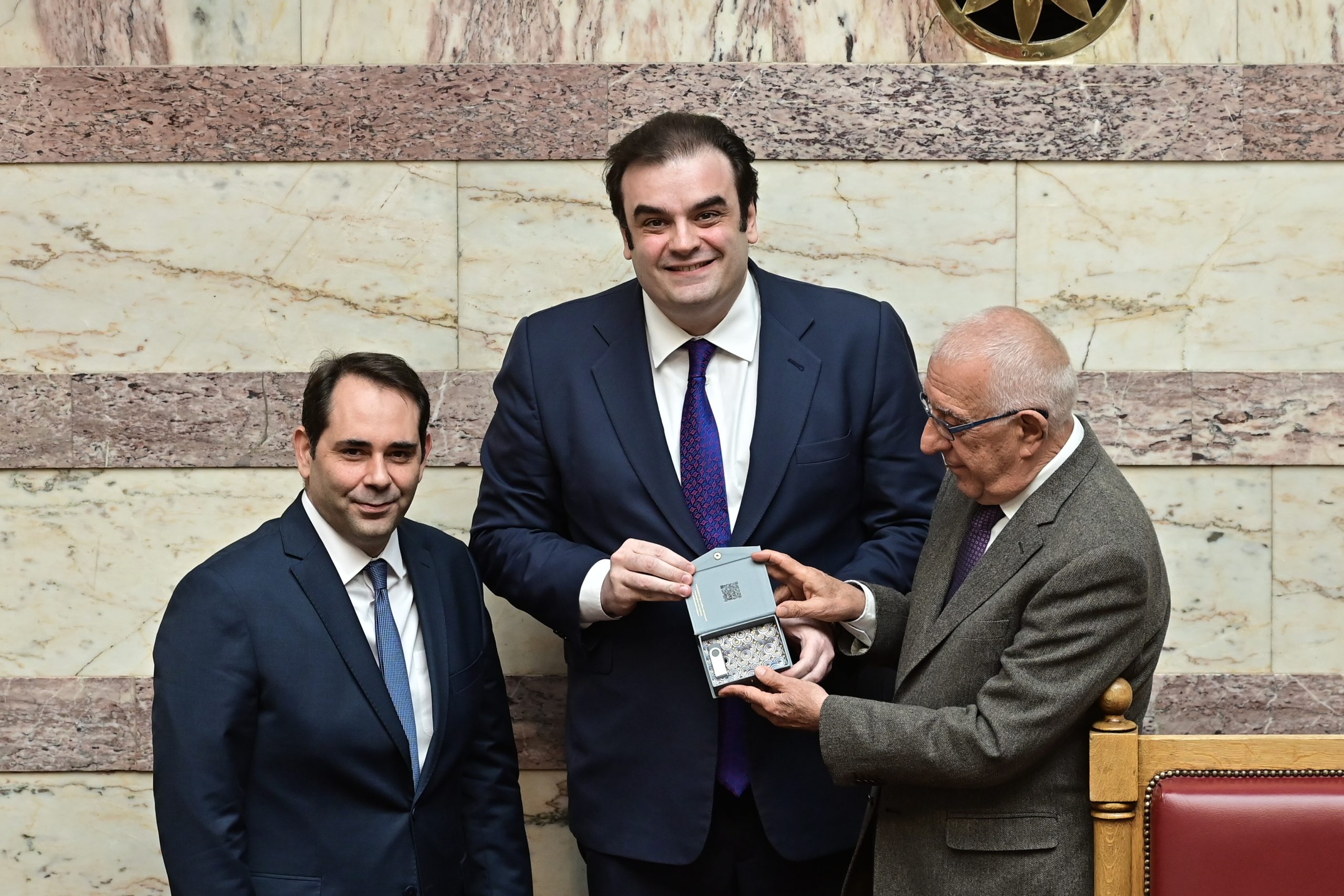
Finance Minister Kyriakos Pierrakakis is scheduled to deliver the budget to Parliament Speaker Nikitas Kaklamanis at 11 a.m. For the first time, the document will be distributed exclusively through a QR code, replacing the USB drive used in previous years.
Economic Growth and Investment
The government expects the Greek economy to grow by 2.3% in 2027, up from an estimated 2% this year. If the forecast holds, Greece will grow faster than the eurozone average for a seventh consecutive year, with growth across the currency bloc projected at 1.2%.
Investment is expected to remain a major driver of growth, increasing by 7.9% next year, compared with 7.7% in 2026 and a projected 1.7% across the eurozone. However, Greece still has some catching up to do. Although investment has risen from 11% of GDP in 2019 to nearly 18% today, it remains below the European Union average of 21%.
The budget also forecasts a 3.1% increase in exports of goods and services, while public investment funding outside the EU recovery program is set to rise from 9.8 billion euros to 11 billion euros. The increase comes as funding from the EU’s Recovery and Resilience Facility winds down, leaving the government to rely more heavily on other sources of public investment.
Tax Revenue to Rise by More Than 2 Billion Euros
The government expects to collect 77.88 billion euros in taxes in 2027, an increase of 2.15 billion euros, or 2.8%, compared with 2026.
Value added tax (VAT) is projected to generate 30.58 billion euros, while excise taxes are expected to bring in 7.31 billion euros.
Income tax revenue is forecast at 29.38 billion euros, including approximately 17 billion euros from individuals and 9.84 billion euros from companies.
Annual property taxes, primarily ENFIA, are expected to generate 2.37 billion euros.
Despite higher tax collections, total net budget revenue is projected to decline by 4.19 billion euros to 78.69 billion euros, mainly because of reduced EU recovery funding.
Government Spending and Debt
Total state budget spending is projected at 85.05 billion euros, down 2.93 billion euros from the estimated 2026 level. The largest spending category is transfers, at 37.09 billion euros, followed by employee compensation, including public sector salaries, at 16.06 billion euros. Interest payments on government debt are expected to reach 10.78 billion euros. Much of the reduction in overall spending reflects the completion of projects financed through the EU recovery program.
The government has also raised its estimate for this year’s primary budget surplus, which excludes interest payments on debt, to between 4% and 4.1% of GDP, from 3.6% in the October draft. For 2027, the primary surplus is projected at 3.3% of GDP, equivalent to approximately 9.1 billion euros.
Public debt is expected to fall to 128.8% of GDP next year, from 136.7% in 2026. In absolute terms, debt is forecast to decline from 358.1 billion euros to 353.69 billion euros. The government also plans to continue repaying bailout loans ahead of schedule, with the aim of completing repayment of loans from Greece’s first bailout program by 2031, roughly a decade before their original maturity. Early debt repayments are expected to total 12.8 billion euros in 2026.
What Changes for Workers, Families and Pensioners?
The budget includes 1.9 billion euros in tax cuts and income measures announced at the Thessaloniki International Fair, most of which are scheduled to take effect in 2027.
Starting in January, employees with three dependent children are expected to benefit from a zero income tax rate on earnings up to 20,000 euros, reflected in the tax withheld from their salaries.
In April, the government plans to introduce the first of two minimum wage increases, with the aim of reaching 1,000 euros per month by January 2028.
Private sector employees will also see their social security contributions reduced by half a percentage point in April.
According to Labor Minister Niki Kerameus, more than 2 million people will receive the annual 400 euro payment, with the money expected to appear in their bank accounts on Friday afternoon, three days ahead of the official payment date of November 23.
The payment covers all pensioners aged 65 and older, regardless of income or assets, as well as recipients of survivor’s pensions over 60, certain people with disabilities and uninsured elderly people.
The benefit, which has increased from 250 euros when it was introduced last year, will be paid every November, Kerameus said.
Public sector employees are also set to receive a 500 euro Christmas bonus beginning in December 2027.
New Housing Loans and Business Support
The budget provides 2 billion euros for Spiti Mou III (My Home III), a housing program offering low-interest mortgages for first-home purchases.
Loans of up to 230,000 euros will be available for properties valued at no more than 300,000 euros.
A separate 1.5 billion euro program will provide loans and guarantees for small and medium-sized businesses.
When Will Parliament Vote?
Parliament is scheduled to debate the 2027 budget from December 11 to 15, with the final vote planned for December 15.