 Μake us preferred on Google
 According to a report by Live Science, archaeologists have discovered decapitated skeletons in a ditch at the prehistoric settlement of Vráble, in southwestern Slovakia, which was inhabited between 5250 and 4940 BC. The find reveals one of the most striking burial practices documented from the Neolithic period in the region.
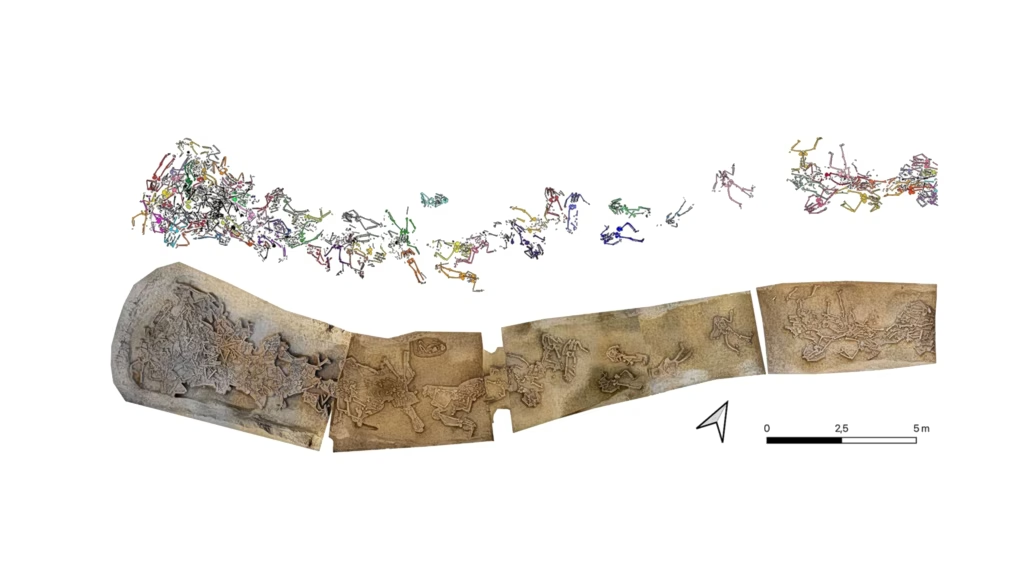
More than 300 house traces have been identified at Vráble, spread across three distinct neighborhoods. The ditch containing the skeletons surrounded one of those neighborhoods and held four pairs of individuals as well as a mass burial of at least 77 people. Only one skeleton, that of a child, still had its skull intact.
According to Katharina Fuchs of Kiel University, cut marks found on the bones indicate that the bodies had been decapitated using sharp tools, most likely after death and as part of a ritual rather than an act of violence. No lower jawbones were found among the remains, suggesting the heads were removed intact.
Cervical vertebrae were found along the walls of the ditch and may have been deliberately placed there following decapitation. Since no skulls have been located, researchers are unable to determine with certainty what post-mortem rituals were carried out.
Fuchs and her team believe that burying the bodies in the ditch encircling the neighborhood may have been a way for its inhabitants to symbolically claim the land through a connection to their ancestors. The full findings were published in the journal Proceedings of the Prehistoric Society.