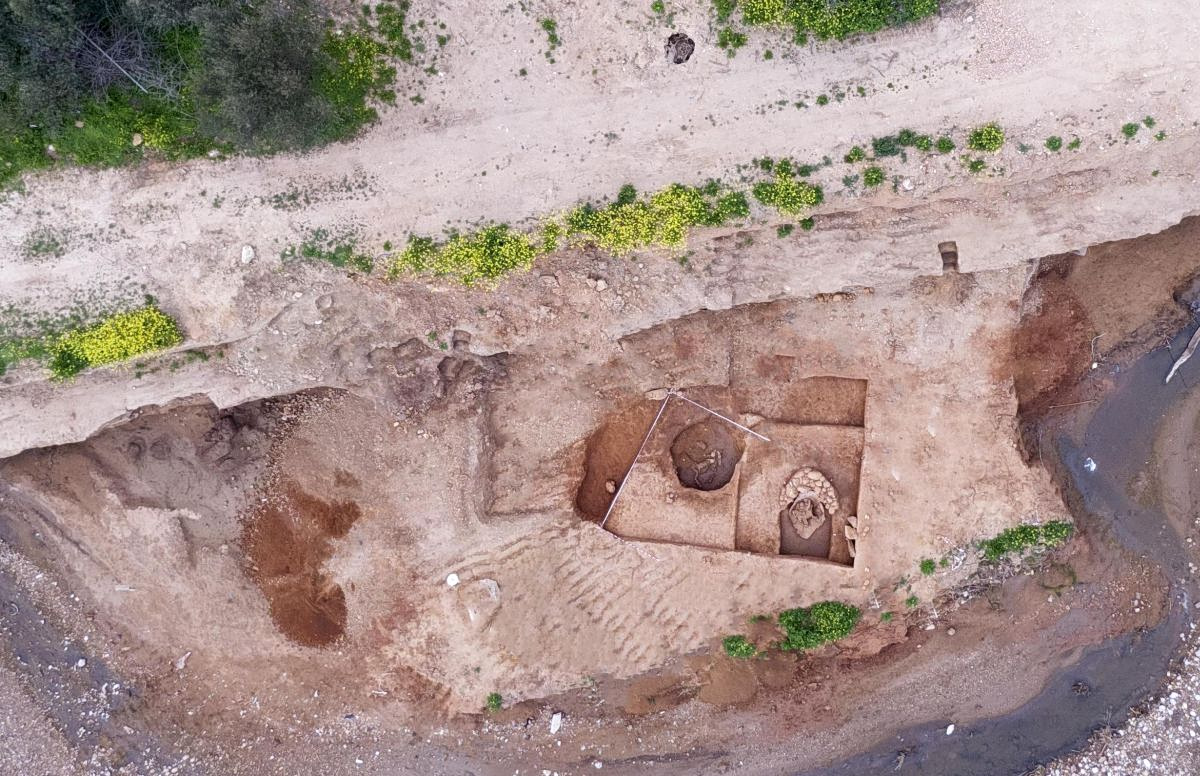
A significant archaeological discovery has been made along the banks of a stream in Rafina, Eastern Attica, revealing a burial from the Early Bronze Age (c. 3200–2000 BCE). The findings come from rescue excavations conducted since 2024 by the Eastern Attica Ephorate of Antiquities, part of a wider project for the stream’s management and boundary works.
The burial consists of a 1.74-meter-high clay jar, placed in a pit on the southern bank of the stream. The vessel features horizontal handles at the belly and distinctive rope-like decorations around the neck and handles. Its mouth was sealed with a semicircular wall of river pebbles, and two large stones with smaller slabs formed false doors with symbolic thresholds.
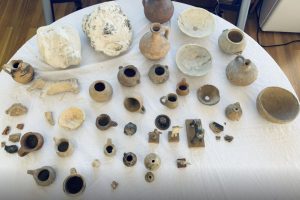
Inside the jar, on a bed of sand and pebbles, archaeologists found the remains of two humans covered by large stones that nearly filled the space. Grave goods included a bronze tong, an egg-shaped stone slab, obsidian points, and ceramic vessels. The careful construction and selection of items indicate profound respect for the deceased.
Nearby, a large circular pit shows evidence of long-term use and burning. The upper layers contained a bucranium, ceramics, and historical-period bronze coins, while the base revealed the skeleton of a horse and smaller animal bones. Archaeologists believe this may reflect ritual animal sacrifices and the enduring sacredness of the area.
“These discoveries, seventy-five years after Dimitrios Theocharis first uncovered Early Bronze Age settlements in the region, provide invaluable insights into the social structures and funerary beliefs of Rafina communities,” the Ministry of Culture stated. The findings highlight both the diversity of burial customs in 3rd millennium BCE Attica and the influence of Cycladic and eastern traditions.