 Μake us preferred on Google
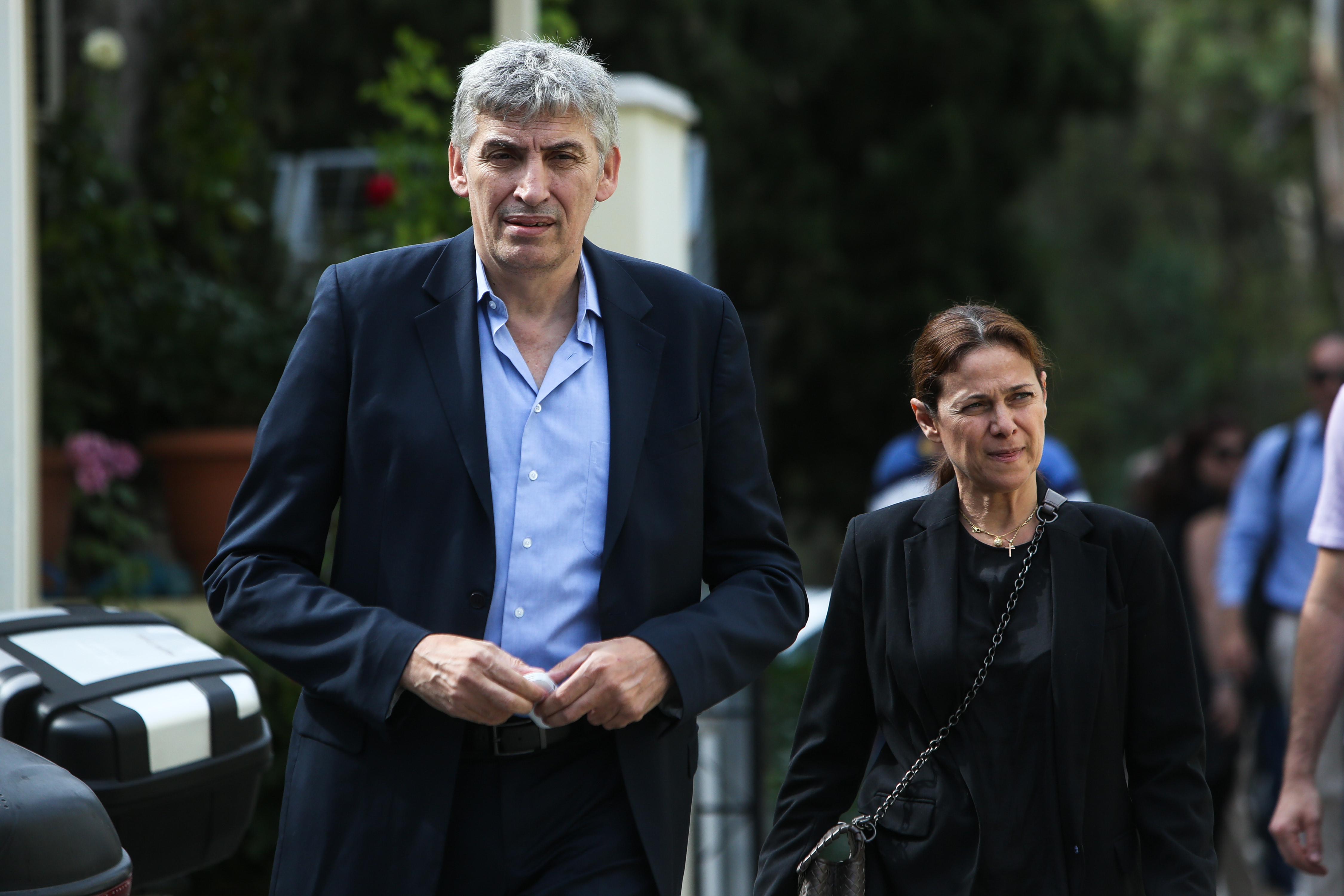
Former Greek basketball star Panagiotis Fasoulas has called for sweeping changes to the way Greek basketball is governed, demanding greater transparency in refereeing, financial accountability and a new administration following the Basketgate scandal that has shaken the sport.
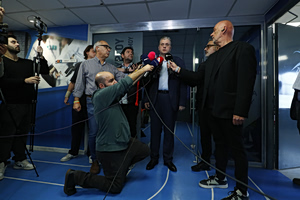
Speaking at a press conference at the offices of the Journalists’ Union of Athens Daily Newspapers (ESIEA), Fasoulas addressed the crisis surrounding the Hellenic Basketball Federation (EOK), following the pretrial detention of its former president, Vangelis Liolios, and prominent referees in connection with the case.
Fasoulas, who is a candidate for the federation’s presidency, criticized the current board for remaining in office despite the developments, arguing that its members should have resigned immediately to allow a new administration to take over.
“I have nothing personal against the members of the board, but it bothers me that you did not all resign the following day, so that we could move forward with the next administration,” he said.
He also questioned the nature of the board’s meetings, claiming that they had increasingly become opportunities for Liolios to deliver lengthy speeches rather than engage in meaningful discussion.
“By the fourth or fifth board meeting, I realized that we were gathering just to listen to Mr. Liolios’ speeches,” Fasoulas said, adding that he had approached a prosecutor and requested that conversations between Liolios and Tschapа be made public.
Fasoulas demands radical changes to Greek basketball refereeing
A central part of Fasoulas’ proposals concerned the operation of Greek basketball refereeing, which he said must become fully transparent.
Acknowledging that little could be changed during the next 18 months, he argued that the federation could nevertheless introduce clear procedures for evaluating and disciplining referees.
He called for referees’ performance assessments to be published on the same night as games, with disciplinary decisions also made public rather than imposed behind closed doors.
“We live under a system of silent punishments. Nobody knows why a referee is being punished,” he said, insisting that suspensions and exclusions should be publicly announced. The same standards, he added, should apply to video review officials.
Fasoulas also criticized what he described as a system in which referees’ careers move in only one direction: upward.
He argued that their overall performance scores should determine whether they retain their positions, in the same way that players and coaches are assessed. He noted that the Greek Basketball League (GBL), the country’s top professional division, represents just 5% of the sport’s overall structure, while the remaining 95% consists of lower divisions.
He further questioned why Greek referees rarely receive appointments to major international competitions.
“Referees should ask themselves why nobody trusts them enough to appoint them to a World Cup or the Olympic Games,” he said, noting that only referee Panagiotis Poursanidis had received such an appointment.
Fasoulas argued that officials should be accountable for their performances and strive to earn positive evaluations even from the team that loses a game.
Federation finances and allegations over the elections
Fasoulas also raised questions about the federation’s financial management, saying that the public had never been given a clear picture of how its funds were being handled.
“We never understood what money the federation was managing,” he said, referring to a budget of 15 million euros and the people who have been sent to prison in connection with the case.
He expressed hope that those detained would ultimately be acquitted, while adding that they should not return to positions within Greek basketball.
He also accused the previous administration of damaging the sport’s wider organizational structure, claiming that people who should have remained involved had been forced out.
Among the examples he cited was the near-destruction of the Attica Basketball Association (ESKANA), which he said had been left without funding while bank accounts were frozen.
“These things must come to an end. These are the things that devastate me when I see them happening in basketball,” he said.
Fasoulas contrasted his own background, alongside fellow basketball figures Nikos Linardos and Panagiotis Giannakis, with that of people he accused of entering the sport primarily for financial gain.
He also defended his decision to address the crisis publicly rather than through private discussions or messages, stressing that he was speaking in his capacity as a candidate for the federation’s presidency.
For those who had built their careers through basketball, he argued, taking on an administrative role offered no personal prestige.
“We want to make basketball a meritocratic sport in the eyes of the public,” he said, adding that the developments had become a matter of concern for Greek society as a whole.
Fasoulas also made a direct allegation about the federation’s electoral process, claiming that his side had been cheated in two elections.
“Two elections took place in which I believe we were robbed. The winners are in prison and the losers are here,” he said.
Giannakis calls for clear roles and justice in basketball
Former Greek basketball great Panagiotis Giannakis, who also attended the press conference, stressed that the crisis should become an opportunity to establish stronger safeguards and put the sport on a new course.
He argued that basketball needed clear rules to prevent people from entering the sport with the primary aim of engaging in misconduct or pursuing personal publicity.
Giannakis acknowledged that the sport’s popularity and major successes had made it particularly prominent, but said the absence of adequate safeguards had allowed individuals with improper intentions to become involved.
He emphasized that players and coaches, who work directly on the court, primarily need fairness and administrators who protect the integrity of sporting results.
However, he cautioned that rebuilding Greek basketball could not depend on a single individual. Instead, it required a collective effort in which everyone understood and respected their responsibilities.
Giannakis criticized the previous administration for attempting to handle every aspect of the sport itself, arguing that responsibilities should be clearly divided.
“The administration should administer, the coaches should coach and the players should play,” he said.
He expressed hope that the initiative would establish the foundations for a new chapter in Greek basketball, allowing the sport to recover the path that had previously brought major successes to the country.