Introduction by Heather Rice, American expat in Greece and founder of Gateway to Greek
When I first came to Greece, it wasn’t part of a long-held plan. In fact, it happened almost entirely by accident. What began as a short trip for a classic car rally turned into a permanent relocation after my passport was stolen and visa complications left me unable to return to where I had been living at the time. I stayed in Athens, and through a series of unexpected events, I found myself building a life here—meeting my future husband, settling into a new country, and eventually learning to navigate not just a new language, but an entirely different communicative culture.

Over time, what began as personal adaptation evolved into a deeper curiosity: why do so many people—Greeks and non-Greeks alike—misunderstand each other even when they share a common language? That question eventually led me to develop workshops on integration and communication, and to establish Gateway to Greek.
“I didn’t choose Greece—it happened to me”
Could you tell us a bit about your background and what brought you from the United States to Greece?
I came to Greece almost by accident. I had been invited to participate in a classic car rally, and on the day I arrived, my passport was stolen. Because I was living in Russia at the time, I couldn’t return without a new visa, so what was meant to be a short trip turned into a much longer stay.
I ended up at a hotel, which my now husband happened to own, and that’s where we met.
People often ask if I have Greek roots, but I didn’t have any connection to Greece before that. It wasn’t a place I had planned to move to. It became part of my life through a series of completely unexpected events.
Learning Greek: structure, resistance, and discovery
How did your relationship with the Greek language evolve over time?
When I arrived, I wasn’t allowed to work during my first year, so I dedicated myself to learning Greek. I enrolled in the Modern Greek program at the National and Kapodistrian University of Athens. It gave me a strong grammatical foundation, and grammar has always come fairly intuitively to me.
But emotionally, it was complicated. I didn’t choose Greek on my own terms, so there was a period of resistance. Vocabulary was especially difficult. I had to actively train myself to look for patterns and connections, rather than memorizing isolated words.
Over time, though, my relationship with the language changed. It stopped being something I was simply “learning” and became something that connected me to my husband, his family, and my daily life in Greece.
When language is not the real barrier
Were there moments when language felt like a barrier—or breakthrough—in daily life?
There were many moments of tension, but not because I couldn’t understand the language. I usually could. The issue was that I didn’t yet understand the social meaning behind what was being said.
I remember being in very ordinary situations—supermarkets, streets—where interactions escalated very quickly. Once, while walking with my child in a stroller and my dog beside me, a stranger told me, “You shouldn’t have a dog with your child.” It felt intrusive, and I reacted defensively. The situation escalated almost immediately.
What confused me most was that I couldn’t locate the “language problem.” I understood the words perfectly. The difficulty was that my expectations of social behavior didn’t match the context I was now living in.
The breakthrough came when I stopped assuming that misunderstanding meant something had gone wrong. Instead, I began to see that meaning was being carried differently than I was used to.
Language, culture, and directness
Do misunderstandings stem more from language or cultural expectations?
Both. It’s a combination of linguistic structure, cultural norms, and historical communication styles.
Greek communication often values brevity and directness. Even the idea of “laconic” speech has deep historical roots. At the same time, Greek grammar can make statements sound more direct or imperative when translated into English, which relies more heavily on softening language.
So what you get is a layered effect: cultural expectation and linguistic structure reinforcing each other. The same sentence can land very differently depending on how it is interpreted.
From confusion to awareness
How can people become more aware of these cultural nuances?
The first step is simply realizing they exist. Most people assume that understanding the language equals understanding the interaction. That assumption is often what creates confusion.
What helped me was learning to observe patterns rather than isolated incidents. When the same type of misunderstanding repeats, it becomes clear it’s not personal—it’s structural.
There’s also a pause that has to develop over time: the ability to question your first interpretation before reacting to it. That small shift changes everything.
From social media to structured workshops
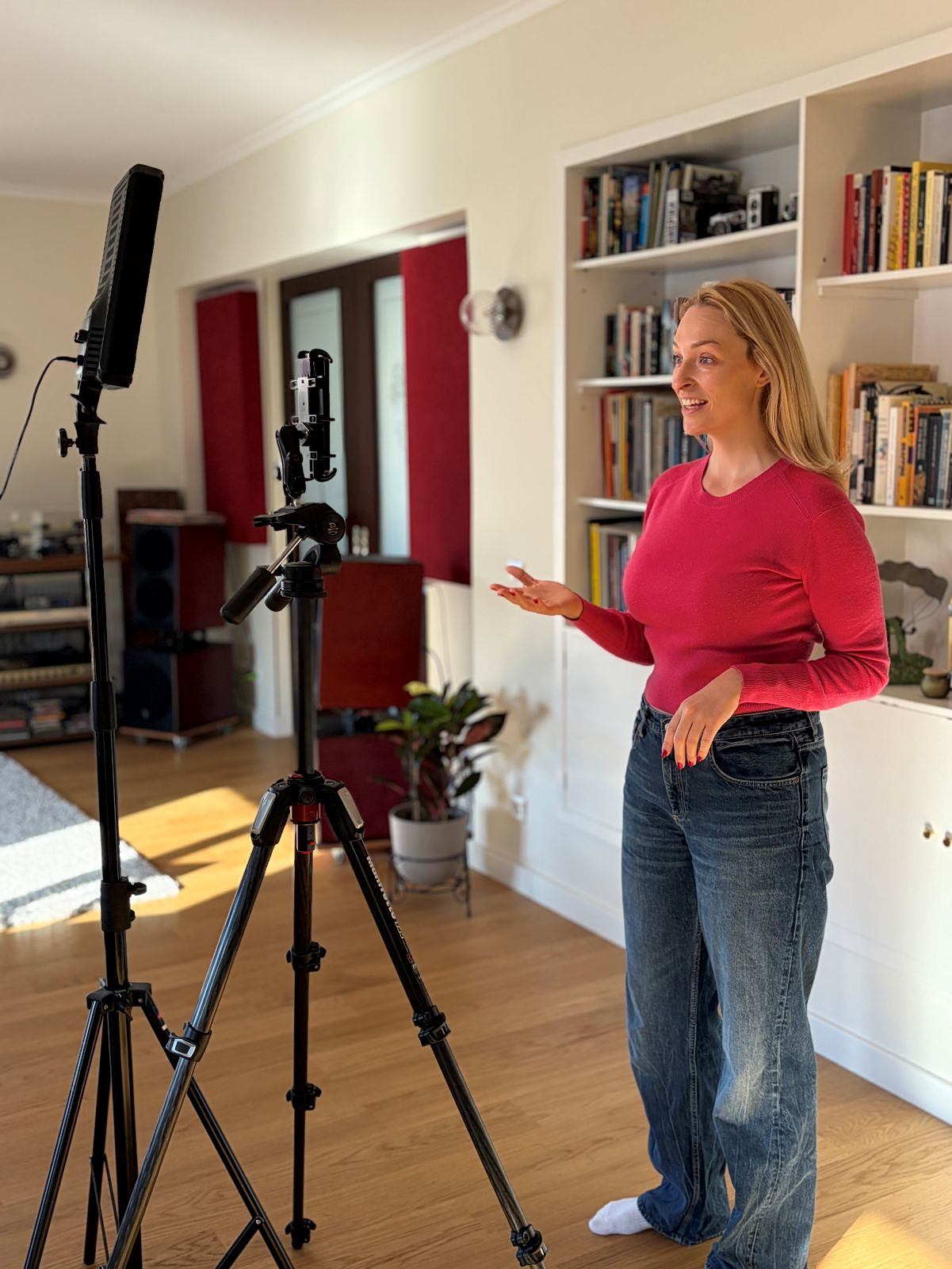
What inspired you to start offering online sessions on integration in Greece?
It grew organically. I began speaking about these experiences online, and the response was immediate. Both Greeks and non-Greeks told me they finally felt understood.
That’s when I realized this wasn’t just my experience—it was widespread. People were having the same interactions but interpreting them in completely different ways.
That gap between experience and interpretation is what led me to create structured workshops, moving beyond explanation into practical tools for real-time situations.
A pattern people recognize in themselves
What has the response been like?
Very engaged. People often recognize themselves immediately in the examples.
Some say things like, “I thought I was failing socially.” Others realize that what they interpreted as criticism was often intended as care.
Interestingly, Greeks in the workshops also report the reverse—finding English communication overly indirect or unclear.
That recognition creates relief. People begin to see that these misunderstandings are not personal failures but predictable patterns.
Who attends these workshops?
There’s no single profile. Participants range from long-term expats to professionals in international environments and people in mixed relationships.
What they share is not a lack of language ability, but repeated moments of social confusion—situations where they leave conversations thinking, “Something didn’t go the way I expected, but I don’t know why.”
What brings people in?
Most participants arrive after noticing a pattern they can’t resolve. They are capable, communicative people, but certain interactions keep repeating in ways they can’t decode.
Often, the frustration comes from the gap between competence and experience. They know they are capable, yet something keeps not landing as expected.
Before and after understanding
Do participants feel discouraged or hopeful when they begin?
They usually feel recognized and, surprisingly quickly, hopeful. Naming the pattern itself creates a shift. Once people can see the structure, they begin to respond differently.
Changing perception
After attending, people often describe a shift in perception—as if they are seeing the same environment with different lenses. The situations don’t change, but their interpretation does.
That reinterpretation reduces frustration and allows more adaptive responses in real time.
Looking ahead
How do you see your work evolving?
Two main directions are emerging. One is relational—supporting couples and families navigating cultural and linguistic differences.
The other is professional—helping organizations where Greek and English communication intersect, especially in workplaces where misunderstandings can affect collaboration and outcomes.
Both build on the same foundation: understanding how meaning is constructed, not just how language is spoken.