The government unveiled temporary fuel support, supermarket price reductions and new investment funding, while warning that prolonged wars in the Middle East and Ukraine could drive higher inflation this winter
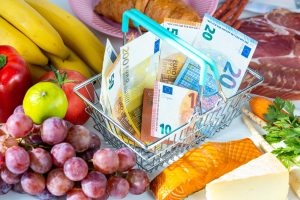
A new survey shows that more than eight in 10 people remain concerned about the rising cost of living, with food prices topping the list of financial pressures and many scaling back summer holiday plans
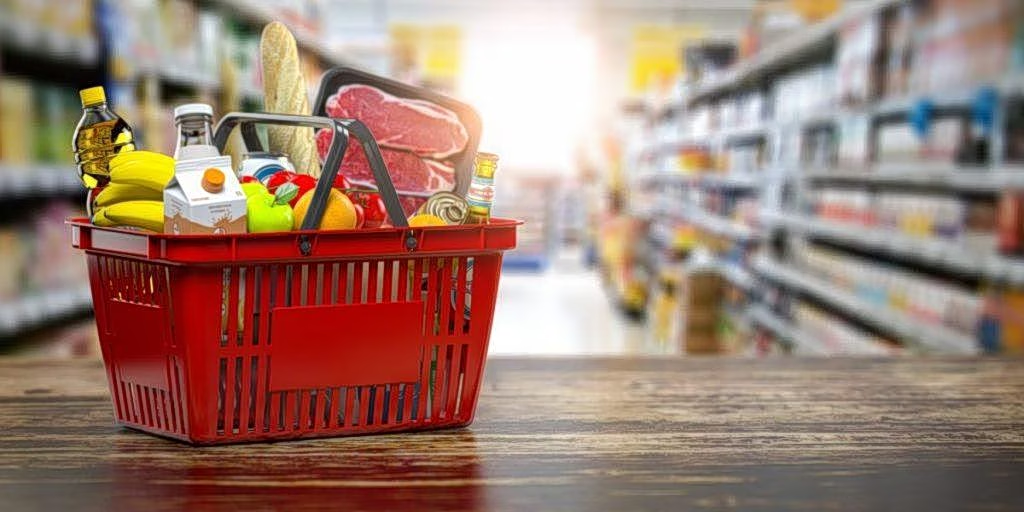
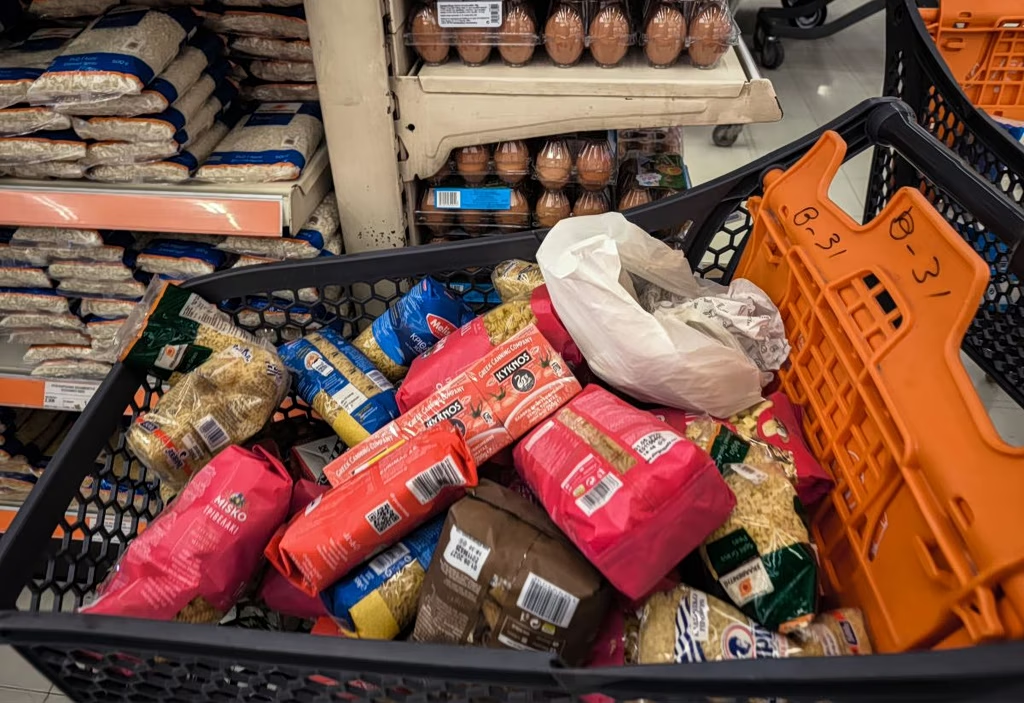
A voluntary government-backed initiative launching on August 31 will reduce prices by at least 5% on a wide range of everyday supermarket products, aiming to ease pressure on household budgets
The government has begun talks with the food industry and supermarket chains on a new voluntary agreement aimed at reducing the cost of everyday products from September
Two scenarios are on the table, both deferring any price relief to September, as the government decides whether to keep a cap on corporate profit margins or let it lapse
Development Minister Takis Theodorikakos says government measures to curb profiteering have reduced prices, while talks continue on further cuts for essential goods.
The new government digital service allows consumers to compare supermarket prices, track price changes and find more affordable options across thousands of products without creating an account.
According to market analysts and government officials, consumer pressures are expected to intensify in the coming months, as there are few signs that the current wave of price increases will ease anytime soon.
A new version of the Market Pass scheme is being considered to support household budgets, offering monthly financial aid for essential goods and usable across a wide range of food retailers and markets
Supermarket inflation in Greece rose to 2.4% in March, on an annual basis, according to the Institute of Retail Consumer Goods (IELKA). The March index recorded a slight 0.15% drop compared to 1.38% in February, with the aggregate 12-month index (April 2025-March 2026) posting a +1.62% uptick. The highest prices recorded were observed in appetizers, […]
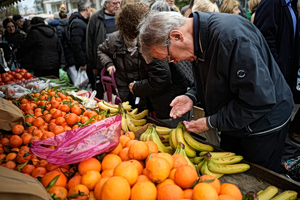
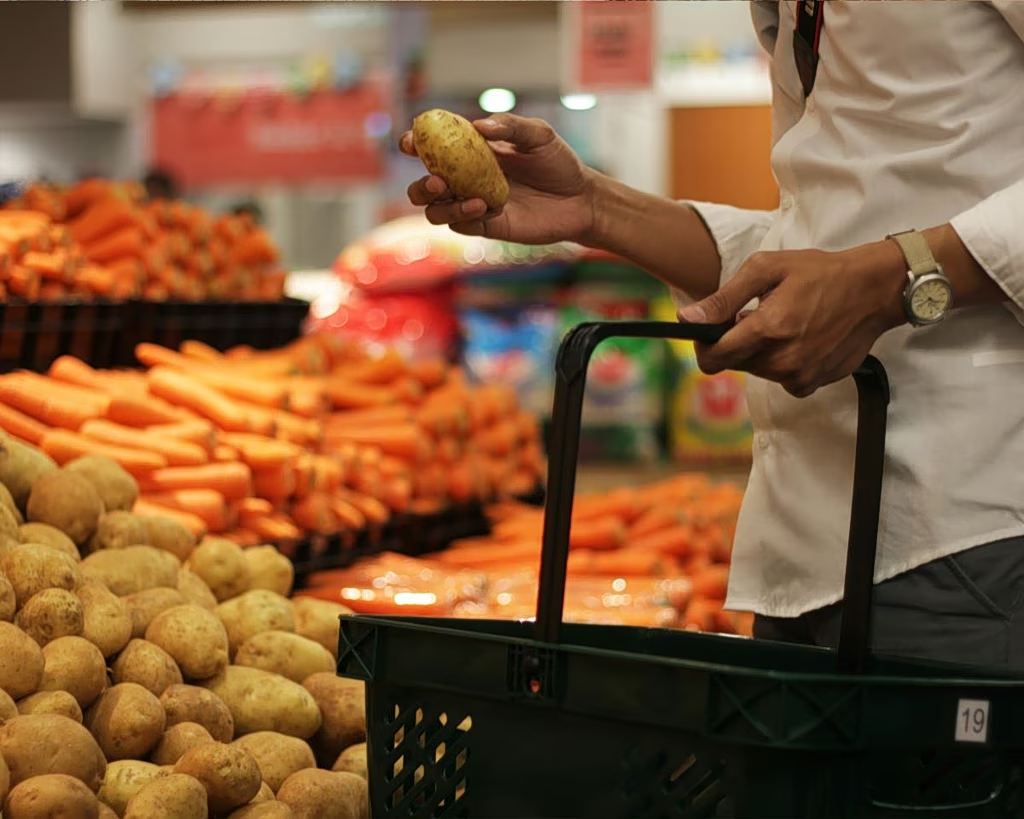
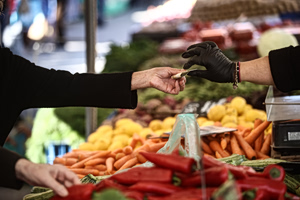
Higher energy, raw material, and transport costs linked to the Middle East conflict are pushing up fertilizer prices and driving noticeable increases in fruit and vegetable prices across Greek markets.
Prepaid cards and vouchers will allow eligible households to purchase food and essential items, standardizing support across the country and ensuring fair, transparent aid distribution
The government prepares to defend temporary profit caps on fuel and supermarket goods as lawmakers debate the measure this week amid rising inflation concerns
Government imposes strict limits on basic food, household, and baby products to curb profiteering, with fines up to €5 million for violations
The government is on heightened alert for the effects of the conflicts, with fears of rising inflation from price increases in fuel and food—the “red lines” of energy risk.
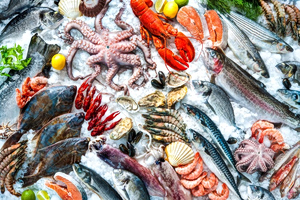
As Greece prepares for the start of Lent, fresh and frozen seafood prices are rising sharply, adding pressure to household budgets ahead of the traditional holiday meal
In terms of Actual Individual Consumption adjusted for purchasing power standards, Greece stands at roughly 70–75% of the EU average.
Inflation in Greece is easing, but supermarket prices, rents and services remain high, forcing households to slash budgets and businesses to report falling sales, according to new data and market analysis
Greek consumers face soaring legume prices as costs rise between farms and supermarkets, fueled by middlemen, packaging, distribution, and widespread “Greek origin” mislabeling, according to producers and experts
Several companies that had stayed on the sidelines are now joining the initiative, especially after seeing their competitors do so.