
 Μake us preferred on Google
 The growth of religious and pilgrimage tourism over the past two decades, a strategic choice by both the Greek Orthodox Church and the state, has brought with it a series of major challenges.
One of them is preserving the authenticity of ecclesiastical items sold in hundreds of shops and exhibition spaces across Greece, whether located inside monasteries, near churches, or, increasingly, through online stores operating under the names of monasteries, religious associations (“Friends of this or that monastery”), or brotherhoods.
These products mainly include religious icons, small devotional images, incense, incense burners, oil lamps, crosses of all sizes, prayer ropes (komboskini), perfumes, and other items.
Within the monastic community of Mount Athos, concerns have already begun to grow over the scale of this phenomenon, particularly following the mass “invasion” of products from China and, earlier, from Romania and Albania.
NEWSLETTER TABLE TALK
Never miss a story.
Subscribe now.
The most important news & topics every week in your inbox.
The Holy Community of Mount Athos has two reasons to be concerned about this development, as a number of products sold throughout Greece carry labels in very small print, such as “fragrant incense” or “prayer rope, Mount Athos type.” Unsuspecting pilgrims focus on the words “Mount Athos” while missing the actual origin of the product, which is revealed only in the tiny clarification stating that it is merely “Mount Athos-like.”
Among the critics of the mass sale of religious items are respected elders of the Athonite monastic tradition, who point to what they describe as a loss of religious awareness among buyers. A prayer rope worn around the wrist as a fashion accessory, they say, is far removed from the prayer rope intended for prayer and repentance.
That is, the prayer rope that has been made during a period of fasting, carrying the “sacrifice” and “repentance” of the monk or nun who created it, and offered to believers for the same spiritual purpose—not as a souvenir.
“This reality no longer exists,” emphasizes an elder from the Skete of Saint Anne on Mount Athos.
The issue at stake is the “spiritual authenticity” of these products and the supposed special “religious weight” they carry.
As Athonite monks point out, making a truly handmade 33-knot prayer rope requires at least two hours of work. If it is a 100-knot prayer rope, it takes more than five or six hours.
“A believer should not be deceived into buying these items believing they come from us. Even if we wanted to, we would not have the time available because of our daily duties of prayer and service.”
It should also be noted that the Charter of Mount Athos itself states in one of its articles that only items made within the Athonite monastic community, in the monks’ cells, may be sold inside Mount Athos.
“Saint John of Damascus said: ‘The honor given to the image passes to the prototype.’ Today, this is collapsing,” argues an abbot of a monastery in central Greece, “because the icon is now nothing more than material branding—the original is not honored, but reproduced as an aesthetic trend.”
In Thessaloniki, a large Chinese market operates selling “made in China” ecclesiastical products, not only wholesale but also directly to retail customers. These are not limited to small religious items but also include larger objects, such as candle stands and stationary candles.
It should be emphasized that there is nothing illegal about these commercial transactions. According to information, general commercial trucks frequently depart from workshops around Iera Odos in Athens, heading toward monasteries and dioceses throughout the country carrying thousands of ecclesiastical products.
Monasteries Becoming “Dairies”…
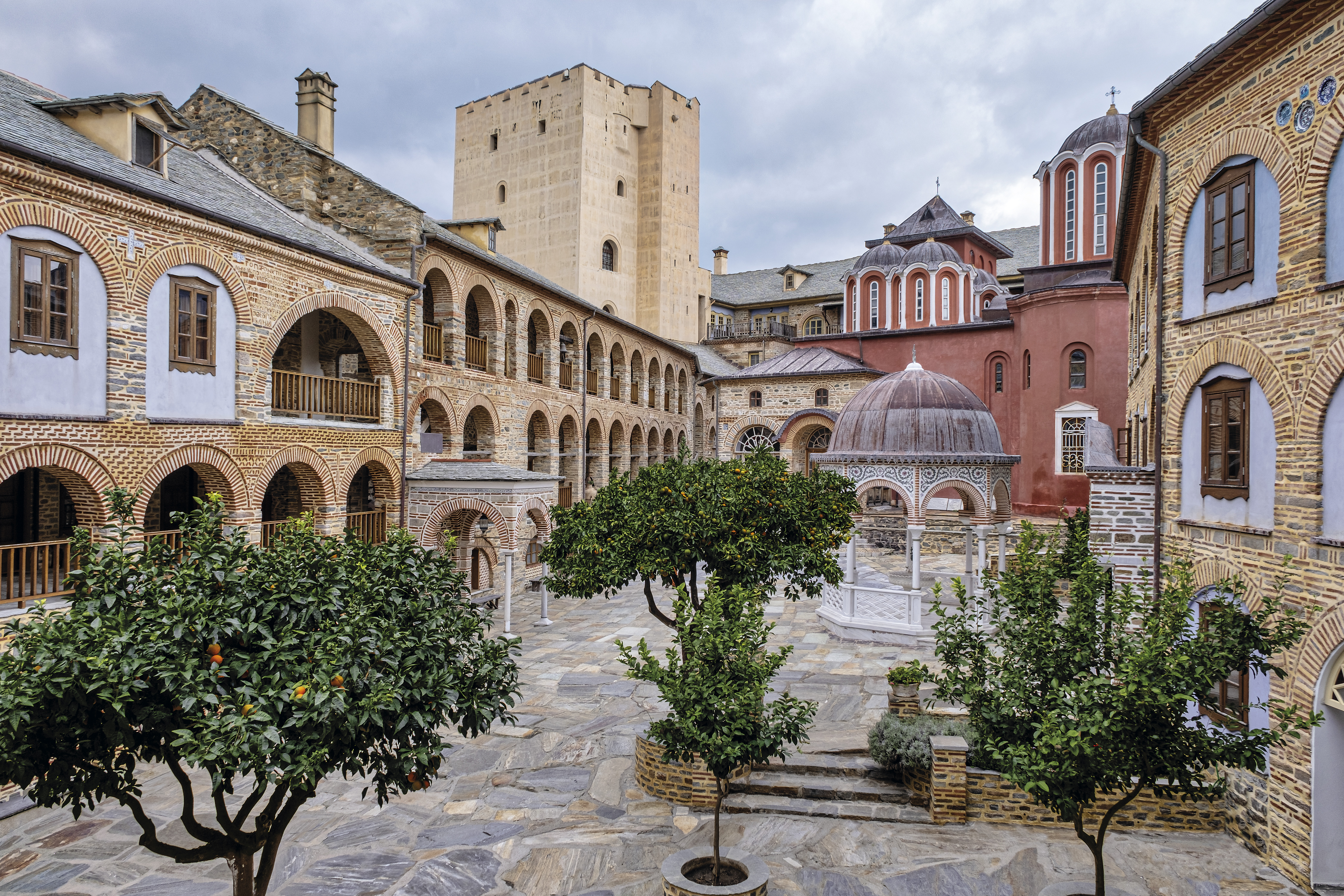
Similar concerns have begun to emerge over the mass distribution—both online and through dozens of sales points in major urban centers—of monastery food products, including milk, eggs, yogurt, cheeses, wines, honey, perfumes, and other goods.
It is clear that the scale of these products cannot originate from the monasteries whose names appear on them, for two reasons: first, because they would require enormous production and support facilities, and second, because monastic and contemplative life could not exist under such conditions.
Usually, the logo of a particular monastery is placed on the products, while the true origin of the goods disappears into the depths of unchecked commercialization.
Priestly Vestments
A completely different category is priestly vestments. Here, the possibilities for the “invasion” of Chinese products are much more limited.
Because vestments are usually tailored to the body of each individual priest, there are no large quantities of ready-made priestly garments.
In some cases, fabrics originating from China or India are used, but even then, the few remaining workshops producing priestly vestments know how to distinguish quality and avoid inexpensive imported fabrics.
At this point, the significant effort made over the past 15 years by Metropolitan Damaskinos of Didymoteicho, Orestiada, and Soufli should also be highlighted. He has promoted the local silk businesses of Soufli to dioceses throughout Greece and has repeatedly recommended their truly distinctive domestic products.
The Counterargument
However, looking at the issue of mass distribution of ecclesiastical goods from another perspective, it should also be emphasized that monasteries across Greece need to survive independently, finance the restoration work required in old monastic centers and cells, and serve the pilgrims who visit them.
The autonomy and independence of historic monasteries in the modern era also depends on their financial strength, which allows monks to devote themselves to their contemplative duties without concern.
“No condition is unreasonable within its own circumstances,” says the same abbot from central Greece.
“The goal is not the pillar saint monk, standing on top of a wooden platform praying. Monasticism and spiritual practice are concepts connected to their own era. We do not live outside the world. Nor can we be maintained by the state, dependent on the preferences of secular standards.”
Perhaps somewhere in the middle lies the golden path.