 Μake us preferred on Google
 Six in ten Greek consumers have postponed purchases and four in ten have reduced spending as fuel costs, energy prices, and food bills weigh heavily on household budgets, according to a survey by the Institute of Retail Consumer Goods (IELKA) tracking consumer attitudes amid ongoing geopolitical and economic turmoil.
The survey, which asked respondents to assess a range of current crises, found that the war in the Persian Gulf generated the highest levels of negative sentiment of any issue tested. Anxiety and stress were recorded at elevated levels across all topics, with the environmental crisis — somewhat unexpectedly — producing a stronger emotional response than the war in Ukraine, a finding researchers attributed to the accumulated psychological burden of multiple overlapping crises.
Spending postponements are concentrated in clothing, personal goods, and discretionary items such as dining out and holidays. Spending reductions, meanwhile, are taking the form of cuts to basic goods, lower fuel and electricity consumption, and a shift toward discount products and cheaper alternatives.
Food and Fuel Dominate Consumer Concerns
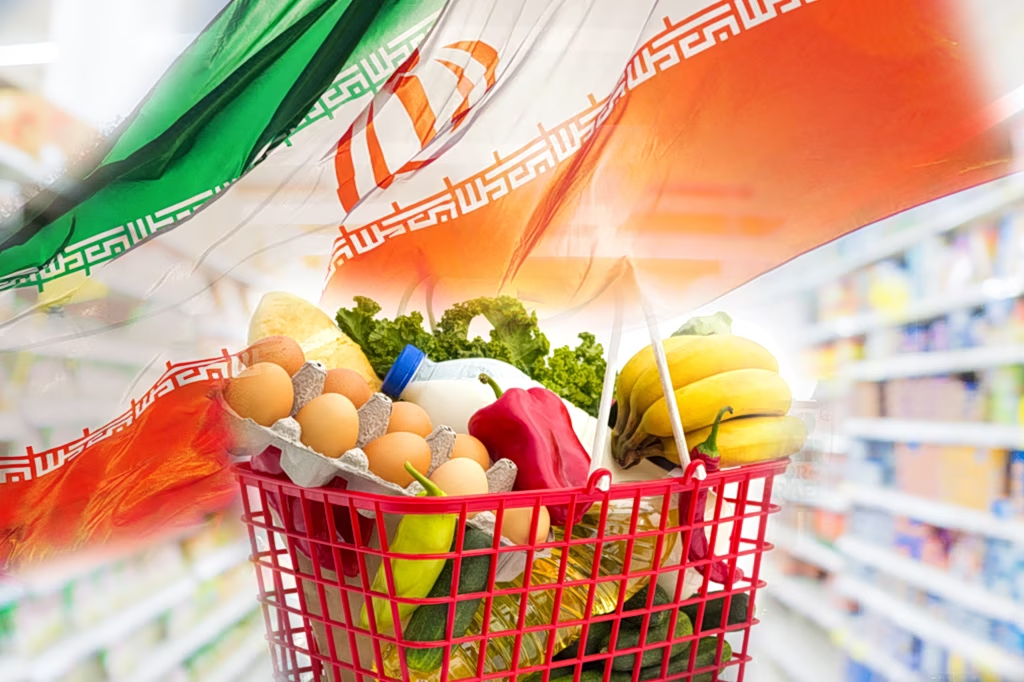
Fifty-five percent of respondents said fuel and energy prices — taken together — represented their greatest financial burden, while 40 percent pointed to food costs. Despite food prices remaining relatively stable before and after the outbreak of the Gulf conflict — in contrast to fuel, which has risen sharply — consumers continue to perceive food as the heavier burden. IELKA attributed this to higher baseline food expenditure and to what it described as accumulated fatigue built up over the past four years.
Breaking down current pressures by category, 40 percent of Greek consumers identified food as their primary burden, followed by energy at 34 percent and fuel at 21 percent.
Looking ahead to the next six months, consumers expect fuel to become a more acute pressure point, with 35 percent anticipating it as their top concern, up from 21 percent currently, while food remains the leading worry at 39 percent. Energy-related anxiety is expected to ease somewhat to 21 percent, likely reflecting the reduced heating needs of the summer months and increased demand for transport.
Expectations of state intervention are high, with 81 percent of respondents saying they would need significant government support to manage electricity bills, 77 percent for fuel, and 67 percent for food.