Greek food exports to Canada continued their upward trajectory in 2025, with products synonymous with the Mediterranean diet strengthening their presence in the Canadian market. Olives, olive oil, seafood, honey, prepared foods, bottled water and salt ranked among Greece’s leading food exports, while producers increasingly focused on “clean label” products free from artificial additives as consumer demand continues to grow.
According to the Office of Economic and Commercial Affairs in Toronto, total Greek exports to Canada rose by 1.85% in 2025 compared with the previous year. Imports from Canada to Greece increased by 28.5%, resulting in overall bilateral trade growth of 9.5%.
Although Greece maintained a trade surplus with Canada throughout the 2021-2025 period, the surplus declined from €185.4 million in 2024 to €155.8 million in 2025, a year-on-year decrease of 16%. The report also noted that trade with Canada accounted for less than 1% of Greece’s total exports and imports, which stood at €48.6 billion and €82.12 billion, respectively.
Olives Remain Greece’s Top Export
Olives and preserved vegetables remained the largest category of Greek food exports to Canada, reaching €28.1 million in 2025, up 1.8% from the previous year.
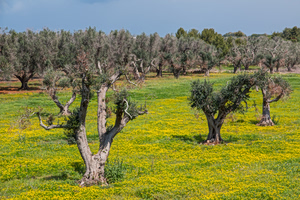
Olives continued to be Greece’s flagship product, with the country ranking as Canada’s second-largest supplier after Spain.
Exports of olives preserved in brine or Sulphur solution (excluding glass packaging) climbed 40.6% to €18.1 million. Meanwhile, exports of prepared non-frozen vegetables recorded a 116.5% increase.
In contrast, exports of prepared or preserved olives not packed in vinegar, acetic acid or sugar declined sharply, falling 86.9% to €8.1 million.
Olive Oil Demand Continues to Rise
Although annual olive oil consumption in Canada remains relatively low, at around 1.2 to 1.5 liters per person, demand continues to increase as consumers become more interested in the health benefits of the Mediterranean diet.
Greek extra virgin olive oil holds a 3.75% share of the Canadian market, ahead of Turkey’s 2.65% and Italy’s 0.5%, while Spain dominates with 89% of the market.
Greek Sea Bass and Sea Bream Dominate Imports
The report found that more than 86% of Canadians eat fish regularly, with younger consumers increasingly choosing frozen seafood because of its convenience.
Greek sea bass and sea bream remain the country’s leading seafood exports to Canada.
In 2025, Greece accounted for 65.4% of Canada’s sea bass imports, followed by Spain (15.7%), Tunisia (9.5%), Turkey (7.1%) and Chile (0.07%). Sea bass is widely marketed in Canada under its Italian name, branzino, and is commonly found on restaurant menus.
Greece also supplied 44% of Canada’s imported sea bream, ahead of Tunisia (35.7%), Japan (6.6%), the United States (4.8%) and Portugal (2.7%).
Prepared Foods Record Strong Growth
While Greek prepared food products account for only 0.3% of Canadian imports in the category, they posted strong growth in 2025.
Exports reached €3.7 million, an increase of 39% compared with 2024. Exports of cane and beet sugar syrups recorded an even sharper rise, jumping 228.5%.
Greek Honey Strengthens Its Position
Canada’s honey market relies heavily on imports to supplement domestic production, particularly as local output can fluctuate by 20% to 40% annually due to weather conditions. While premium honey is largely dominated by New Zealand’s Manuka honey, Greek exports continued to expand.
Greek honey exports rose 15.76% in value in 2025 to €2.4 million.
In the packaged honey category (containers under five kilograms), Greece ranked as the fourth-largest supplier with a 9% market share by value. New Zealand led with 34.2%, followed by Australia (13.7%) and Turkey (10%).
Bottled Water and Salt Also Gain Ground
Greek salt exports reached €1.9 million in 2025, with refined salt representing the largest subcategory at €1.76 million, up 15.9%.
Greek bottled water exports increased 6.6% to €423,000. Natural mineral water accounted for €284,000, although sales fell by 3% compared with the previous year.
Exports of other bottled waters without added sugar or sweeteners increased by 51%.
Canada’s imported bottled water market remains dominated by France, with a 46.6% share, followed by Italy at 33.3%, while all other countries hold less than 5% of the market.
Feta Remains a Special Case
Feta continues to occupy a unique position in trade between Greece and Canada.
Greece remains among the EU member states that have not ratified the Comprehensive Economic and Trade Agreement (CETA), arguing that the Protected Designation of Origin (PDO) status of feta is not sufficiently safeguarded under the agreement.
Although feta is recognized as a geographical indication under CETA, the report notes that the agreement has nevertheless acted as a catalyst for Greek cheese exports by gradually removing tariffs and introducing special import quotas.
As a result, exports of Greek feta to Canada have more than doubled since the agreement was signed, increasing by over 110%, while annual export volumes have approached 1,000 tons. Traditional Greek cheeses such as kefalotyri and kefalograviera have also benefited from the expanded market access.