 Μake us preferred on Google
 Once upon a time, Mykonos was a remote, almost forgotten whitewashed island among the countless jewels of Greece. Neither Jackie Kennedy nor any international VIP had heard of its existence, let alone crossed oceans to discover its secluded beaches and winding alleys. Even Athenians rarely ventured there, as reaching the island was once a difficult and time-consuming journey.
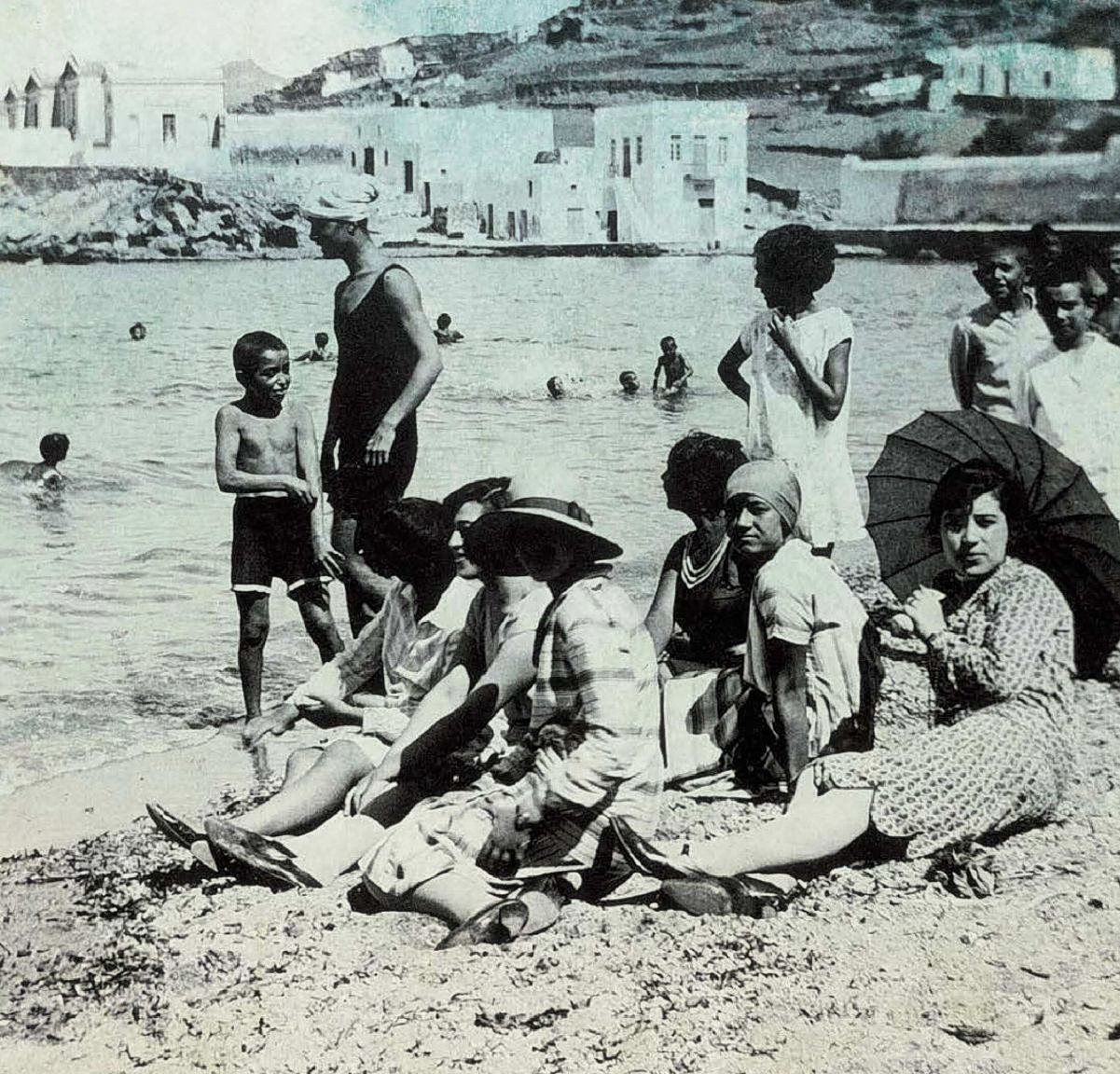
Theoklitos Triantafyllidis in Mykonos, 1927.
Back then, Mykonos belonged to fishermen and a small, warm-hearted community of islanders who, well into the middle of the 20th century, lived beneath the Aegean sun in much the same simple way their ancestors had for generations.
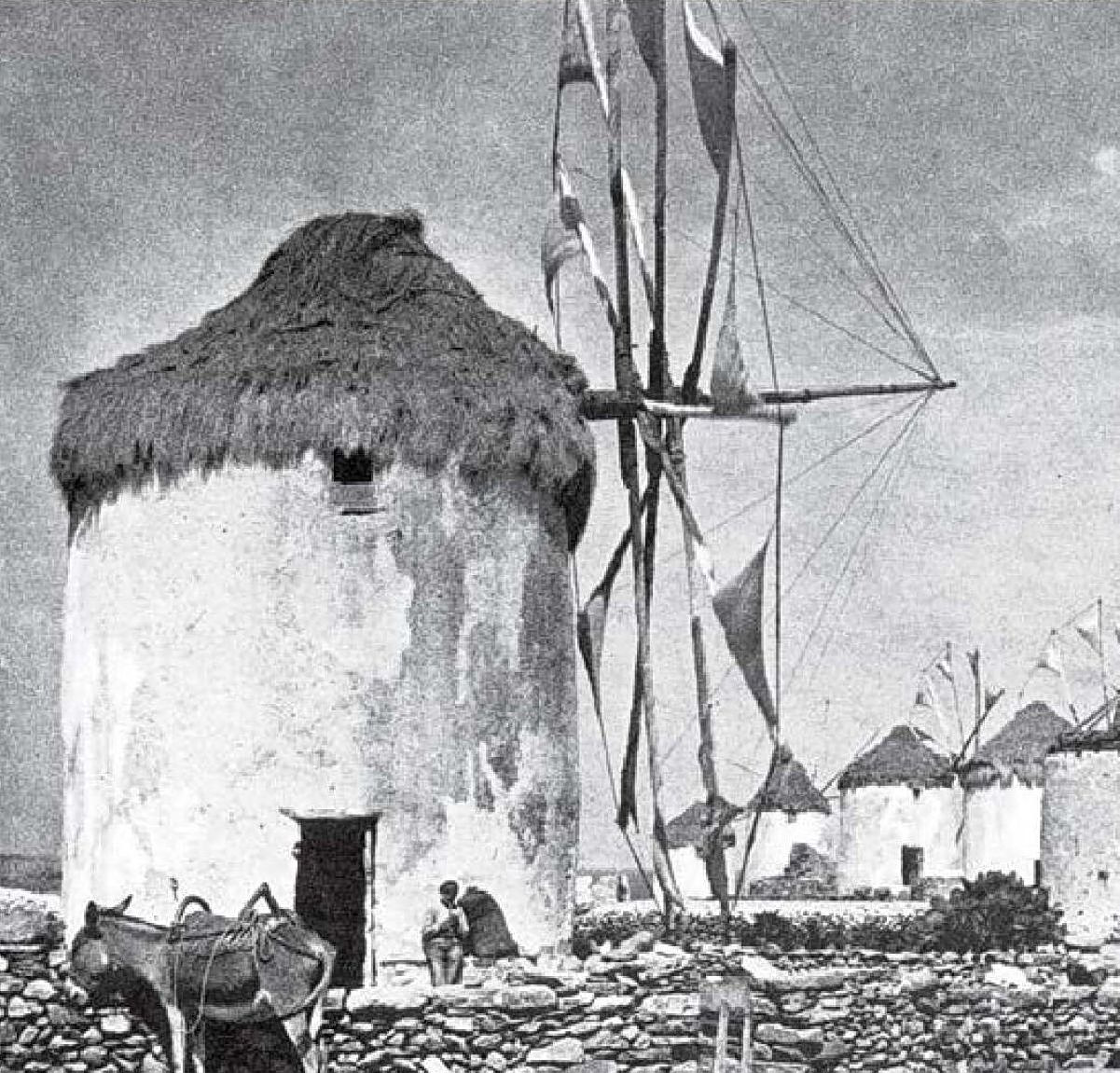
It is this lost Mykonos that comes vividly to life in the remarkable photo album Mykonos, a rare collection of images captured by Theoκlιtos Triantafyllidis, the renowned cytologist who spent his summers on the island. Published several years ago in an elegant edition by Eleftheroudakis under the title Theoκlιtos Triantafyllidis, Mykonos, the extraordinary archive reveals a world far removed from the glamorous, colorful, and frenetic destination known today.
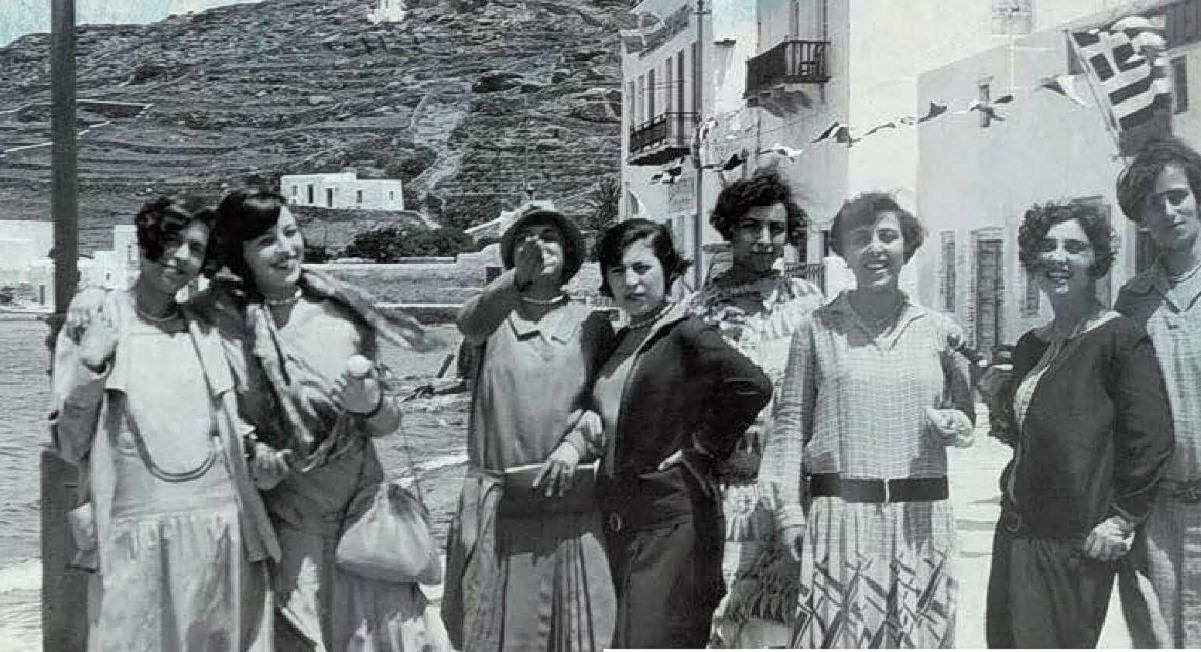
Mykonian women from Athens and their friends at Yialos, on a festive day in the early 1930s.
Instead, it presents a monochrome and almost ascetic Mykonos, spanning from the early decades of the 20th century to the 1970s, when Triantafyllidis passed away. The photographs, worthy of the pages of National Geographic, portray the rhythm of everyday life: the deep bond between people and nature, the dependence on the land and sea, and the quiet harmony between islanders and their environment.
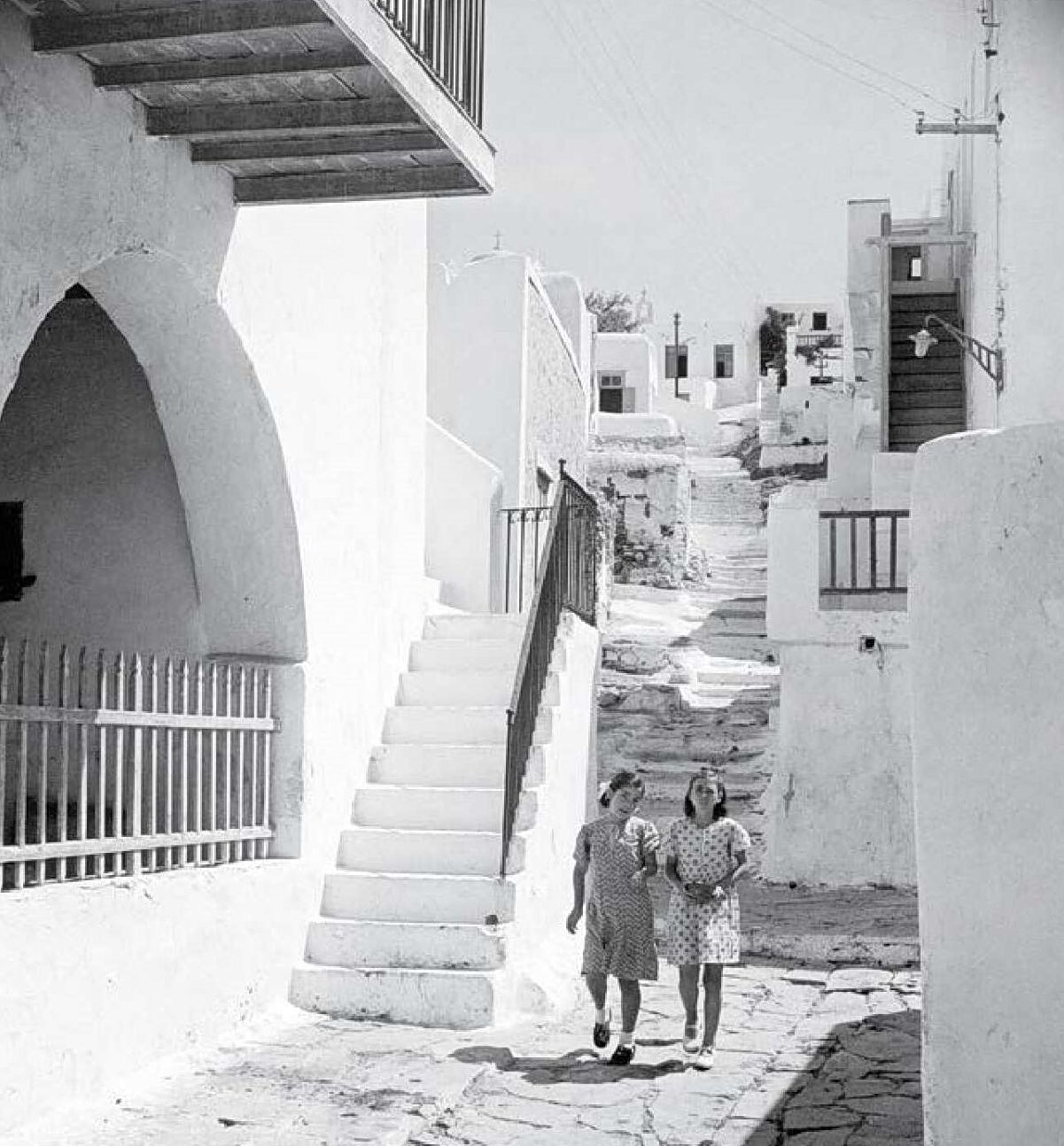
Goumenio, on the steps of Agios Spyridon Church (1936).
Of course, these images offer an idealized vision of the past. They are not a documentary record of the era in its entirety, but rather a selection of its brighter and more beautiful moments. They capture the charm and serenity of island life while leaving in the shadows the hardships, shortages, and struggles that defined much of that period.
“The faces in these photographs are of exceptional interest, whether they belong to ordinary working people or members of the island’s social elite,” writes Mykonos mayor Panagiotis Kousathanas in the album’s introduction.
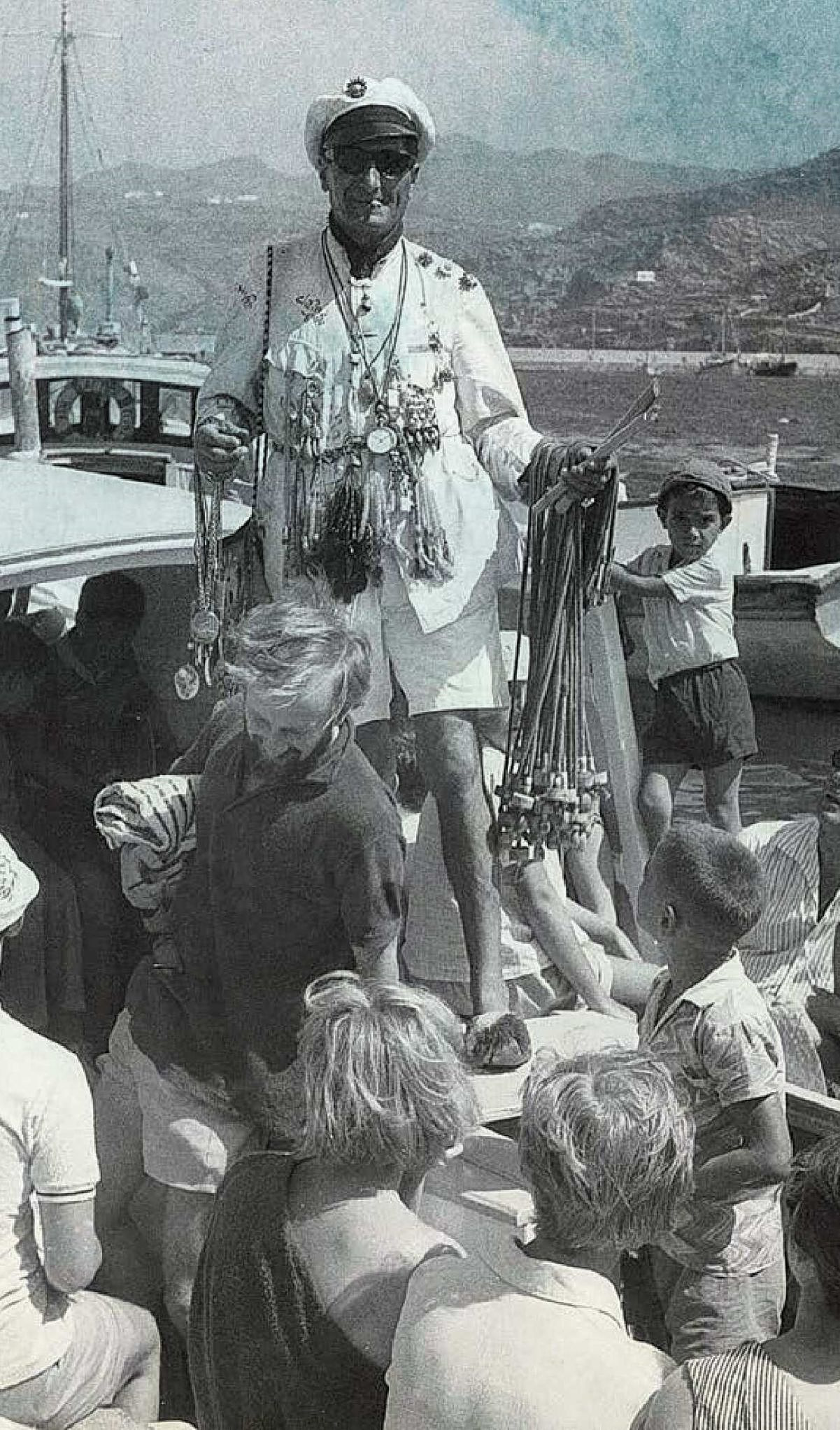
The street vendor Kostas Zouganellis with his wares at Agios Stefanos.
Among Triantafyllidis’ most compelling subjects are the fishermen and laborers of Yialos — including the fisherman Theodoros Kyrantonis, known as the protector of the famous pelican Peter I, and street vendor Kostas Zouganellis with his small collection of tourist souvenirs. His lens also captures Mykonian women returning from Athens, Athenian holidaymakers dressed in the latest fashions of their time, stylish young men and elegant older visitors who came to summer on an island that, in its own way, had always carried a cosmopolitan spirit.
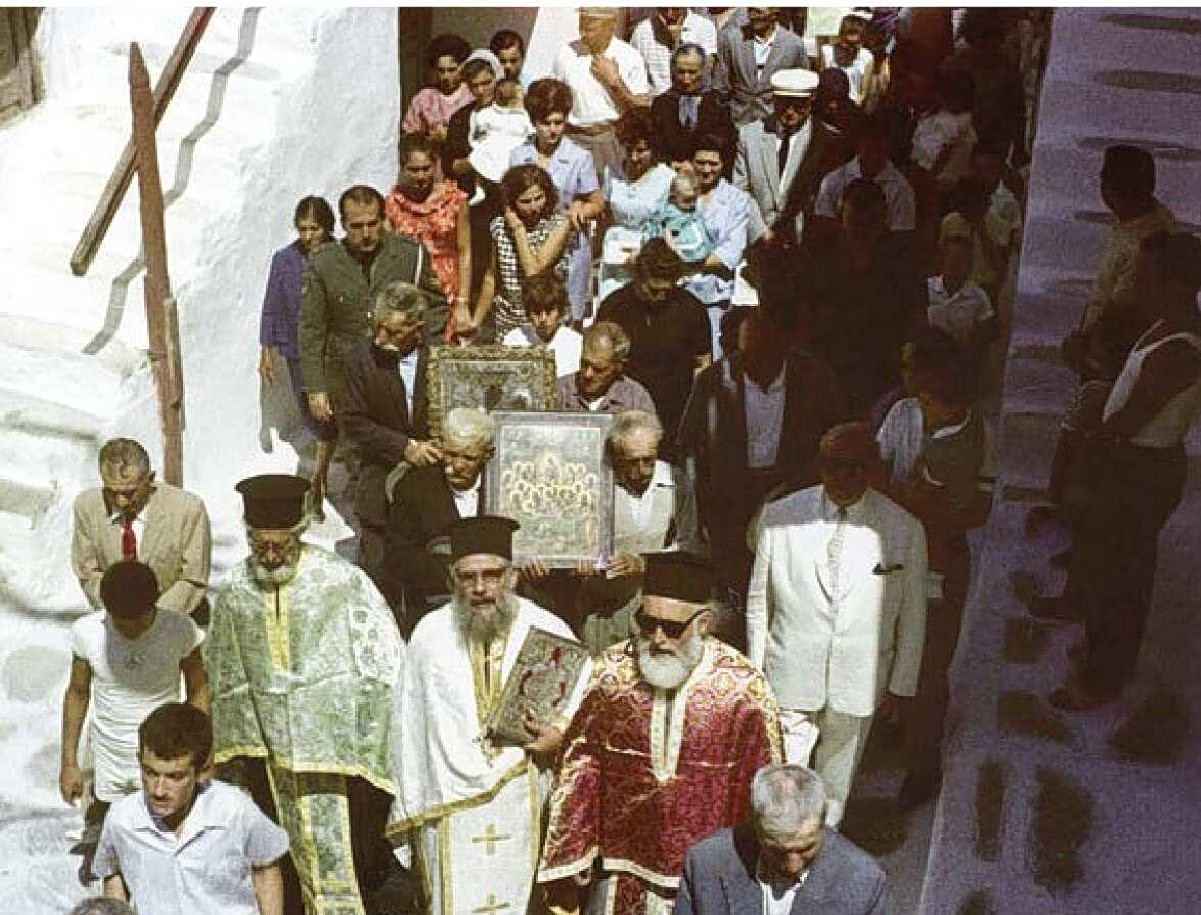
The procession of the icon of the Dormition of the Virgin Mary, 1976.
The photographs also preserve portraits of figures who shaped local history: Dimitrios Kouzis Georgoulis, mayor of Mykonos for nearly four decades between 1920 and 1959, alongside his wife Anna Koroni, a schoolteacher; Nontas Kampanis, one of the last descendants of a prominent island family; members of the urban elite; captains and passengers aboard the legendary passenger ships of the era; and the familiar faces gathered in the celebrated cafés of Yialos — locals recognizable by their easy joy, and visitors drawn into the island’s timeless atmosphere.
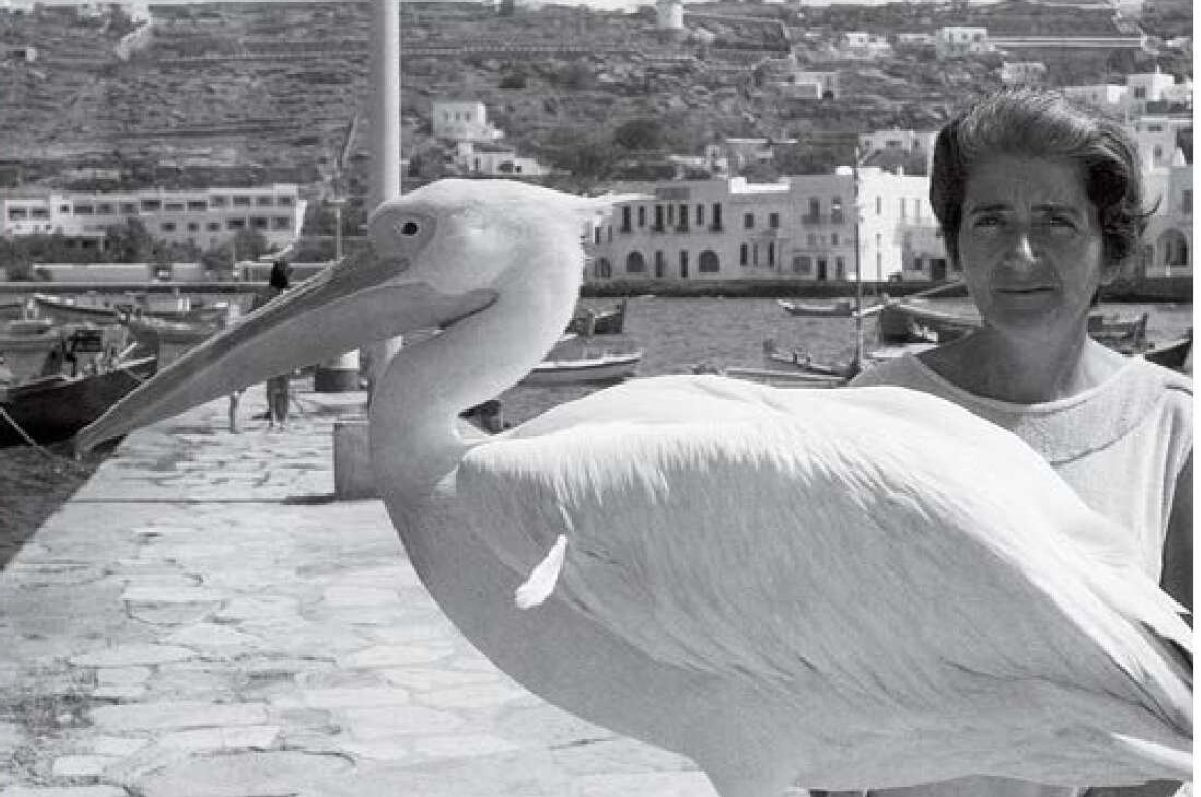
Ismini Triantafyllidis with Peter at the harbor.
Yet Mykonos was destined to transform completely.
First came the affluent Athenians who discovered its magic — figures such as Zachos, Melina, Eleni Vlachou, and Anna Veltsou. The island gradually became the summer refuge of Athens’ most adventurous and influential circles, a playground for the city’s celebrated “fearless children.”
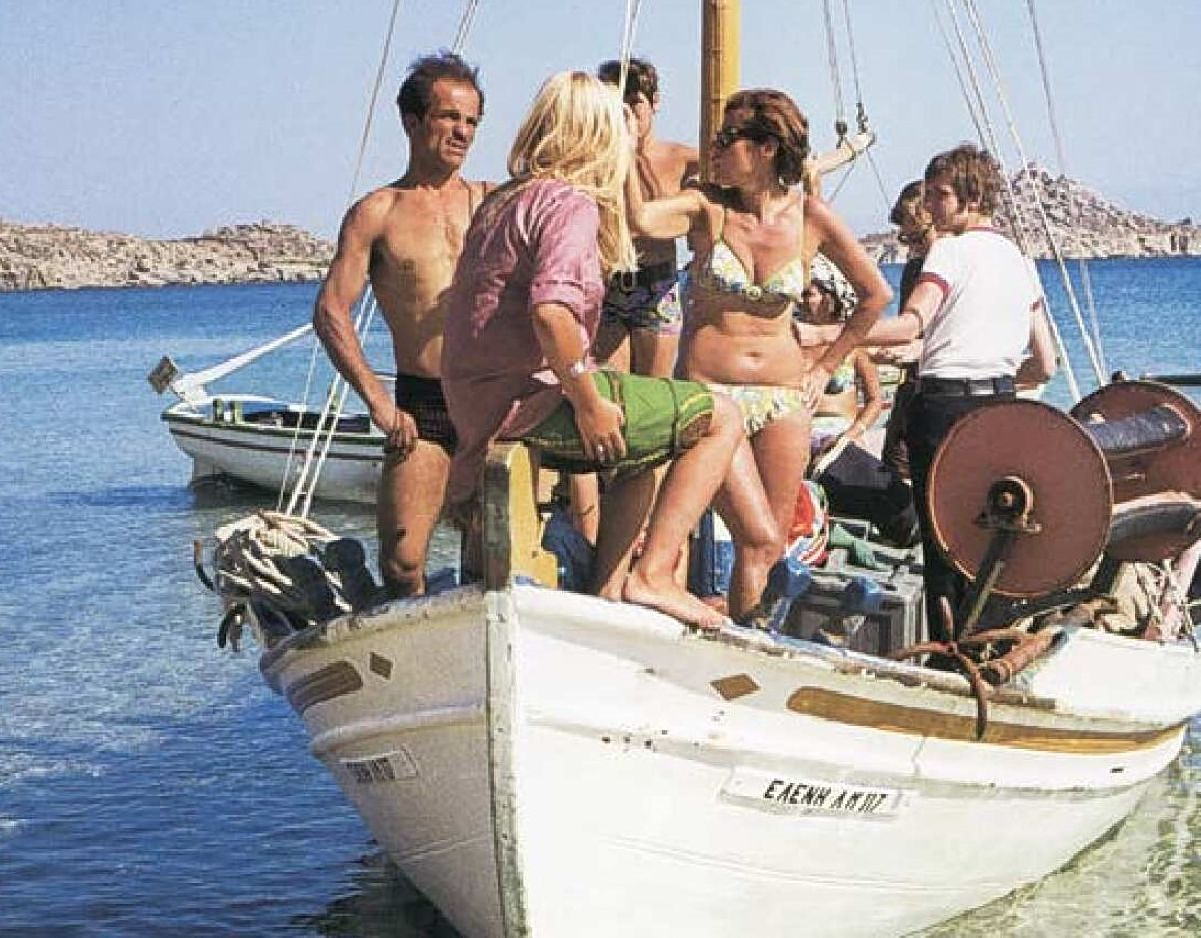
Leaving for other beaches from Platis Gialos, with Captain Giakoumis, 1971.
Then came the first hotels, the first boutiques, and legendary establishments such as Maroulina. Finally arrived international names — Piero Aversa, Jackie Kennedy, and Lee Radziwill — followed by the global jet set, the “beautiful people,” and film crews whose presence would introduce Mykonos to audiences around the world.