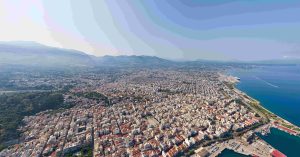
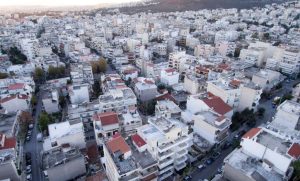
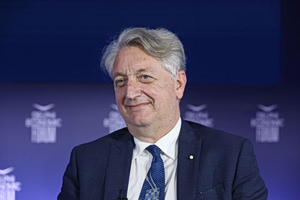
Heraklion Mayor Alexis Kalokairinos told in.gr that traffic congestion and the lack of parking near the city’s historic center are among the most persistent challenges facing major Greek cities.
He attributed the problem to urban growth that outpaced infrastructure, combined with decades of car-dependent culture, noting that daily searches for downtown parking spots add further strain to traffic, the environment, and public space.
Kalokairinos acknowledged there are no easy fixes, but stressed the responsibility to plan for the coming decades rather than just manage daily problems. He pointed to boosting public transit, cycling, and walking as realistic alternatives, especially given Heraklion’s compact size and favorable climate for most of the year.
The Mayor’s Plan
On concrete actions, he described a unified planning approach that involves:
- a new traffic study for the old town tied to reimagining public space, protecting the city’s historic character
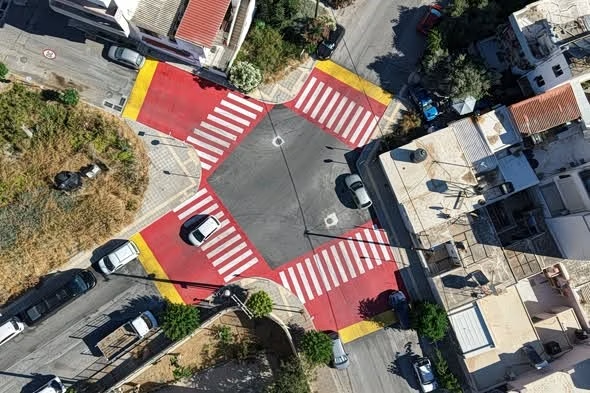
- improving road safety through a network of 27 completed raised pedestrian crossings, with 24 more “smart” crossings finishing in the coming weeks.
Two pedestrian-route networks are also underway, one connecting neighborhoods to the center and a second linking neighborhoods to each other, still in the design phase.
The municipality already runs three free city bus lines from the east, south, and west into the center, paired with free parking areas holding several hundred cars, a resident parking permit program, and two free parking areas along the coastal avenue at the city’s western entrance.
Kalokairinos said the city is also exploring private and public land for new parking, seeking funding tools, and preparing to roll out electronically monitored controlled parking.
Exploring New Frontiers
Looking further ahead, he floated an ambitious idea: a droneport for short-distance VTOL (vertical takeoff and landing) aircraft, to be built on land freed up by the airport’s planned relocation, a third of which belongs to the municipality.
He framed the city’s overall strategy as one grounded in studies, data, and public consultation rather than impressions, aiming for a Heraklion where public space belongs to residents and mobility is safer and more efficient.