The Council of State, Greece’s highest administrative court, has rejected a legal challenge against the expansion of a major hotel complex in Mytakas, in northeastern Milos, clearing the way for construction work to resume early next year after the project was halted amid concerns over building rights, environmental protection and the rapid pace of tourism development on the Cyclades island.
The ruling did not examine the substance of the case. Instead, the court found that the challenge had been filed after the statutory deadline for contesting the project’s environmental approval had expired. As a result, the court did not rule on the appellants’ arguments concerning whether the property can legally be built on or whether the project’s environmental authorization complies with planning and environmental requirements.
The ruling, issued by the court’s fifth chamber on Aug. 3, became public earlier this month. The company managing the development has said construction is expected to restart at the beginning of 2027, with the hotel scheduled to resume operations in summer 2027 and the expansion expected to be completed in 2028.
The development covers about 2.94 hectares (7.3 acres) in northeastern Milos and is among the island’s larger hotel investments. Under the expanded plans, the complex is expected to have 125 rooms and 271 beds, compared with an initial capacity of 99 beds.
The project’s construction work was suspended in January following a request for interim judicial protection by the municipality of Milos, the Greek Society for Environment and Cultural Heritage and local residents.
At the heart of their challenge was the claim that the property does not have frontage on a legally designated public road, raising questions over its buildability. Petitioners also challenged the environmental approval, citing the absence of an approved spatial planning framework for the area.
The appellants further pointed to the area’s spatial planning study, which envisaged relatively low-intensity tourism development in the zone, which lies within a designated Wildlife Refuge. Those issues, however, remain unresolved by the latest court ruling because the challenge was dismissed on procedural grounds rather than after an examination of its merits.
The case comes as Milos faces growing pressure from tourism development. To Vima has reported that dozens of new hotel projects are being planned on the island, raising questions over whether its infrastructure, landscape and environmental resources can accommodate further expansion. A special urban plan for Milos and other islands in the southern Cyclades chain is expected to establish a clearer framework for future development, including building conditions for properties outside designated settlements.
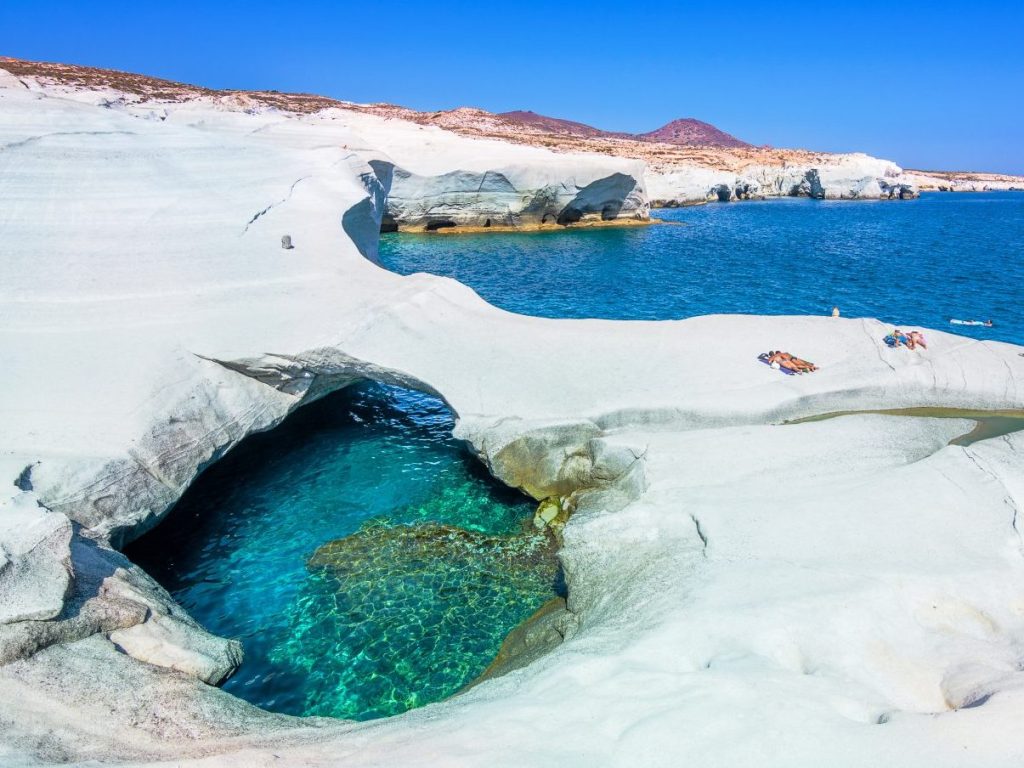
File photo: The iconic Sarakiniko site on the island of Milos.
The wider debate intensified earlier this year after construction of another hotel project at Sarakiniko, one of Milos’ most recognizable natural landscapes, triggered a political and legal response and prompted the environment and energy binistry to seek restoration of the site. The controversy has placed broader scrutiny on how building permits are issued in environmentally sensitive areas of the island.