 Μake us preferred on Google
Nine European Union member states, including Greece, are seeking a revision of the bloc’s rules on family reunification for acknowledged refugees and other third country nationals, arguing that existing arrangements are placing increasing pressure on public services, housing and education systems.
The governments of Austria, Bulgaria, Finland, Greece, Italy, Luxembourg, the Netherlands, Poland and the Czech Republic have jointly asked European Commissioner for Migration Magnus Brunner to initiate a targeted revision of the EU’s Family Reunification Directive (2003/86/EC).
In a letter dated Nov. 13, the nine governments argue that countries which have received substantial numbers of migrants since 2015 are facing additional challenges as those granted protection subsequently seek to bring their relatives to Europe.
The signatories identify schools, particularly in urban areas, as facing difficulties accommodating large numbers of children, some of whom have had limited access to education before arriving. They also cite pressures on housing, healthcare, childcare and labor-market integration services.
The ministers acknowledge that several member states have already introduced national measures restricting family reunification or are considering doing so. However, they argue that individual national initiatives cannot provide a lasting solution because the legal framework is largely established at European level.
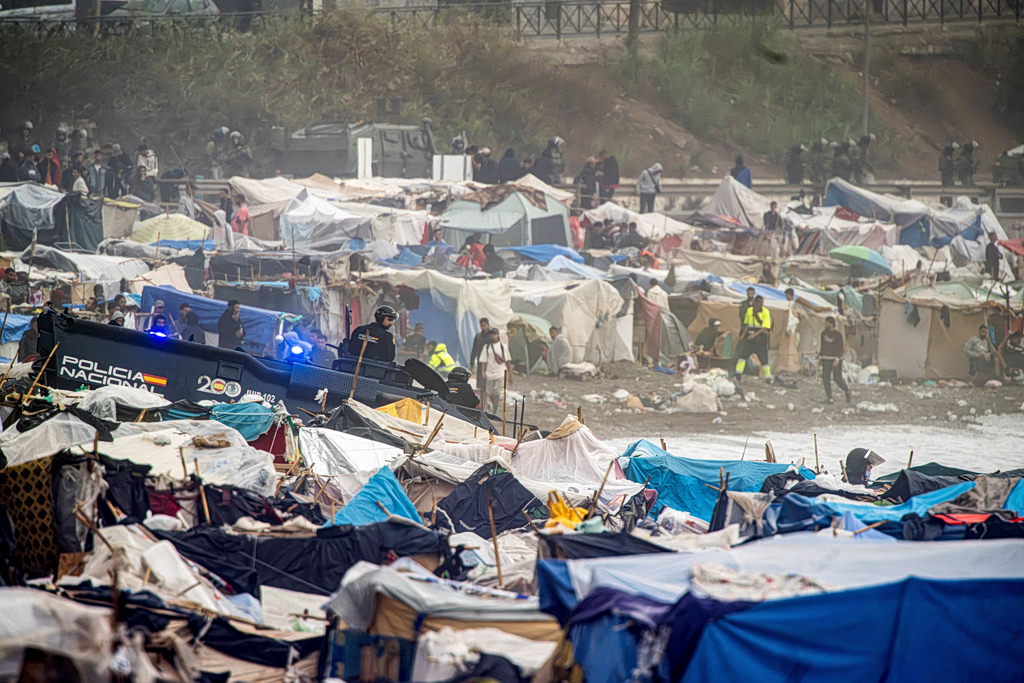
Police clear up an encampment of migrants at El Trampolin beach in the Spanish enclave of Ceuta, in Ceuta, Spain October 4, 2026. REUTERS/Marcos Morenoas
They are consequently seeking a common EU approach that would give governments greater legal scope to introduce restrictions while maintaining a sustainable regulatory framework.
The letter does not specify particular new eligibility requirements, waiting periods, income thresholds or numerical limits. Nor does it set a timetable for the Commission to respond or present legislative proposals. The initiative therefore represents a political request to reopen existing legislation rather than an agreed change in EU law.
Under the current directive, recognized refugees benefit from more favorable family-reunification provisions than other categories of third-country nationals. The legislation also establishes minimum standards, allowing member states to adopt more generous national arrangements. Beneficiaries of subsidiary protection fall outside the directive’s scope, although individual countries may extend similar rights to them.
The initiative comes amid a broader tightening of European migration policies.
Separately, five EU countries, including Greece, are pursuing an initiative to establish a migrant return hub in Rwanda for people whose asylum applications have been rejected and whose appeals have been exhausted.
Austria, Denmark, Germany, Greece and the Netherlands outlined the proposal at a meeting in Vienna with Rwandan representatives and UN High Commissioner for Refugees Barham Salih last week. The countries envisage reaching an agreement within the coming months, with the first transfers potentially taking place in 2027.
UNHCR has stressed that any arrangement must comply with international refugee and human rights law, while also emphasizing the importance of preserving access to fair asylum procedures and international responsibility-sharing.
The two initiatives concern different aspects of migration policy: family reunification for people already residing legally in Europe and the return of individuals whose asylum claims have been rejected. They are separate policy processes and should not be treated as components of a single proposal.