 Μake us preferred on Google
 Though the path to Eastern Orthodox- Roman Catholic dialogue began 60 years ago, and notable progress has been made in that time, unity remains a pious wish.
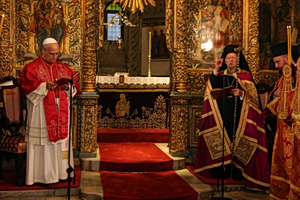
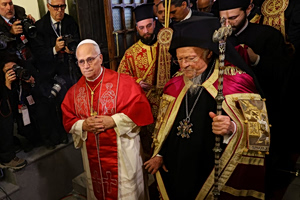
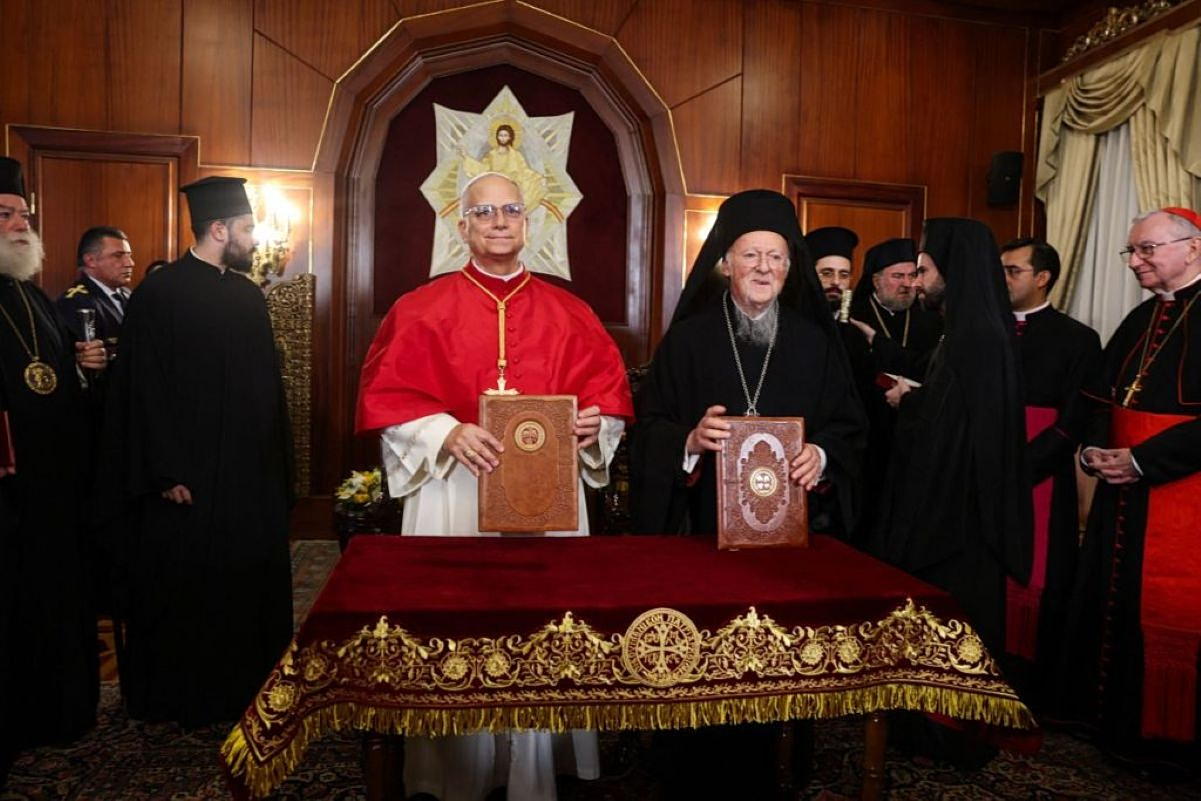
This was the message at the core of the historic 28 November Joint Declaration issued even as Leo XIV, the to-ranking bishop of a united Christendom, was visiting Ecumenical Patriarch Bartholomew, the second- ranking bishop of the united Christian Church, a position held by the 85-year-old Bartholomew for the last 34 years.
This was the most recent of a long series of papal-patriarchal declarations, the first issued by Pope John VI and Ecumenical Patriarch Athenagoras on 7 December, 1965.
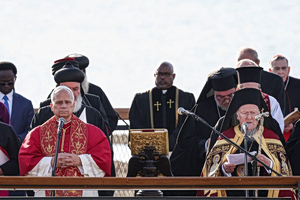
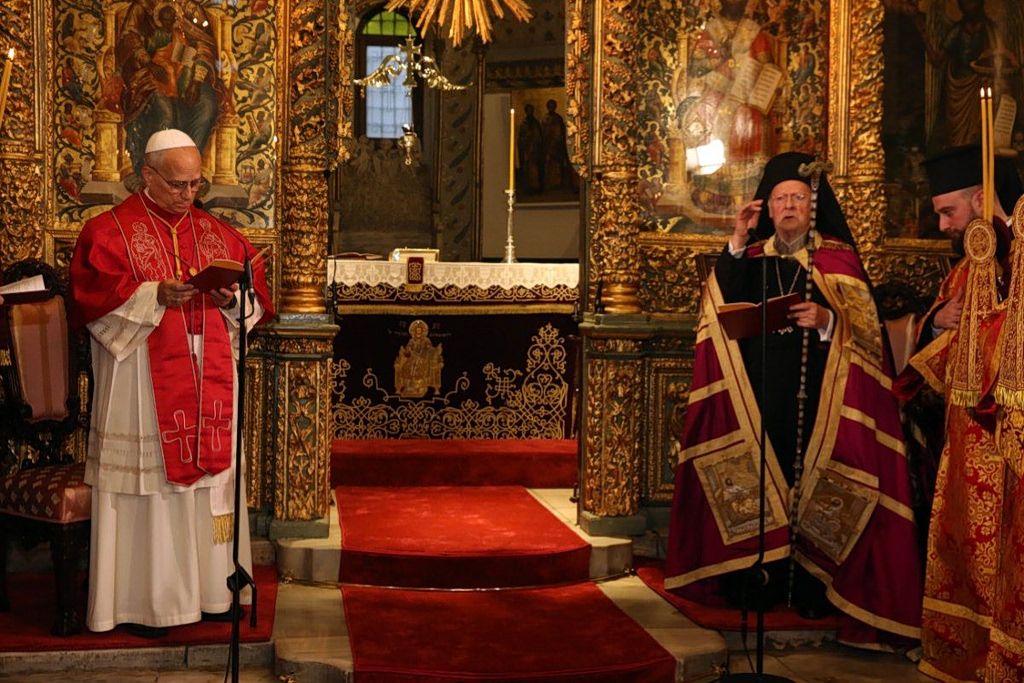
The meeting of Leo and Bartholomew was by any standard historic, especially due to their simultaneous recitation on 28 October – in English at Nicaea (Iznik, Turkey) – of the Creed or dogmatic Symbol of Faith that still unites Roman Catholics, Eastern Orthodox, and other Christian confessions.
It is the foundation and starting point on the road toward reconciliation and unity – the “Common Cup” as the joint receiving of Holy Communion is called.
Unity an imperative expressed by Christ
In the declaration, unity is described as an imperative emanating from the prayer that Jesus Christ addressed to the Father: “That they may all be one, even as you, Father, are in me, and I in you… so that the world may believe” (John 17:21).
“Following the example of our venerable predecessors, and heeding the will of our Lord Jesus Christ, we continue to walk with firm determination on the path of dialogue, in love and truth (cf. Eph 4:15), towards the hoped-for restoration of full communion between our sister Churches,” the declaration says.
Goal of common Eastern celebration
One step toward rapprochement that once seemed inconceivable would be the common celebration of Easter, until now impeded by the two churches’ differing ecclesiastical calendars.
Leo recently expressed the resolve to pursue this goal.
“It is our shared desire to continue the process of exploring a possible solution for celebrating together the Feast of Feasts every year. We hope and pray that all Christians will, “in all wisdom and spiritual understanding” (Col 1:9), commit themselves….” the declaration states.
Need for common Christian front in war-ravaged world
In their joint statement, the two church primates directly addressed the difficulties inherent in persuading their flocks that the path toward reconciliation is a biblical imperative.
“We exhort those who are still hesitant to [accept] any form of dialogue, to listen to what the Spirit says to the Churches: [“He who has an ear, let him hear what the Spirit says to the churches” (Book of Revelation 2:29)], In the current circumstances of history to present to the world a renewed witness of peace, reconciliation and unity.”
The symbolic visit to Lebanon
The importance of the unity of Christendom and the message of peace and brotherly love it offers a world beset my multiple, hugely deadly wars was repeatedly underscored by Leo and Bartholomew in their statements.
Leo’s symbolic visit, beginning today, to long war-torn Lebanon (with a Christian minority constituting 37 percent of the population) on his first Apostolic Journey is meant to stress that message.
The burden of the past: Dialogue continues, but are the faithful ready?
Beyond the theological and ecclesiastical issues that separate them, which to an outsider may seem picayune given the same faith in the four Gospels and common Creed, the faithful of the Eastern and Western churches do not at all appear to be ready for anything approaching full reconciliation.
For many centuries, including the 20th but less today, Eastern Orthodox bishops and priests taught the faithful that popes and their followers are heretics.
Rome, the argument goes, has made egregious changes to the theology of the united Christian Church – torn apart by the tragedy of the Great Schism of 1054 – abolishing the Apostolic tradition of conciliarity (collective decision-making in Councils), making the pope an absolute religious and secular ruler (head of the Vatican State today and ruler of papal states, that spanned much of modern Italy, for centuries in the past.
The Fourth Crusade and the apology of Pope John Paul II
Moreover, the deep wounds of the ruthless sacking of Constantinople by Catholics of the Fourth Crusade in 1204 (and their attacks on Orthodox Christians) – who ostensibly were going to Jerusalem to liberate it from Muslim rule – is still ingrained deeply in the conscience of the Orthodox, especially in Greece.
The Crusaders killed, pillaged, and stole the most opulent treasures of the greatest and richest city in the world (many now in museums in Venice). They proceeded to establish the Latin Empire.
Pope John Paul II, on a visit to Athens in May, 2001, expressed regret for the sacking of Constantinople by Catholic Crusaders and the suffering it caused to Orthodox Christians.
Orthodox viewed as schismatics
For its part, the Roman Catholic church and its faithful view the Orthodox as schismatics, who since1054 have refused to return under the jurisdiction of the top throne of Christianity, that of the leading Apostle Peter (“On this rock I will build my church,” the Evangelist Matthew quotes Jesus Christ as saying.)
That quote is the foundation of papal primacy.
Rome, too, accused Ecumenical Patriarch Michael Cellularius of a number of weighty theological and ecclesiastical heresies.
Papal Bull placed on altar table of Hagia Sophia initiates schism
In a moment of high drama, in 1054 Cardinal Humbert (the pope’s ambassador to Constantinople) on behalf of Pope Leo IX, entered the altar of Hagia Sophia – the greatest church in Christendom at the time and an architectural marvel – and placed the Papal Bull of excommunication on the altar table.
“Anathema Maranatha” – “Accursed, the Lord is Coming” it declared. The second word is in Aramaic, the language spoken by Jesus, taken from the Apostle Paul’s First Letter to the Corinthians.
Michael reciprocated less than a week later.