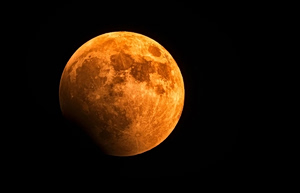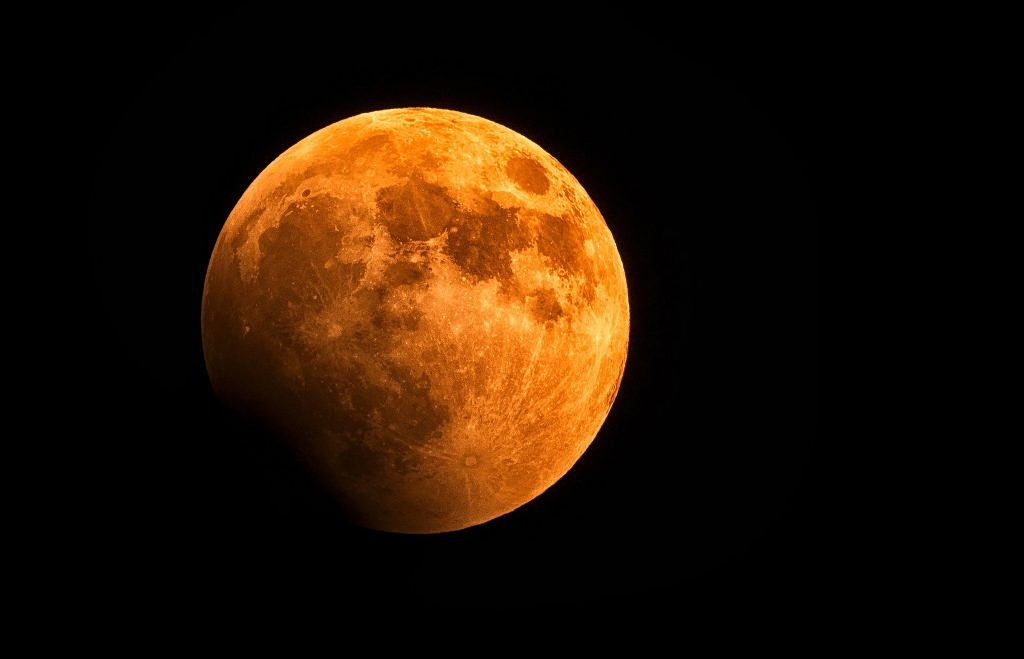
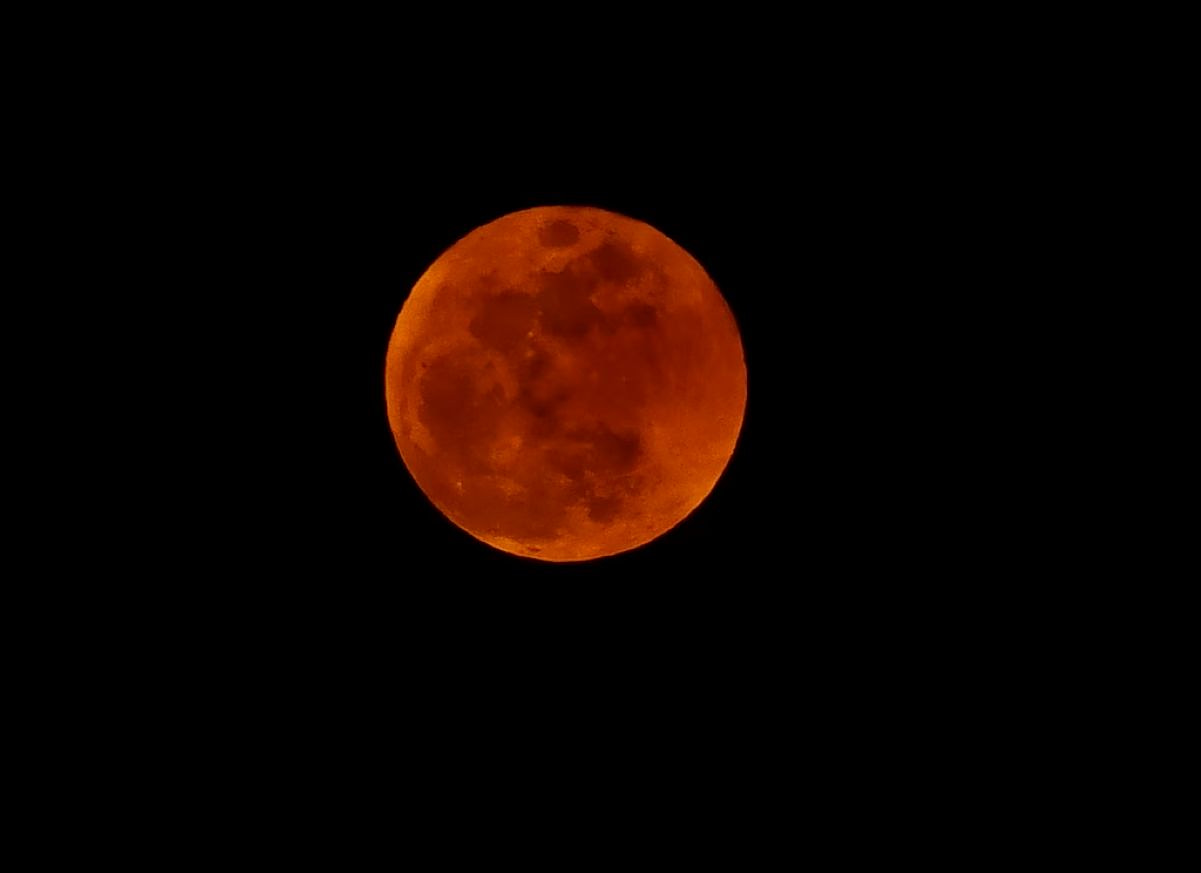
Skywatchers are in for a rare spectacle tonight, March 3, 2026, as March’s full moon rises not merely as the traditional “Worm Moon” — the first full moon of spring — but as a dramatic “Blood Moon.” Unlike an ordinary March full moon, this one will undergo a total lunar eclipse, transforming it into one of the year’s most anticipated celestial events.
The phenomenon occurs when the Moon passes entirely into Earth’s shadow. During this alignment, sunlight is filtered through Earth’s atmosphere before reaching the lunar surface. Because the atmosphere scatters shorter blue wavelengths of light more effectively, the longer red and orange wavelengths continue onward, bathing the Moon in deep crimson and copper hues.
Ordinarily, most full moons do not result in eclipses. The Moon’s orbit is slightly tilted relative to the plane of the Earth and the Sun, preventing perfect alignment. But when that alignment is exact, the Moon moves fully into the darkest central part of Earth’s shadow — known as the umbra — producing the awe-inspiring red glow that has fascinated observers for centuries.
According to Space.com, the eclipse will be visible to approximately 31% of the world’s population, with an estimated 2.5 billion people able to witness at least part of the event.
The total lunar eclipse will take place between 3:44 a.m. and 9:22 a.m. EST (08:44–14:22 GMT), corresponding to 10:44 a.m. to 4:22 p.m. Greek time. The peak phase — when the Moon is fully immersed in Earth’s deepest shadow and glows its richest red — will occur between 6:04 a.m. and 7:02 a.m. EST (11:04–12:02 GMT), lasting 58 minutes (13:04–14:02 in Greece).
The eclipse will be best viewed from western North America, Australia, New Zealand, East Asia, and across the Pacific region.
Astronomers note that the next total lunar eclipse will not occur until New Year’s Eve 2028, making tonight’s “Blood Moon” a rare opportunity for millions around the globe to look up and witness a timeless cosmic alignment.