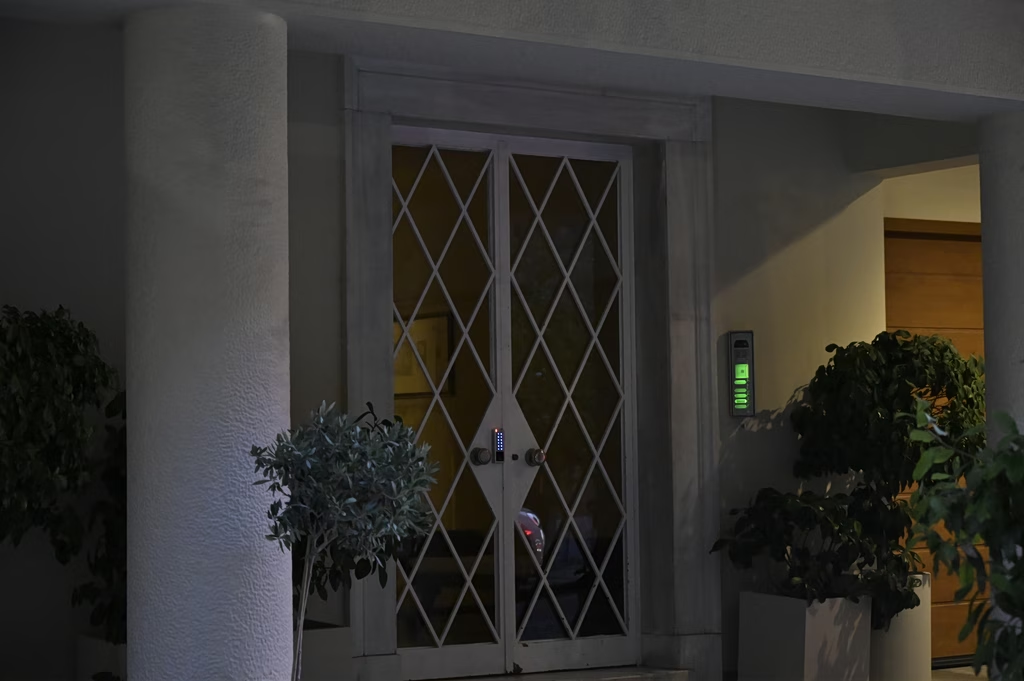
All the protocols required by EKAB (the National Emergency Aid Center) were followed in the case of Giorgos Mazonakis. That is what the paramedic who arrived at the clinic on Karneadou Street right after the call to 166 told the investigator.
The EKAB paramedic who responded to Giorgos Mazonakis’ cardiac arrest was questioned by the judicial official who is continuing the investigation into the circumstances of the singer’s death.
The investigation is moving forward with key witness testimonies being added to the case file every day.
After completing the testimonies of the staff at the clinic of the doctors held in pretrial detention, the investigator began a new round of witness statements with the members of the EKAB crew.
“All Protocols Were Followed”
The paramedic spent about an hour in the investigator’s office and, according to judicial sources, confirmed what she had told police during the preliminary investigation.
According to the same sources, the witness insisted that “the protocols EKAB requires for such cases were strictly followed.”
“None of Them Wanted to Accompany Mazonakis”
The paramedic reportedly told the investigator that none of the accused doctors asked the EKAB crew to accompany Giorgos Mazonakis to the hospital.
The witness was accompanied to the courts at the former Evelpidon military academy by Giorgos Mathiopoulos, president of the EKAB workers’ union. Speaking to the media, he said that the paramedics found Giorgos Mazonakis in the condition of a person who had been in cardiac arrest for several minutes.
“The Ambulance Arrived in Three Minutes”
Earlier, speaking to Mega, Mr. Mathiopoulos said the paramedic testified that the ambulance arrived at the clinic about three minutes after the call.
According to her testimony, Giorgos Mazonakis was found there in cardiac arrest and with mydriasis (dilated pupils). The paramedics began the cardiopulmonary resuscitation procedures required by protocol.
The president of the EKAB workers noted that it is not known how long the patient had been in cardiac arrest before the crew arrived.
“Of course, we don’t know how long it had been. It could have been a few minutes or it could have been longer. It was several minutes, because he also had mydriasis,” he said, adding that the exact length of time and the circumstances will also be assessed through the forensic examinations.